
Moving to Taipei With Your Parents: How to Rent Two Homes at Once
By Raytio Ray
Moving to Taipei with parents? How to search for two homes at the same time, what an older parent's apartment needs, and how to reassure landlords wary of older or foreign tenants.
If you are moving to Taipei with your parents and want two homes, one for you and one for them, run it as one search with two separate briefs. Start with your parents' home, because it is the harder one: it must have an elevator and an easy walk to transport, and some landlords hesitate to rent to older tenants, especially foreign ones. Search both areas in parallel, but view them on separate days, and plan the leases so both homes are empty and ready when your shipped furniture lands.
That is the short version. Below is how families usually split the two homes, how to run both searches without exhausting everyone, a checklist for your parents' apartment, and how to prepare for a landlord who is unsure about older tenants. We draw on a recent client family who moved here with their parents and needed exactly this: a larger home for the couple and a two-bedroom with an elevator for the parents, in two areas most of an hour apart.
Two homes or one big one?
Plenty of families first look for one large home. In Taipei that is harder than it sounds. Homes with four or more bedrooms are rare, and the median asking rent for them across Taipei City is NT$70,000 a month, rising to NT$100,000 in Shilin (591 rent market data, updated October 28, 2026). Meanwhile a two-bedroom in Beitou has a median of NT$35,000 (591, Beitou). Two homes can cost about the same as one very large one, and everyone keeps their own routine.
How to decide:
- Your parents are independent and have their own life here (friends, relatives, a favorite temple or park): two homes, each in the area that suits its residents.
- They need help every day: two homes in the same building or a few minutes' walk apart, or one large home.
- Somewhere in between: two homes on the same MRT line, so a visit is one train ride with no transfer.
Our pick for most families: two homes on the same MRT line, no more than 30 minutes apart. If the parents have a strong reason to live in a particular area, as our recent client family's parents did, accept a longer gap and plan visits around it.
How to search for two homes at the same time
Write two briefs, and rank each one. Bedrooms, bathrooms, distance to the MRT, elevator, windows, budget. A ranked list stops you from relitigating every viewing. Treat budgets as ceilings, not targets, and ask to see a few options well below the ceiling too. Comparing them side by side shows what the extra money actually buys.
Start with your parents' home. It has stricter must-haves (an elevator, a flat walk) and a landlord who may need more reassurance, so it usually takes longer. Your own home has more options.
One area per viewing day. If the two areas are far apart, never mix them on the same afternoon. Three or four homes in one area, with time to walk the neighborhood before or after, is plenty for one day. Older parents tire quickly, so we also suggest finishing before dinner and letting them see only the shortlist, not every candidate.
Line up the furniture. If your belongings are coming by sea, ask for empty homes and get the owner's agreement to remove existing furniture in writing. Shipping dates slip; plan for a gap. Our guides to shipping belongings to Taiwan and furnished vs unfurnished rentals cover both sides.
You don't need to sign on the same day. Sign whichever home is ready first, as long as the move-in dates work with your shipment and your short-term housing (see where to stay your first two weeks).
What a senior friendly apartment in Taipei needs
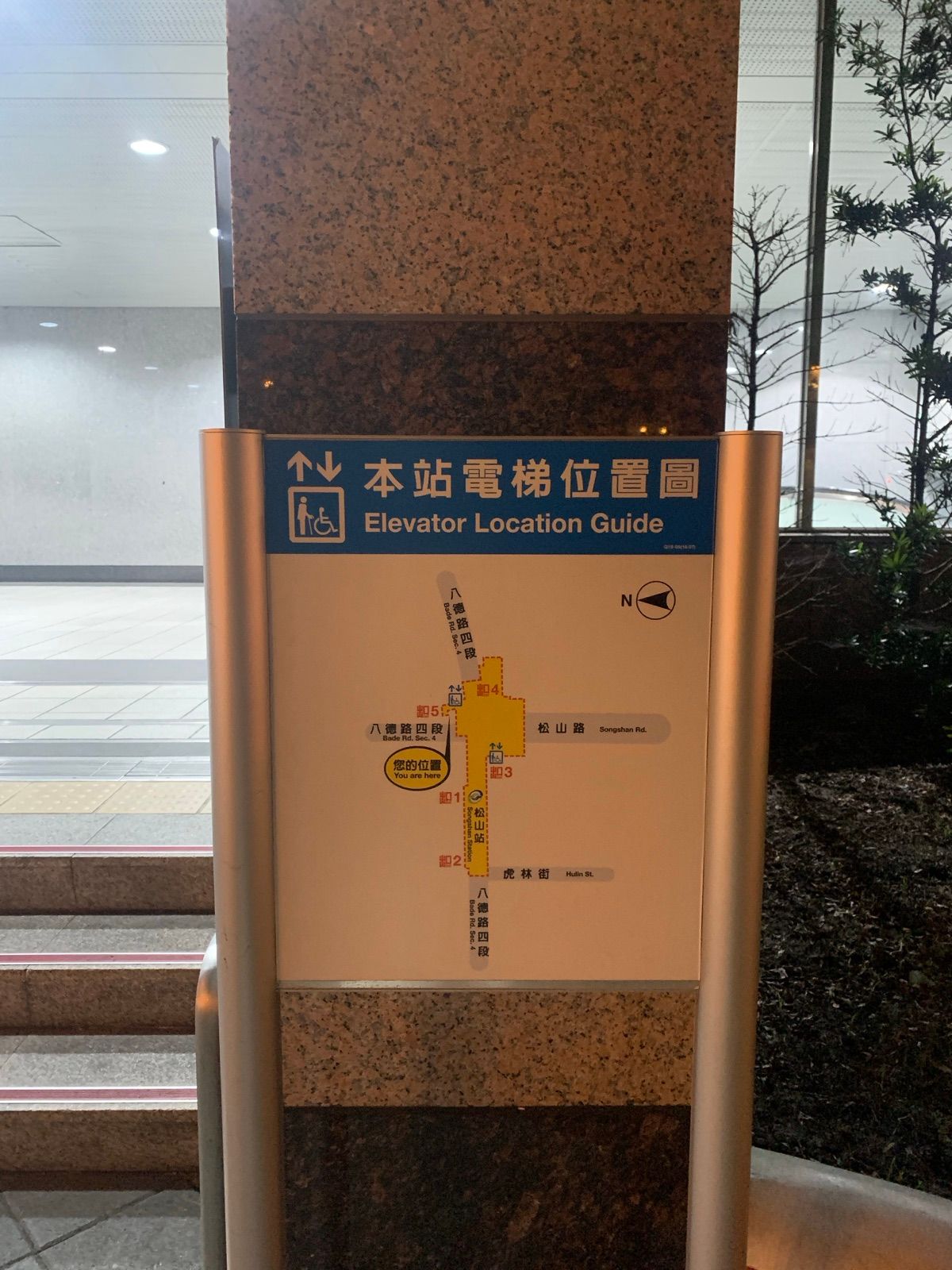
Photo: Tbatb via Wikimedia Commons, CC BY-SA 4.0
An elevator, without exceptions. Many older Taipei buildings are four- or five-floor walk-ups. A third-floor walk-up is fine at 60 and a daily obstacle at 80, and moving a parent out after an injury is far worse than paying more now. Elevator buildings rent for about 20% more than walk-ups on average (ETtoday, August 2026); it is worth it. Our guide to walk-up vs elevator buildings explains how to tell them apart in listings. Also check that the building entrance has no steps, or a ramp beside them, and that the elevator is big enough for a wheelchair.
A flat, short walk to the MRT, through the right exit. Distance on a map is not enough. Parts of Beitou climb steeply toward the hot spring area, and a "five-minute walk" uphill is a different thing for a parent. Also check which station exit has an elevator: not every exit does. Taipei Metro publishes the locations of accessible elevators and ramps by station exit, and stations post maps like the one above. Pick a home on the elevator side.
A major hospital within a short taxi ride. In the north, Taipei Veterans General Hospital sits near Shipai Station, which is one reason Beitou and Shilin suit older residents. Wherever you look, check the route to the nearest large hospital and a nearby clinic before you sign.
A bathroom that works for an older body. A window or good ventilation, a shower without a high step, and wall space for grab bars. Ask the owner up front whether you may install removable grab bars and a shower seat; many agree when the fittings come out cleanly at the end of the lease.
A safe water heater. Many Taipei homes use gas. A heater inside an enclosed balcony can be a carbon monoxide risk, which is especially dangerous for older people. Our gas water heater guide shows what to check.
A management desk and a garbage room. A 24-hour desk means someone in the building can help in an emergency and accept parcels. A garbage room means your parents never have to chase the evening garbage truck; see trash pickup in a Taipei apartment.
Light and a balcony. Older people spend more time at home. A bright living room, windows in the bedrooms and a small balcony make a bigger difference than an extra room.
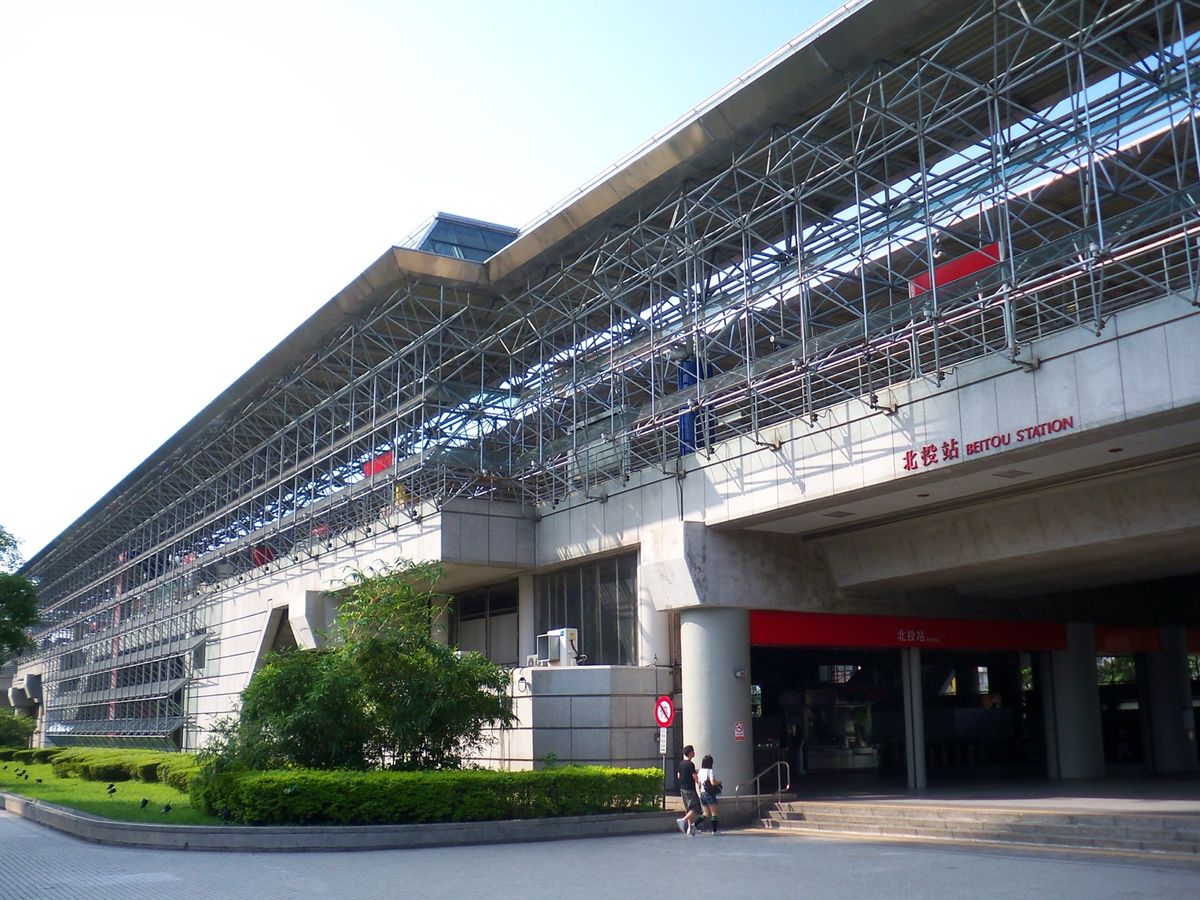
Photo: 玄史生 via Wikimedia Commons, CC BY-SA 3.0
When a landlord hesitates about older or foreign tenants
Be ready for this, because it happens. In a 2024 phone test in Kaohsiung, two out of three landlords refused callers who were elderly (PTS News, November 2024). In Taichung, a city councilor described a 75-year-old who was turned down by close to 40 landlords, most of whom refused as soon as they heard the tenant was over 65 (Newtalk, November 2025). Those are cases of seniors renting alone, often on tight budgets. Your parents' situation is different, and the way you present it matters.
Landlords rarely say why they hesitate. From the conversations we have with owners, the worries are practical: who do I call if something happens, can I communicate with the tenant, and will the rent be paid. Answer those before they are asked:
- Introduce the family. Make it clear that an adult child lives nearby in Taipei, is the main contact, and will handle anything that comes up. If that person speaks Chinese, even better.
- Decide whose name goes on the lease. Your parent can sign with a passport or ARC, or you can sign or co-sign. If the owner asks for a guarantor (保證人), you can offer to be it. Our article on when a landlord won't rent to foreigners explains how guarantor requests work.
- Show that the rent is secure. A bank statement or proof of your income, and an offer of a one-year lease or longer.
- Have the health plan ready. Owners sometimes ask. Know when your parents will be covered by Taiwan's national insurance and what covers them before that; see health insurance before NHI.
- Meet in person. A short, friendly meeting with a family member who speaks Chinese changes more minds than any document.
For the wider picture on retiring here as a foreigner, including visas and costs, read can you retire in Taiwan as a foreigner.
How TRA handles a two-home search
Searching for two homes in two areas, with two sets of priorities and a landlord question on one of them, is a coordination job. That is what we take off your hands.
- One point of contact for both searches. One chat thread, two shortlists. We contact every agency and owner for both homes, so you don't juggle two sets of agents. Our article on one point of contact explains how this works.
- We pre-screen landlords. Before a viewing, we ask the owner or agent whether they are comfortable with older and foreign tenants, and introduce your family in Chinese. You only view homes where the answer is yes.
- We check the things that matter for your parents: elevator, entrance steps, the walk and the station exit, the water heater, the management desk.
- Viewing days are planned by area, a few homes per day, finishing at a time that suits your parents.
- Better agent fees. We work with several real estate agencies, and for agent listings we work to get you the most favorable agent fee available. We are never paid by landlords or agents.
- Contracts read clause by clause for both homes, and we help finalize each deposit and signing.
Once the in-person search starts, each home typically takes 3 to 5 days, up to about 1 to 2 weeks. You pay a deposit when we start and the balance once you've found your home. Pricing is quoted individually, per home. See our services or tell us about your family.
Our pick
Rent two homes on the same MRT line, no more than 30 minutes apart, unless your parents have a strong reason to live in a particular area. Search for the parents' home first, make an elevator and a flat walk to the station non-negotiable, and introduce your family to the landlord before they have a chance to worry. View one area per day, and let your parents see only the shortlist. If you'd like us to run both searches at once, send us both briefs.
FAQ
Is it better to rent one big home or two homes in Taipei for three generations?
For independent parents, usually two homes. Homes with four or more bedrooms are rare and expensive in Taipei, and two smaller homes on the same MRT line often cost about the same while giving everyone their own space.
What should I look for in an apartment for elderly parents in Taipei?
An elevator, a step-free entrance, a flat walk to an MRT exit that has an elevator, a nearby major hospital, a safe water heater, a 24-hour management desk and a bathroom you can fit with grab bars.
Will Taiwanese landlords rent to older foreign tenants?
Many will, but some hesitate. Introduce a family member in Taipei as the main contact, show that the rent is secure, offer to co-sign or act as guarantor, and meet the owner in person.
Can my parents sign the lease themselves?
Yes, with a passport or ARC. Some families have the adult child sign or co-sign instead, which can reassure a hesitant landlord.
How do I view apartments in two areas that are far apart?
On separate days. Plan three or four viewings in one area per day, leave time to walk the neighborhood, and finish before your parents get tired.