
When a Landlord Won't Rent to Foreigners in Taiwan: Why It Happens and What Actually Works
By Raytio Ray
Landlord won't rent to foreigners in Taiwan? Why it happens, what the law says, how to handle 保證人 guarantor requests, plus a Chinese LINE message that works.
Sooner or later almost every renter hears it: the landlord won't rent to foreigners. In Taiwan it usually comes as a polite "已經租出去了" (already rented) on the phone, a LINE message that is read and never answered, or a sudden demand for a Taiwanese guarantor. It stings, but it isn't a wall. Most Taipei landlords will rent to you, and the ones who won't are usually telling you something useful. Here is why it happens, what the law actually says in 2026, and what we'd do to get a yes faster. And if you'd rather not fight this yourself, this is exactly the problem TRA was set up to solve: we talk to the landlords in Chinese, so the refusals land on us, not on you.
Why a landlord won't rent to foreigners in Taiwan
Very few of these landlords dislike foreigners as people. They are guessing at risk, and the guesses are fairly predictable:
- Language fear. Many owners are older and run everything by phone in Chinese or Taiwanese. If the toilet leaks at 11pm, they picture a conversation they can't have.
- Tax and the address trail. Plenty of private landlords don't declare rental income. A tenant who registers the address on an ARC, or claims the rent deduction on a tax return, feels like a paper trail to the tax office. Our article on Taiwan rental fine print explains how this plays out.
- "Foreigners leave early." Landlords worry you will get a job offer in Singapore and vanish with two months left on the lease, or leave the country with bills unpaid. Chasing someone abroad is impossible for them.
- Cooking smells and lifestyle. Some fear heavy spices, parties, extra people sleeping over, or shoes worn indoors. It is stereotype, but it is in their heads.
- One bad tenant years ago. On Forumosa, regulars explain that some owners simply had one bad experience and now say no to every foreigner.
Notice what is missing from that list: your income. Most refusals are about communication and paperwork fears, which means most of them can be talked down by someone who speaks to those fears directly.
How common is it, really?
Read Forumosa threads on this topic and a clear pattern shows up. A 2022 thread from a couple moving to Taoyuan is typical: someone had told them it was "almost impossible" to rent without a Taiwanese co-signer. The replies were blunt. One member did need a local guarantor because an older landlord insisted; most others said they found places without one, and one simply messaged landlords on 591 and LINE, moved on from anyone who ignored them or demanded a cosigner, and signed on the same day as the first serious viewing.
Another 2023 thread put it well: the landlords who refuse foreigners are often landlords you don't want anyway, the unresponsive kind who prefer a quiet local student who won't push for repairs. Several posters also note that experiences vary a lot by nationality and appearance, and that Southeast Asian renters often get a harder time than Western ones.
Our honest read: expect some of the listings you contact to say no or go silent, especially older walk-ups owned by older individuals. In newer elevator buildings, units handled by management companies and anything aimed at young professionals, refusals are much rarer.
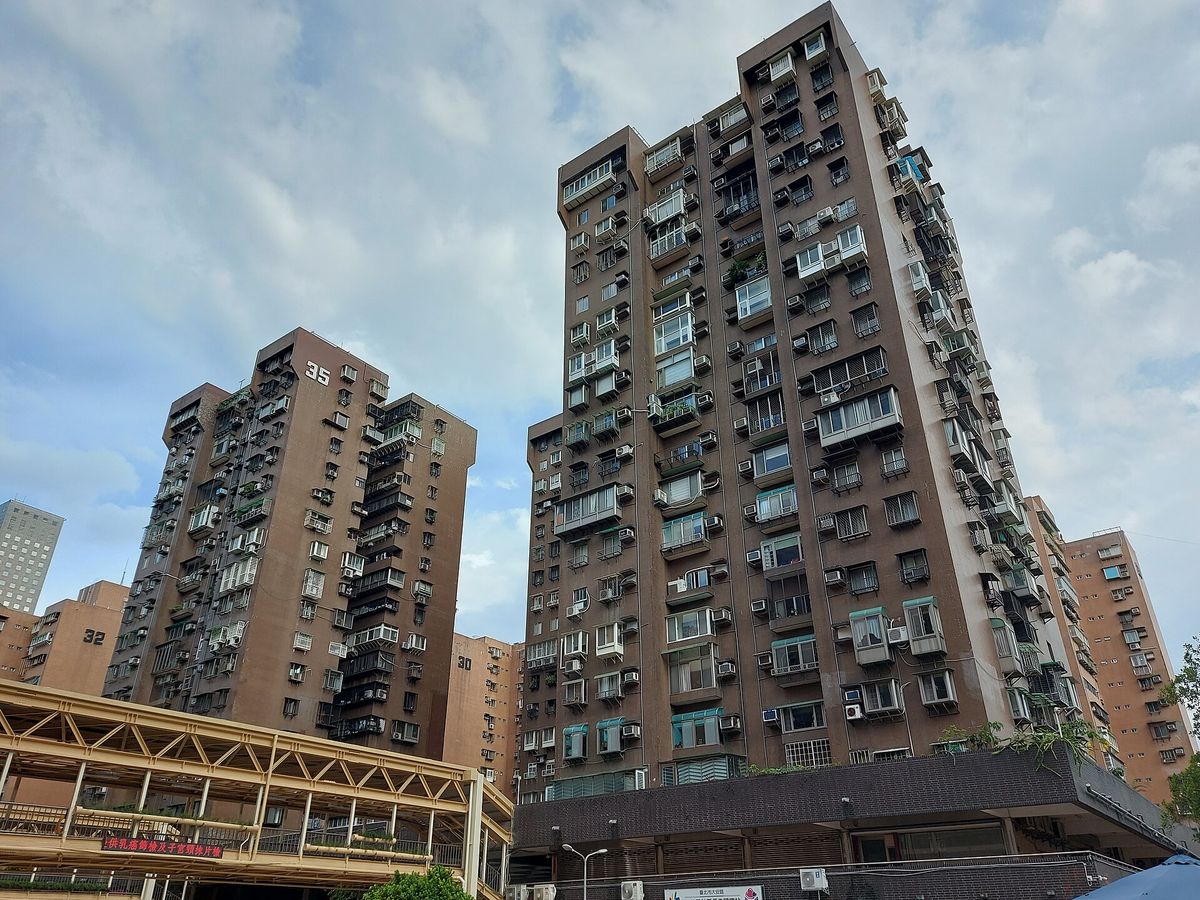
Photo: Johan Jönsson (Julle) via Wikimedia Commons, CC BY-SA 4.0
Is rental discrimination in Taipei legal?
Short answer: it is not clearly allowed, but it is hard to enforce.
Taiwan has no comprehensive fair housing law like the ones in the US or UK. The main rental law, the Rental Housing Market Development and Management Act (租賃住宅市場發展及管理條例, last amended in February 2023), covers deposits, repairs, sub-letting and rental businesses, but says nothing about choosing tenants by nationality. The Ministry of the Interior's amendment plans reported in July 2026 focus on problem tenants and on banning clauses that stop tenants from registering the address or claiming rent subsidies, not on discrimination.
What does exist is Article 62 of the Immigration Act (入出國及移民法): nobody may discriminate against people residing in Taiwan on the basis of nationality, race, skin color, class or place of birth. If you are harmed by it, you can file a written complaint with the National Immigration Agency within one year (since October 2025 a scanned complaint can also be sent by email). If the complaint is upheld, the person is told to correct it, and only if they don't can they be fined NT$5,000 to 30,000 (Article 81).
In practice, a landlord can always say they chose someone else. A complaint only has teeth if you have something in writing, such as a LINE message saying "不租外國人" (we don't rent to foreigners). If you get one and it makes you angry, filing is your right. Just don't expect it to get you that apartment.
What about guarantors? Asking for a guarantor (保證人) is legal in itself. The MOI's own model residential lease (住宅租賃契約書範本) has a signature line for a guarantor and a checkbox for their ID copy. Where it gets shaky is asking only foreigners for one. Forum members who argue Article 62 applies point out you'd need that "because you're a foreigner" in writing.
Guarantor rental in Taiwan: when to agree and when to walk
A 保證人 signs the lease alongside you and becomes liable if you don't pay. For a Taiwanese tenant it is often a parent. For a newcomer, it means asking a colleague or friend to take on real financial risk for you, which is a big favour.
What we'd do:
- If you have a partner, spouse or close friend who is Taiwanese and happy to sign, and the flat is genuinely good, fine. It is a small cost.
- If you'd have to ask your new boss or someone you met last month, don't. Offer stronger proof of income instead (see below).
- If the landlord asks only foreigners for a guarantor and won't accept any alternative, walk. One Forumosa member replied to an agent's guarantor request by saying he'd already shown proof of income and would rent elsewhere if they insisted. The agent backed down and apologised the same day. That happens more often than people expect.
How to present yourself so the answer is yes
The goal is to answer the landlord's fears before they ask. Paperwork for Taiwanese rentals is light; one longtime Forumosa member noted you often won't even be asked for payslips. That is exactly why volunteering a few documents works: it sets you apart.
What to have ready, as photos on your phone
1. Your ARC (or visa and passport if the ARC is still being processed; see renting without an ARC yet)
2. Your employment contract or offer letter, showing the employer and contract length
3. Your last two or three payslips, or a bank statement
4. A Taiwanese phone number and a LINE account in your real name
Money: what you can and can't offer
- Extra deposit is not a legal option. Article 7 of the Rental Housing Act caps the deposit (押金) at two months' rent. Don't offer three months of deposit, and be wary of a landlord who asks.
- Prepaying rent is. Offering to pay three or six months of rent upfront is a different thing from deposit, and it directly answers "foreigners leave early." Only do it after you have checked the person is the real owner, and make sure the prepayment is written into the lease with a receipt.
- Lease length. Offering a full one-year lease instead of asking for six months removes another worry.
If the problem is tax, say early that you don't need to claim the rent deduction. It is often the real reason behind "no foreigners", and it costs many renters nothing. If you do want the deduction, filter for listings that say 含稅 (tax included) instead.
A Chinese LINE message that works
Send this as your first message, in Chinese, even if your Chinese is basic. A landlord who can read your situation in ten seconds is far more likely to reply. Fill in your own details:
您好,我在591看到您大安區的套房,請問還有在出租嗎?
我是美國人,在台北的公司正職上班,有居留證。一個人住,不抽菸,沒有養寵物。
可以提供居留證、工作合約和最近三個月的薪資單給您參考,也可以簽一年約。
請問這週方便看房嗎?謝謝您!
English translation:
Hello, I saw your studio in Da'an on 591. Is it still available?
I'm American, working full-time for a company in Taipei, and I have an ARC. I live alone, don't smoke and have no pets.
I can share my ARC, employment contract and last three months of payslips for your reference, and I'm happy to sign a one-year lease.
Would a viewing this week be possible? Thank you!
And if the reply is "需要保證人" (a guarantor is required), this short answer often works:
我沒有台灣的保證人,但可以提供薪資證明,也可以預付三個月租金。請問這樣可以嗎?
(I don't have a Taiwanese guarantor, but I can show proof of income and prepay three months of rent. Would that work?)
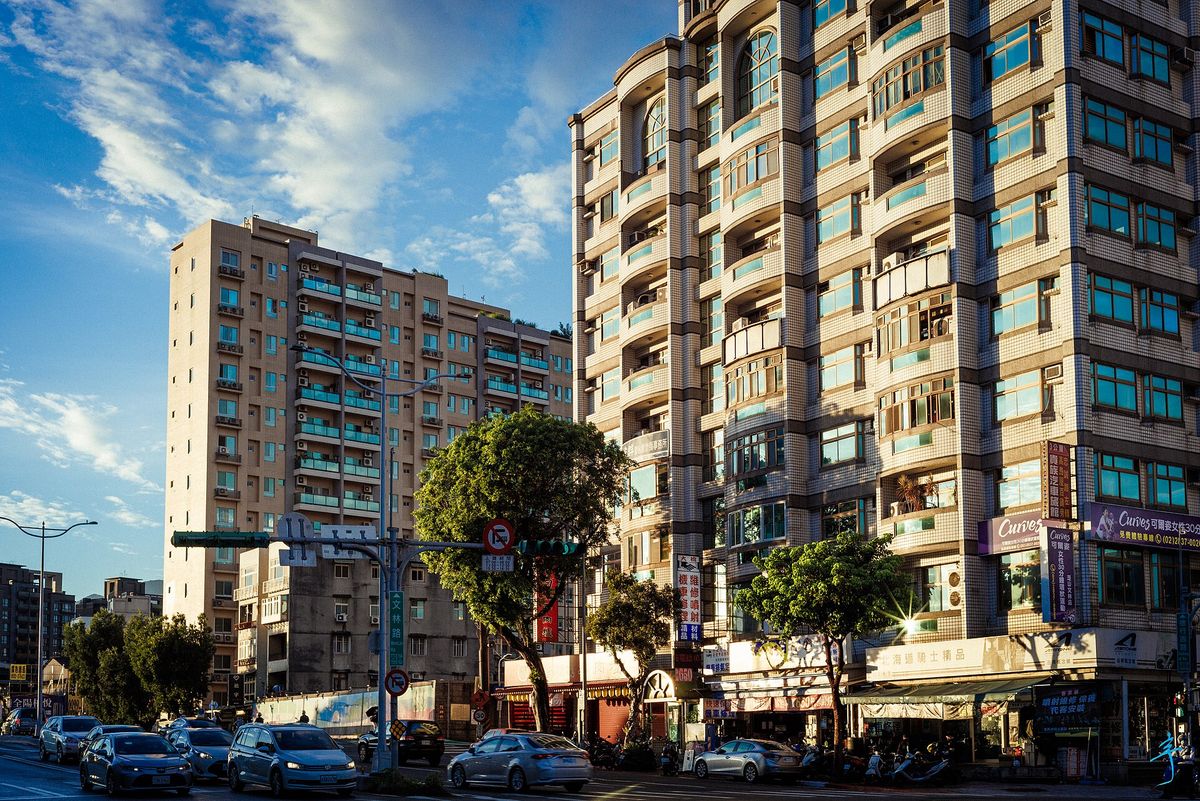
Photo: 迷惘的人生 via Wikimedia Commons, CC BY-SA 2.0
Use a Chinese speaker for the first call
Many older owners only answer the phone and ignore LINE messages from strangers. A friendly call in Chinese from a Taiwanese friend or colleague, explaining who you are and that they will help with communication, removes the language fear in one go. That first call often does more than any document.
If you have no one to ask, don't rely on a 房仲 (real estate agent) alone. They can open doors, but they work for the landlord's side, and a landlord who hesitates about foreigners usually just gets quietly skipped. Our guide on whether you need a Taipei rental agent compares the options.
The shortcut: let TRA handle the landlords for you
Everything above works, but it takes time, Chinese, and a thick skin. This is the part of renting that TRA does every day, and it's the main reason foreigners hire us.
- We screen landlords before you ever see a listing. We call and message owners in Chinese first. The ones who won't rent to foreigners say so to us, quietly, and drop off the list. You only view places where the answer is already yes.
- We introduce you the way landlords want to hear it. A local voice explaining who you are, what you do, how long you plan to stay and that we'll help with communication removes most of the fears in the first section before they come up.
- We view with you and negotiate on the spot. Guarantor requests, deposit, rent, repairs, the electricity rate: we handle the conversation in Chinese while you're standing in the apartment.
- We go through the contract with you before you sign, clause by clause, so nothing like a no-registration or "rent excludes tax" surprise slips through, then help you finish the deposit and signing right away.
Once the in-person search starts, most clients find their place within 3 to 5 days, and almost always within 1 to 2 weeks. Fees are a deposit when we start and the balance once you've found your home; we quote individually. See how our service works, or tell us what you're looking for.
Finding a foreigner friendly landlord in Taipei
Rather than fighting refusals one by one, start where yes is the default:
- Rental management companies (代管 / 包租). Licensed companies run units like a business, with standard contracts and staff whose job is to fill vacancies. Complete paperwork tends to matter more to them than nationality.
- Newer elevator buildings with a management office. Owners here are more often investors who care about steady rent, not who you are.
- Listings written in English. If an ad on 591 or Facebook includes English, the owner has already decided foreigners are fine. Our 591 guide shows how to search it.
- University-linked platforms. NCCU's international office, for example, points students to the Tsuei Ma Ma Foundation's rental platform (rent.tmm.org.tw), International House of Taipei and My Room Abroad.
Our pick: message 10 to 15 listings at once with the Chinese template above, skip anyone who goes silent or wants a guarantor only from you, and put your energy into the three or four who reply warmly. A landlord who is nervous about you before signing will usually be difficult after signing too. The goal is not to convince every landlord in Taipei. It is to find one good one, and they exist in every district. If you're short on time, don't speak Chinese, or have already been turned down a few times, skip the trial and error: let us do the calling.