
Trash Pickup in a Taipei Apartment: The Question to Ask Before You Sign
By Raytio Ray
Taipei apartment trash pickup can shape your whole evening routine. Here's how the three setups compare, what to ask the landlord, and how to check online.
Taipei apartment trash pickup is the question almost nobody asks before signing, and it decides what your evenings look like for the whole lease. Taipei has no dumpsters and no curbside bins. In most apartments you carry your bags down to a truck that stops on the street at a fixed time, usually in the evening, five days a week. If that time is 7:15 pm and you get home at 8, you have a problem every week for a year.
The good news is that you can check this before you sign, even from abroad. There are three common setups, they suit very different lifestyles, and our free Garbage Truck Tracker shows the truck times around any address in Taipei and New Taipei in English. Here's how to make trash part of your apartment decision instead of a surprise in week one.
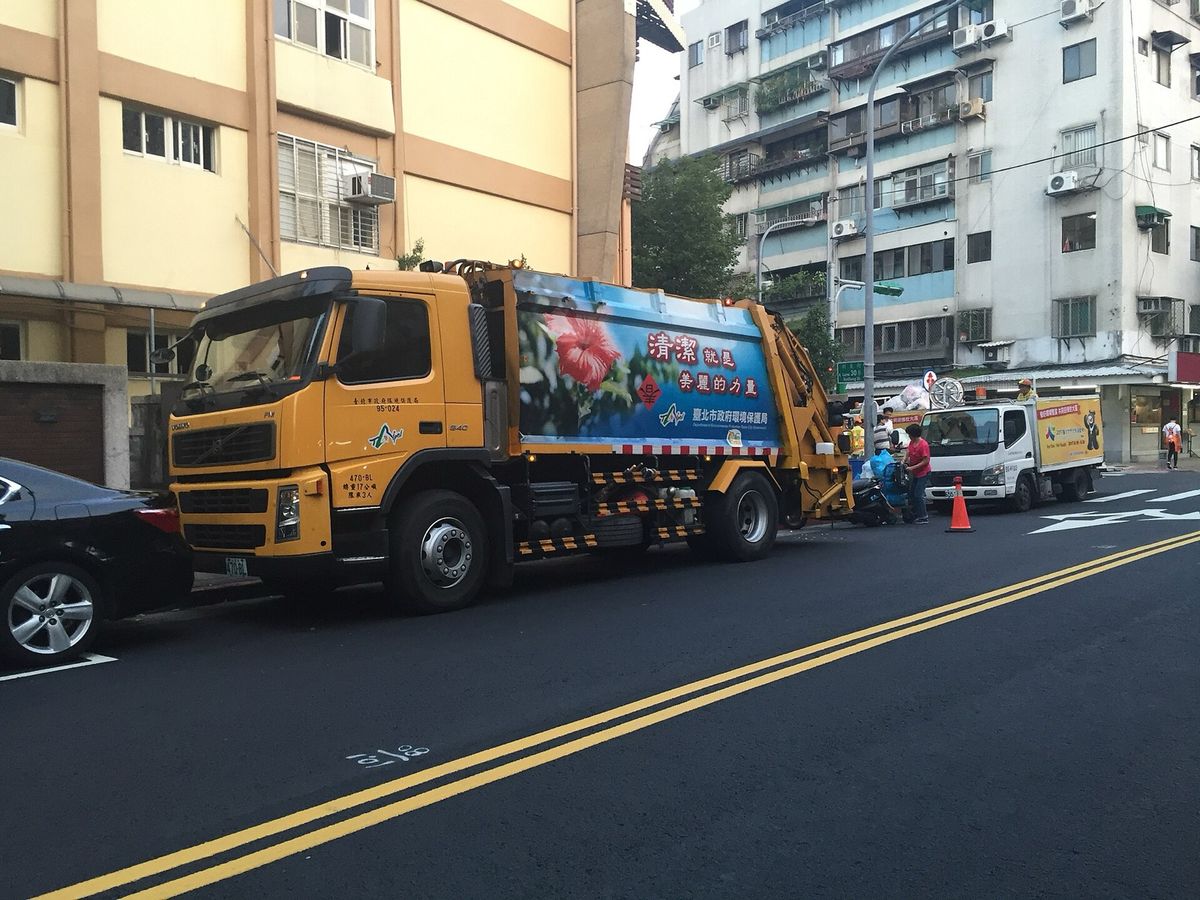
Photo: 玄史生 via Wikimedia Commons, CC0
Why trash belongs on your apartment checklist
Taipei runs a "trash doesn't touch the ground" system (垃圾不落地). There is no bin room in the street and no leaving bags out overnight. Trucks collect on Monday, Tuesday, Thursday, Friday and Saturday, with no collection on Wednesday or Sunday. Each stop has a fixed time. A recycling truck follows right behind, and food scraps go in a bin on the back.
We went through Taipei's open data timetable of 4,012 stops: about 95% are served between 4 pm and 10 pm, and roughly six in ten at 7 pm or later. New Taipei's 26,574 stops are more spread out, with about half in the evening, a third in the early afternoon and some in the morning.
That's fine if you're home most evenings. It's a weekly headache if you:
- work late, work shifts or commute more than an hour each way,
- travel often for work,
- cook a lot (food scraps can't wait a weekend in August),
- or live alone with no one to take the bag down when you can't.
And the cost of getting it wrong is real. Leaving trash on the street breaks the Waste Disposal Act, and since a July 2026 amendment Article 50 allows fines from NT$1,200 up to NT$100,000. Nobody gets the maximum for one bag, but "I'll just leave it by the door downstairs" is not an option.
What trash actually takes, in time and money
Before you decide how much to pay to avoid the truck, it helps to know what the routine costs if you don't.
Money. You don't pay a separate trash bill. The city fee is built into the official trash bags you buy at any convenience store: both Taipei and New Taipei charge NT$0.36 per liter of bag, so a 25-liter bag works out to about NT$9, and the two cities' bags are accepted on each other's trucks. A single person who recycles properly usually fills one or two small bags a week. Recycling is free and goes in any clear bag. That's the whole cost of the street truck option.
Time. This is the real cost. On a collection night you need to be home, with trash, recycling and food scraps already sorted, ten minutes before the truck. Waiting at the stop is part of the routine; trucks can arrive a few minutes early and stay less than a minute. Budget 15 minutes, three to five evenings a week, at a time the city chose for you.
Food scraps. These are the part that can't wait. Since January 2026, Taipei takes raw and cooked food waste together in the blue bin on the back of the truck, which made sorting easier, but a Saturday night miss still means keeping scraps until Monday. In summer that means the freezer.
Bulky items. Furniture and mattresses don't go on the regular truck at all. You book a free or low-cost bulky pickup with the city through the 1999 hotline, in Chinese, which is worth knowing before you buy that second-hand sofa.
None of this is hard once you're settled. It's just a fixed appointment, several evenings a week, and you should know whether you can keep it before you choose where to live.
The three setups you'll find in Taipei rentals
1. Street truck only. Most older walk-ups (公寓) and many small buildings have no trash arrangement at all. You follow the truck schedule like everyone else. Cheapest rent, no extra fee, and full dependence on being home at the right time.
2. A building trash room. Many elevator buildings (華廈 and 大樓) with a management office have a trash room or a set of bins in the basement or by the parking entrance. Building staff sort it and hand it to the city. Often you can use it any time of day; some buildings limit it to certain hours. You pay for it through the monthly management fee (管理費), which our guide to costs beyond rent breaks down.
3. A private pickup service. Some landlords, especially those renting suites to students and young professionals, include a door-to-door trash service in the rent: you leave sorted bags outside your door on set nights and a hired cleaner takes them. Others leave it to you to arrange. Check whether it's actually in the contract, because a "we have trash service" that lives only in the landlord's mouth can disappear after month two.
Which setup we'd pick, by lifestyle
This is our honest recommendation after viewing a lot of Taipei apartments with clients:
- You work late or travel often: a building with a trash room, full stop. It's worth a few thousand more a month in rent and management fee. It's the single feature that takes the truck out of your life, and you will use it more often than the gym on the rooftop.
- You're home most evenings and on a budget: a walk-up is fine, as long as there's a stop within a few minutes' walk at a time you're home. Check it before you sign (below), and treat a stop at 4:30 pm as a real drawback if you work office hours.
- You're renting a suite in a shared building: ask whether trash is included, and get it written into the contract or at least confirmed in a LINE message. It's common in suites aimed at students and costs the landlord little.
How building type affects everything else, from stairs to heat to fees, is in our walk-up vs elevator building guide.
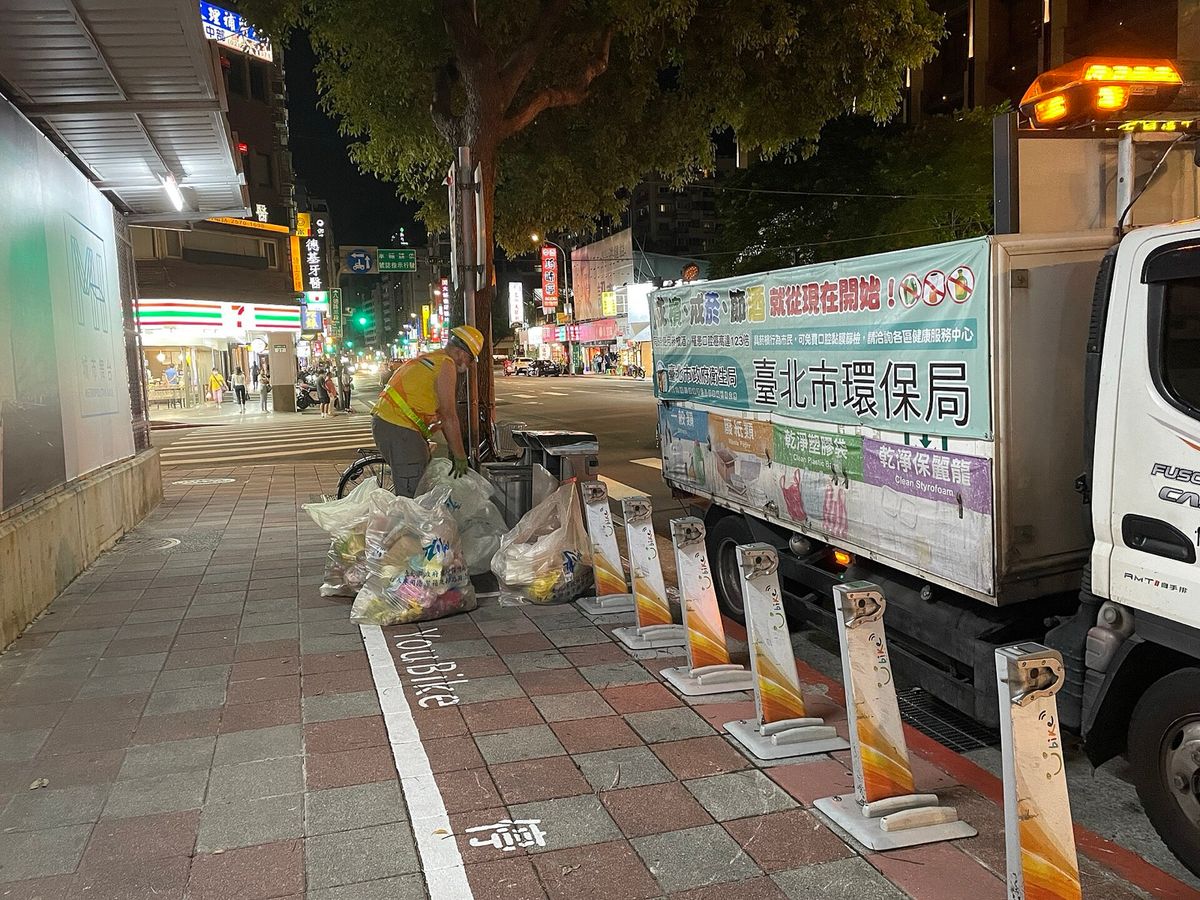
Photo: ThomasYehYeh via Wikimedia Commons, CC BY-SA 4.0
How to check the garbage truck time before renting
You can do this from your laptop in two minutes, before you even book a viewing:
1. Get the address. Most listings on 591 show at least the street and lane. Our guide to reading a Taiwanese rental listing shows where to find it.
2. Search it in the [Garbage Truck Tracker](/garbage-truck). Type the street in English or paste the Chinese address, or search a nearby MRT station. You'll see every stop within 500 m, the arrival time, and the walking distance.
3. Switch the sort to "Nearest" and look at the closest two or three stops. Ask yourself: am I home at that time on a normal Monday?
4. Note the days. Taipei stops all follow the same five days. In New Taipei, the tracker shows each stop's trash, recycling and food scrap days, which can differ.
If every stop nearby is at 5 pm and you work in an office until 6, either the building needs a trash room or that apartment needs to be cheap enough to justify paying for pickup.
What to ask the landlord or agent
Add these to the questions you already plan to ask (our 5 questions to ask before you sign covers the rest):
- "Does the building have a trash room, and what are its hours?" (大樓有垃圾集中處理嗎?幾點可以丟?)
- "Is the trash room included in the management fee, and how much is the fee?"
- "If there's no trash room, where and what time does the truck stop?"
- "Is there a private trash pickup service, and is it in the contract?"
- "Who handles recycling and food scraps?" Some trash rooms take general trash only.
At the viewing itself, ask to see the trash room. A clean, organized one says a lot about how the building is managed; a smelly corner with overflowing bags says the opposite, and you'll get the cockroaches that come with it. Our first viewing checklist lists what else to look at while you're there.
Let TRA check it for you
This is exactly the kind of thing that's easy to miss when you're viewing apartments in a second language, so it's built into how we work. When you search with TRA:
- We ask the landlord about trash before the viewing, in Chinese, along with the other questions newcomers don't know to ask: management fee, what it covers, trash room hours and whether pickup is included.
- We check the truck stops and times around every shortlisted apartment, and flag the ones that won't fit your working hours.
- We look at the trash room in person during the viewing, and if you're renting from abroad, we show it to you on the video call.
- We get it in writing. If a landlord promises pickup or trash room access, we make sure it's in the contract or confirmed in writing before you sign.
See how our home search works or tell us what you're looking for. Already moved in and can't make the truck? Our sister team at TRA Live runs a garbage and recycling pickup service in selected districts of Taipei and New Taipei.
FAQ
Do Taipei apartments have garbage rooms?
Some do. Elevator buildings with a management office often have a trash room or bins you can use any time; older walk-ups usually don't, so tenants use the street truck. Always ask, and ask to see it.
What time does the garbage truck come in Taipei?
Each stop has its own fixed time. Most Taipei stops are served between 4 pm and 10 pm, five days a week, never on Wednesday or Sunday. Look up any address in our Garbage Truck Tracker.
I work late. Can I still rent a walk-up?
Yes, if there's a late stop nearby or you arrange a pickup service. Many Taipei stops are at 9 pm or later. Check the times for the exact address before you commit.
Is trash collection included in the rent?
City collection itself is paid through the official trash bags you buy. A building trash room is paid through the management fee, and private pickup is only included if the landlord says so in writing.
Can I leave my trash outside if I miss the truck?
No. Leaving bags on the street can be fined under Article 50 of the Waste Disposal Act. Keep it sealed inside until the next truck, or use your building's trash room if it has one.