
Gas Water Heaters in Taipei Apartments: How to Spot Carbon Monoxide Risk at a Viewing
By Raytio Ray
Gas water heater Taiwan apartment guide: heater types, enclosed balconies, CO poisoning signs, bottled vs natural gas, and what to walk away from at a viewing.
Most older Taipei flats heat their shower water with gas, and the gas water heater in a Taiwan apartment is the one piece of equipment that can actually kill you. Every winter the local news runs the same story: a family closes the windows against the cold, takes hot showers, and wakes up dizzy, or doesn't wake up at all. The cause is almost always the same, and you can spot it in two minutes at a viewing. Here's what to look at, what to ask, and what we'd walk away from. If you're renting with TRA, we do this check with you at every viewing.
Why the gas water heater in a Taiwan apartment matters so much
A gas heater burns gas to heat water. If there isn't enough fresh air, it burns incompletely and produces carbon monoxide (一氧化碳), a gas with no smell or color. You won't notice it building up.
Taiwan's National Fire Agency (消防署) says the pattern is very seasonal: of the gas water heater CO poisoning cases from 2020 to 2024, about 79.5% happened in December, January and February, when people shut their windows. Fire departments repeat the same diagnosis every year: the large majority of cases involve an outdoor-type heater installed indoors or on a balcony that has been closed in.
So the question at a viewing isn't "is there hot water?" It's "where is the heater, what type is it, and where does its exhaust go?"
The four heater types, and the one rule that matters
Every gas water heater sold in Taiwan falls into one of these types. The type is printed on the label on the front or side.
- Type: RF, outdoor type | Chinese: 屋外式 | How it breathes: Takes air from and vents into the open air around it | Where it can go: Outside only: an exterior wall or a genuinely open balcony
- Type: FE, forced exhaust | Chinese: 半密閉強制排氣式 | How it breathes: Takes air from the room, fan pushes exhaust out through a pipe | Where it can go: Indoors, as long as the exhaust pipe leads outside
- Type: FF, sealed forced intake and exhaust | Chinese: 全密閉強制供排氣式 | How it breathes: Pulls air from outside and vents outside through pipes | Where it can go: Indoors; safest option
- Type: CF, natural exhaust | Chinese: 半密閉自然排氣式 | How it breathes: Relies on a chimney draft | Where it can go: Banned for sale since 2011, but old ones still exist
The rule: an RF (屋外式) heater must have open air around it. If it sits in a laundry room, a kitchen, a bathroom, or a balcony that has windows all around, it is installed wrong. That single mistake is behind most of the deaths.
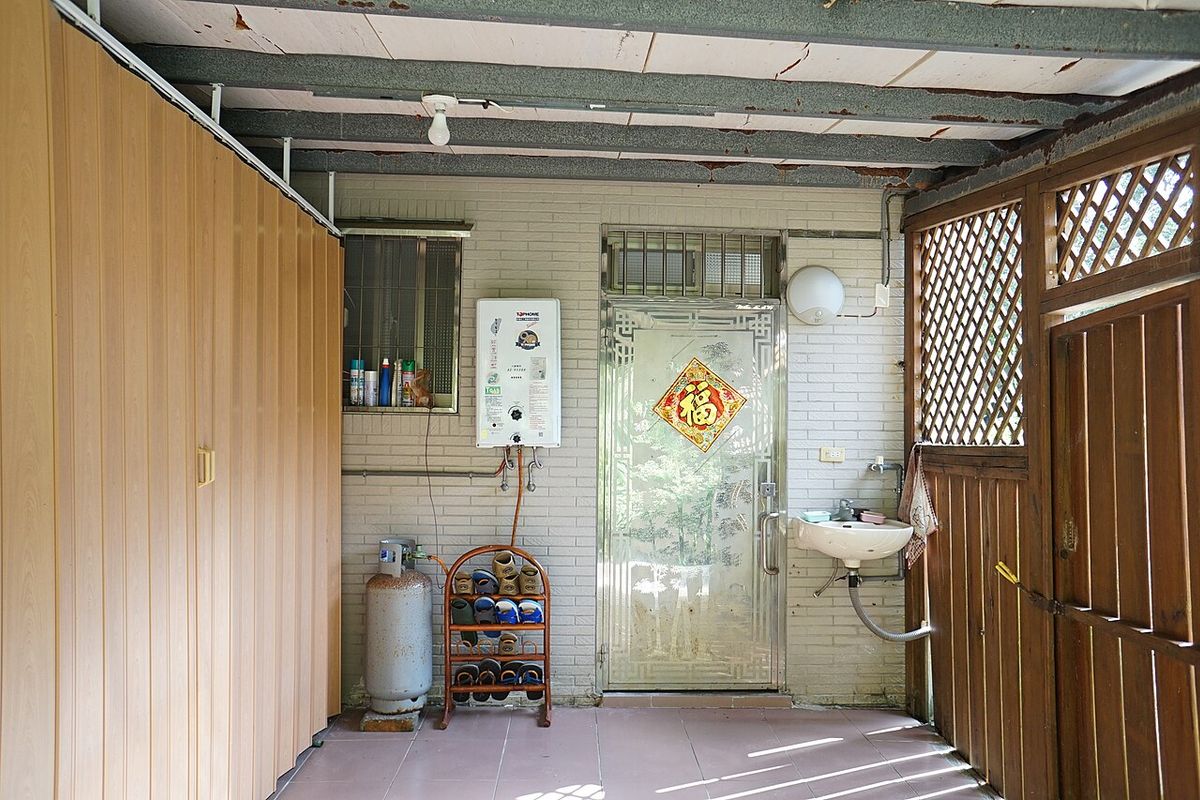
Photo: Solomon203 via Wikimedia Commons, CC BY-SA 4.0
The 陽台外推 problem: balconies that stopped being outside
Taipei has a habit called 陽台外推: the owner closes in the balcony with windows or aluminum panels to gain floor space or a laundry room. The heater was originally installed on an open balcony, which was fine. Then the balcony got walls. Now the same RF heater is effectively indoors.
Add winter, a rack of drying laundry in front of the window, and a shower that runs for 20 minutes, and you have the classic accident. Fire departments also warn that a balcony with only a small gap left open is not "ventilated", and that a window air conditioner nearby can pull exhaust back into the flat.
This overlaps with illegal additions in general. If the whole unit is a partitioned suite or rooftop add-on, read our guide to rooftop additions and subdivided units, because those are where improvised heater setups are most common.
What to check at a viewing
Bring this list with the rest of your first viewing checklist. It takes two minutes.
1. Find the heater. Ask "熱水器在哪裡?" (where's the water heater?). If the agent hesitates or says "it's electric" and you see a gas pipe, look anyway.
2. Read the type label. Look for 屋外式 / RF, or 強制排氣 / FE / FF. Photograph it.
3. Check where it sits. RF on an exterior wall or open balcony: fine. RF in a bathroom, kitchen, laundry room or windowed balcony: not fine.
4. Follow the exhaust pipe. On an FE or FF heater, the metal pipe must run all the way through a wall or window to the outside. A pipe that ends inside the room, is disconnected, or has been taped together is a fail.
5. Look for the safety marks. A certified heater carries a national standard mark (CNS) and the TGAS gas appliance mark from the industry association. No labels at all on a very old unit is a bad sign.
6. Check the window situation. Can the balcony windows stay open in winter? Is there laundry hanging in front of the heater? Are there louvers or vents?
7. Ask about the gas source. Natural gas (天然氣, piped in) or bottled gas (桶裝瓦斯)?
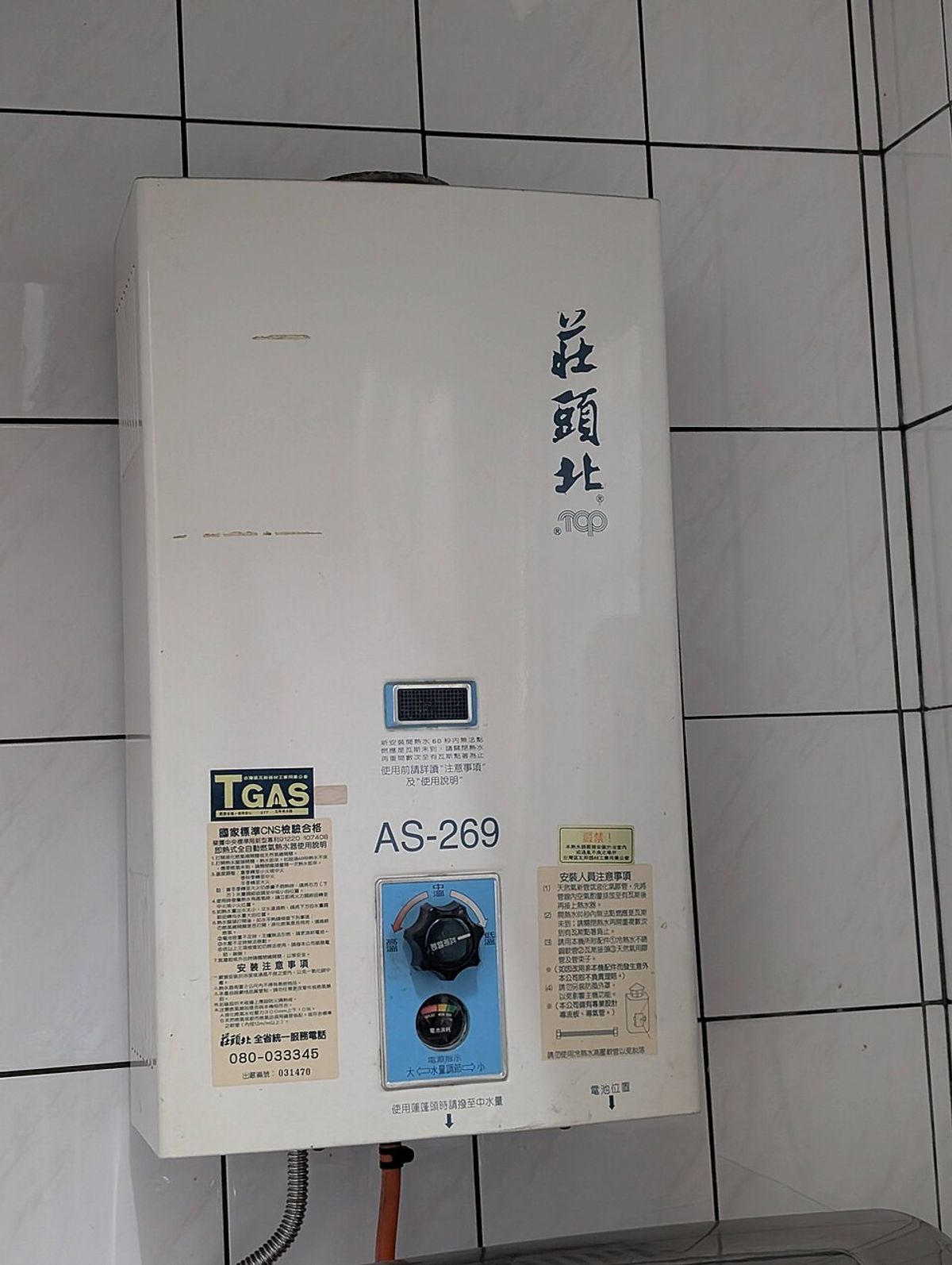
Photo: Honmingjun via Wikimedia Commons, CC BY-SA 4.0
Bottled gas vs natural gas
Both produce carbon monoxide if burned without enough air, so the heater placement rule above is the same either way. The differences are practical.
Natural gas (天然氣). Piped from the city supplier, billed every two months, and you never think about it. Most newer and mid-age buildings in Taipei have it.
Bottled gas (桶裝瓦斯). A steel cylinder delivered by a local gas shop (瓦斯行), usually by scooter. You call when it runs out, often mid-shower. It's common in older walk-ups and rooftop units without a gas line. Two safety points:
- Each cylinder has an inspection tag showing the next inspection deadline. Fire authorities say not to accept a cylinder past that date, with the tag removed or altered, without the gas shop's name and phone, or rusted so badly it won't stand upright. You can report those to 119.
- The cylinder should stand outside or in a well-ventilated spot, upright, away from heat.
Bottled gas isn't a dealbreaker, but it adds a chore, and units that rely on it tend to be in older buildings, where improvised installations are more common. Look harder.
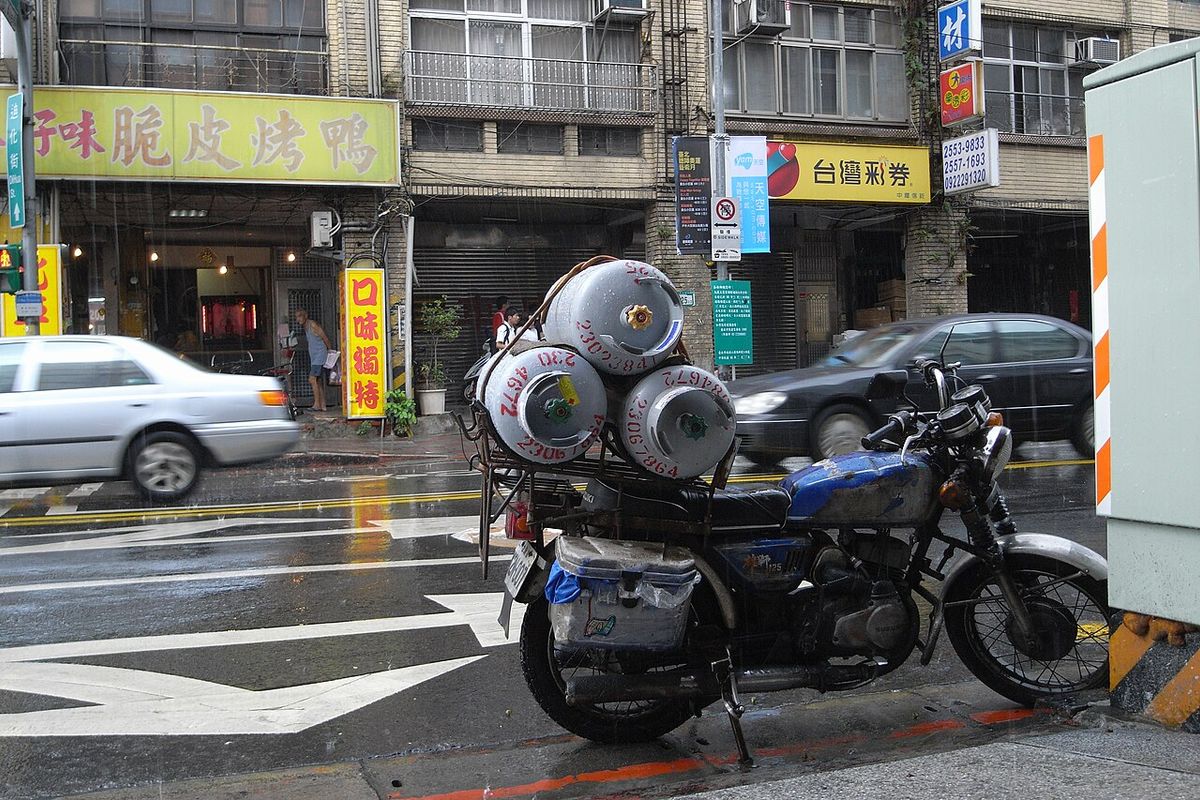
Photo: Yukiko Yamamoto via Wikimedia Commons, CC BY 2.0
Electric storage heaters: the boring, safe alternative
Many suites (套房) use an electric storage heater (電熱水器, a tank, usually in or above the bathroom). No combustion means no carbon monoxide.
The trade-offs: the tank takes time to heat, a small tank runs out if two people shower back to back, and it adds to your electricity bill, which matters if your landlord charges a per-kWh rate above Taipower's. Ask how big the tank is and how electricity is billed.
Our view: for a single person or couple in a small flat, an electric storage heater is a perfectly good setup and removes the CO question entirely. We'd take it over a badly placed gas heater every time.
Who pays to fix or replace an unsafe heater
The landlord. Under Taiwan's Civil Code (Article 429), repairs to a rented property are the landlord's responsibility unless the contract says otherwise, and if the landlord refuses after you've asked, Article 430 lets you arrange the repair and deduct the cost from rent. A heater that is installed in a way that can poison you is not a "tenant maintenance" item.
Cities also help landlords pay for it. In 2026, the Taipei City Fire Department runs a subsidy for relocating or replacing gas water heaters: firefighters visit, assess whether there's a real CO risk, and if so the household can get up to NT$3,000 (more for low-income households) toward moving or replacing the heater, installed by a qualified technician. Places are limited and each address can only use it once. You apply through your local fire station (消防分隊) by phone or in person.
Practically, the owner is the one who buys and installs the new heater, so push the landlord to apply. If you're unsure whether your setup is dangerous, ask the local fire station; they treat this as a core part of their prevention work.
If you're still choosing a place, make the heater one of your questions to ask a landlord before you sign, and get any promised fix written into the lease with a date.
Using a gas heater safely in winter
If your heater is correctly installed, a few habits keep it that way:
- Keep the balcony or laundry-area window open while the heater is running, even when it's cold.
- Don't hang laundry or stack boxes in front of the heater or its vent.
- Run the bathroom fan during showers.
- Take showers one after another with a break in between rather than a long continuous run.
- If the flame looks yellow or orange, or the unit has scorch marks or soot, stop using it and tell the landlord.
CO poisoning symptoms and what to do
Taiwanese fire departments list the early signs as headache, dizziness, nausea, vomiting, fast breathing or heartbeat, and weak limbs. They feel like flu or tiredness, which is what makes CO dangerous. A clue: everyone in the flat feels it at the same time, and it improves when you go outside.
If you suspect CO:
1. Turn off the heater and gas valve.
2. Open windows and doors.
3. Get everyone out, including pets.
4. Call 119 (fire and ambulance). Don't switch lights or appliances on or off if you also smell gas.
For a broader list of Taiwan emergency numbers, see our sister site's guide to what to do if something goes wrong in Taiwan.
Let TRA check it for you at the viewing
Most foreigners don't know what an RF or FE label means, and asking a landlord "is this heater safe?" in English rarely gets a straight answer. When we view apartments with clients, the water heater is on our checklist:
- We look at where it is and what type it is (RF, FE or FF), and whether the balcony has been closed in.
- We ask the landlord in Chinese how old it is, whether it's on bottled or natural gas, and whether they'll replace it if it's in the wrong place.
- If it needs fixing, we get it into the lease as a written condition before you sign, not a verbal promise.
- If the landlord refuses, we tell you plainly to walk, and move on to the next listing on the list.
It's one of many small things we check while you focus on whether you like the place. See how our home search works, or tell us what you're looking for.
Our pick: buy a CO alarm, and know what to walk away from
Taiwan requires smoke alarms in homes, but a carbon monoxide alarm is not standard in rentals. Buy one. A plug-in or battery CO detector for a Taipei apartment is cheap compared with the risk, and it's the only way to know about a problem you can't smell. Put it near the bedrooms and in the room closest to the heater, test it monthly, and take it with you when you move.
What we'd walk away from, or refuse to sign until fixed:
- An RF (屋外式) heater inside a bathroom, kitchen or closed-in balcony
- An FE or FF heater with no exhaust pipe to the outside, or a broken one
- A landlord who brushes off the question or says "everyone does it like this"
- Bottled gas cylinders stored indoors in a closed room
What we'd happily accept: a correctly placed RF heater on an open balcony, an FE or FF heater with its pipe running outside, or an electric storage heater. Combined with a CO alarm, any of those is a setup you can stop worrying about.