
Finding a Modern, Western-Style Apartment in Taipei: What It Costs and Where to Look
By Raytio Ray
Modern apartment Taipei guide for 2026: what 'Western-style' means here, what newer elevator buildings cost, where to search and how to filter 591.
If you're looking for a modern apartment, Taipei has them: newer elevator buildings with a proper kitchen, a separate shower, a washer you don't share and decent soundproofing. But they are a minority of what's listed, and they cost a clear premium. Taipei's housing is old: homes sold in the city in late 2025 averaged 37 years of age, the oldest of Taiwan's six big cities (UDN, June 2026). That is why so many newcomers say Taipei apartments are "awful". They are looking at the average listing.
Our short answer: budget roughly NT$30,000 to NT$45,000 a month for a modern one-bedroom in a central district, or NT$25,000 to NT$35,000 if you're willing to live in Neihu, Nangang, Dazhi or New Taipei's newer districts. Below is what "Western-style" means here, what pushes the price up, where newer buildings are concentrated, and how to find them without reading Chinese.
What a modern apartment in Taipei usually means
When foreigners ask for a "Western-style" or modern apartment, they usually mean a list like this. Some items are easy to find; others are rare in any building.
- Elevator building (電梯大樓) with a doorman or management desk. Common in newer buildings, rare in older walk-ups. The management desk also accepts your parcels.
- Building age under about 20 years. Look for 屋齡 (building age) on the listing.
- A real kitchen with a full-size fridge and gas or induction cooktop. Ovens are rare; most people buy a countertop oven.
- Separate shower area. Many older bathrooms are "wet rooms" with no shower enclosure. Newer buildings usually separate them.
- Your own washing machine, ideally a washer-dryer. Shared rooftop machines are common in older buildings. Dryers are still unusual; many people rely on a dehumidifier and an indoor rack.
- Inverter air conditioners in every room. Cheaper to run and quieter than old window units.
- Double glazing and decent walls, which matter on busy roads.
Decide which of these are must-haves before you search. Each one you insist on shrinks the pool and raises the price, and a few (a dryer, an oven, a bathtub) are cheaper to add yourself than to rent.
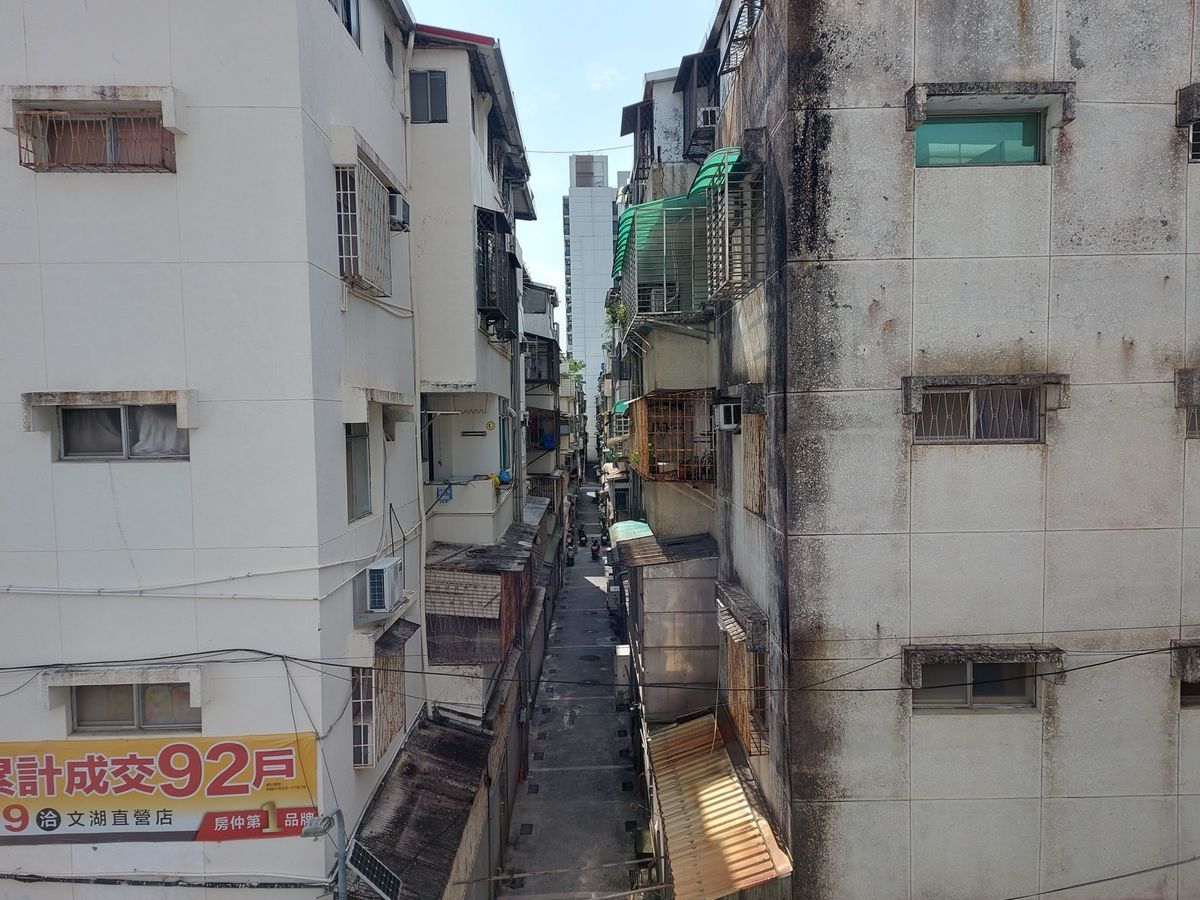
Photo: Johan Jönsson (Julle) via Wikimedia Commons, CC BY-SA 4.0
Modern apartment Taipei prices in 2026
The Ministry of the Interior's first-half 2026 rent statistics added building age and building type for the first time, and the pattern is clear. Newly built homes rent for more than 20% above middle-aged ones, middle-aged ones for 10% to 20% above old ones, and elevator buildings for about 20% more than walk-up apartments (ETtoday, August 2026). Stack those together and a new elevator building can easily cost half again as much as an old walk-up of the same size on the same street.
For a sense of the overall market, crowdsourced Numbeo data puts an average city-center one-bedroom at about NT$32,250 a month in October 2026, and a three-bedroom at about NT$49,500. Taiwan's biggest rental site, 591, publishes median asking rents from the last three months of listings across all building ages: in October 2026 a one-bedroom had a median of NT$35,000 in Da'an, NT$34,000 in Xinyi and NT$32,000 in Songshan, against NT$26,800 in Neihu, NT$30,000 in Nangang and NT$22,000 in Banqiao (591 rent market data). Newer elevator buildings sit above those medians. Our rough estimates for them:
- Type: Modern studio | Central districts (Da'an, Xinyi, Zhongshan, Songshan): NT$20,000 to 28,000 | Neihu, Nangang, Dazhi, New Taipei new districts: NT$14,000 to 20,000
- Type: Modern one-bedroom | Central districts (Da'an, Xinyi, Zhongshan, Songshan): NT$30,000 to 45,000 | Neihu, Nangang, Dazhi, New Taipei new districts: NT$25,000 to 35,000
- Type: Modern two or three bedrooms | Central districts (Da'an, Xinyi, Zhongshan, Songshan): NT$50,000 to 90,000 | Neihu, Nangang, Dazhi, New Taipei new districts: NT$35,000 to 55,000
- Type: Serviced apartment, one-bedroom | Central districts (Da'an, Xinyi, Zhongshan, Songshan): NT$50,000 and up | Neihu, Nangang, Dazhi, New Taipei new districts: Rare
These are estimates, not an official average, and they move with floor, view, parking and furniture. Add a monthly management fee (管理費), which in newer buildings is often charged separately; our hidden costs guide explains it. Our Taipei rent guide by area shows how ordinary units compare.
Where to look for newer buildings
Newer buildings cluster where land was redeveloped in the last 25 years. Our picks by priority:
- Neihu (內湖). The youngest housing stock in Taipei city, though even here the average sold home was about 31 years old in late 2025. Good if you work in Neihu Technology Park, and the Brown Line takes you into the city.
- Dazhi (大直), in Zhongshan District. Quiet riverside towers between the city and Neihu, popular with families and couples. Our Zhongshan guide covers it.
- Nangang (南港). Lots of new construction around the Nangang station hub, with the MRT, Taiwan Railway and High Speed Rail all in one place.
- Xinyi (信義). The newest and most expensive towers around Taipei 101. Great if you work there and the budget is no issue.
- Da'an (大安). Mostly older buildings, with some modern ones scattered through it. Expect to pay the top of the range for a new building near Daan Park.
- New Taipei new districts: Banqiao's Xinban special district (新板特區), Xinzhuang's new center and Linkou. Newer, bigger and cheaper, with a longer commute. Our best area to live in Taipei guide compares commutes.
Our pick for most people who want modern: Dazhi or the Neihu stations closest to the city if you work in the north or east, and Banqiao's new district if you work on the west side or need to stretch your budget.
How to search when you don't read Chinese
591 is still where most of these apartments are listed. Use its filters for 電梯 (elevator), 屋齡 (building age, start with the newest brackets) and 可開伙 (cooking allowed), and sort by the newest listings. Our guide to 591 in English walks through the site, and how to read a Taiwanese rental listing explains the terms.
Watch for three traps. First, photos of a new lobby don't mean the unit is new: some old buildings were renovated inside, others only in the lobby. Ask for the building's age. Second, "furnished" can mean anything from a full designer setup to a bed and a wardrobe; see furnished vs unfurnished. Third, a cheap "new" studio in an older building is often a subdivided unit with a sub-metered electricity rate. Our guide to rooftop additions and subdivided units shows the warning signs.
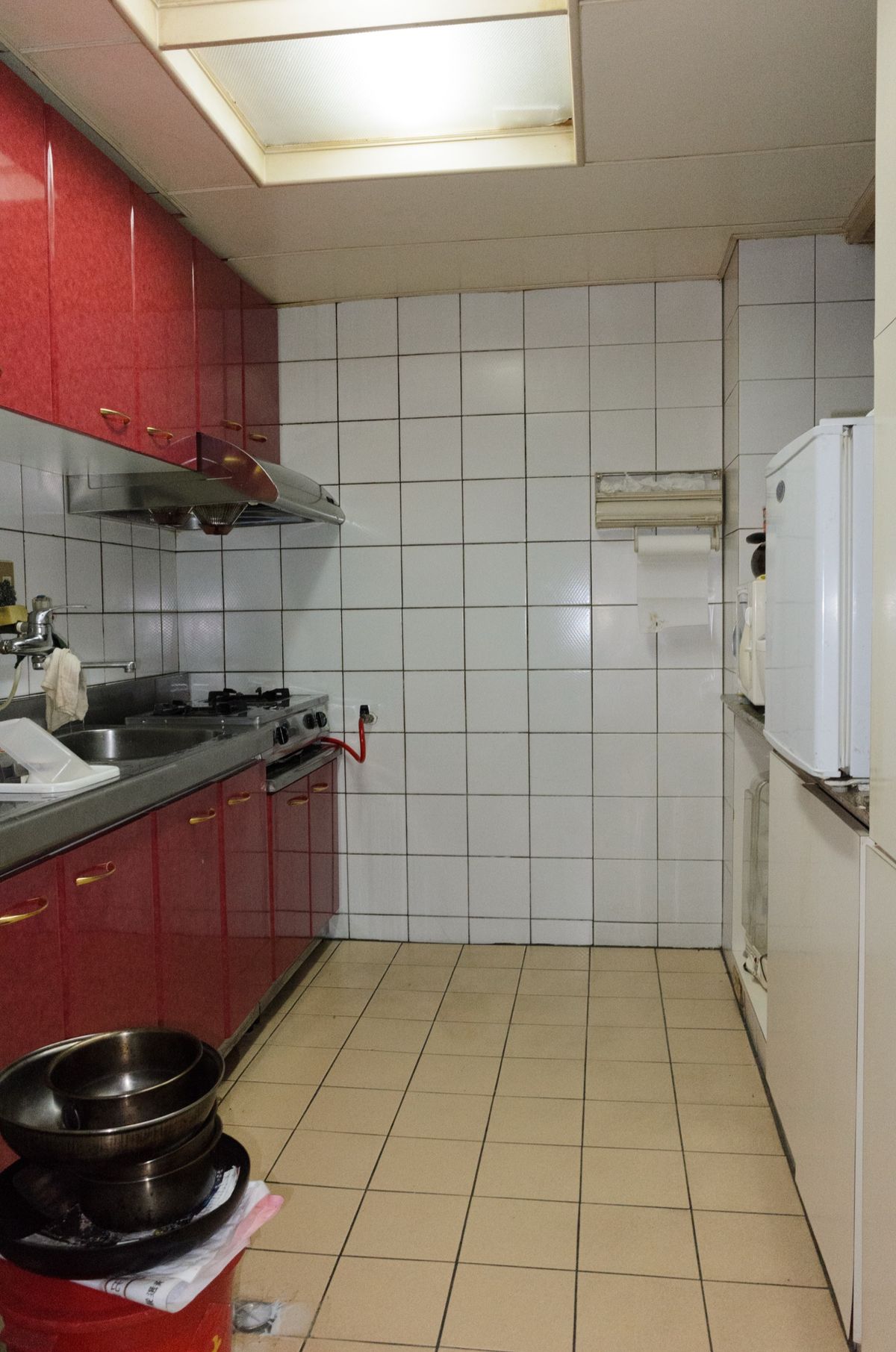
Photo: 玄史生 via Wikimedia Commons, CC0
The kitchen above, in an older Songshan apartment, is typical of what an average listing looks like. It's clean and functional, and it's what most of Taipei cooks in. If it's not what you want, building age is the filter that matters most.
What to check when you view a newer building
A new lobby can hide an ordinary apartment, so check the unit itself, not just the building:
- Building age on paper. Ask for the completion year (建築完成日期) or look at the building's ownership record. "Recently renovated" and "new building" are not the same thing.
- Water heater and ventilation. Newer buildings usually have electric or properly vented gas heaters, but enclosed balconies can still be a carbon monoxide risk. Our gas water heater guide shows what to look for.
- Mold and leaks. Even new buildings get condensation on north-facing walls. Check closets, window frames and the ceiling around the air conditioner. Our mold and leak checklist covers it.
- Noise. Visit once in the evening. A modern tower on a main road can be louder than an old walk-up in a quiet lane.
- The management fee and what it covers. Ask whether it includes trash collection, parcel handling, the gym or pool, and whether it is included in the rent.
The trade-offs nobody mentions
- Modern is not always better located. The most convenient old lanes near major MRT stations are full of 30 to 50 year old walk-ups. You may have to choose between a new building and a two-minute walk to the station.
- Management rules. Newer buildings often have stricter rules on moving hours, renovation noise, pets and parcel pickup. Read them before you sign.
- Landlord expectations. Owners of new units are often more careful about who they rent to, and may ask for proof of income. Have an employment letter or bank statement ready. Our guide to what happens when a landlord won't rent to foreigners helps here.
- A renovated older unit can be the sweet spot. A well-renovated apartment in a 25 to 35 year old elevator building often gives you most of the modern list at a lower price than a new tower.
How TRA finds a modern apartment for you
Finding a newer apartment in Taipei is exactly the kind of search TRA does. Newer units in good locations go quickly, the best ones are often listed only in Chinese, and their owners prefer tenants who can view this week and sign without a long back-and-forth.
- We start with a consultation on your budget, workplace and your must-have list, and tell you honestly which items are realistic at your number and which you'd be better off adding yourself.
- We line up listings that match your checklist (building age, elevator, kitchen, washer, management) and view them with you, handling all landlord communication and negotiation in Chinese on the spot.
- We ask the questions that matter in newer buildings: management fees, building rules, electricity setup and whether you can register your address for your ARC.
- We go through the contract clause by clause before you sign, then help finalize the deposit and signing.
Once the in-person search starts, finding the right place typically takes anywhere from 3 to 5 days up to about 1 to 2 weeks. You pay a deposit when we start and the balance once you've found your home; we quote individually. We're never paid by landlords or agents, so our only job is to find the place that fits you. See how our service works.
Our pick
If modern matters to you, set your budget at NT$30,000 or more for a one-bedroom in a central district, or look at Dazhi, Neihu or Banqiao's new district at around NT$25,000 to NT$35,000. Prioritize building age, a separate shower and your own washer; add the dryer and oven yourself. And if you'd like someone to check listings and ask the right questions in Chinese, send us your must-have list.
FAQ
How much is a modern apartment in Taipei?
By our rough estimates, a modern one-bedroom in a newer elevator building costs about NT$30,000 to NT$45,000 a month in central districts and NT$25,000 to NT$35,000 in Neihu, Nangang, Dazhi or New Taipei's newer districts, plus any management fee.
Why are Taipei apartments so old?
Much of the city was built from the 1970s to the 1990s, and rebuilding is slow. Homes sold in Taipei in late 2025 averaged 37 years old, the oldest of Taiwan's six major cities.
Which area of Taipei has the newest apartments?
Neihu has the youngest housing stock in Taipei city. Dazhi, Nangang and Xinyi also have many newer towers, and New Taipei's redeveloped districts such as Banqiao's Xinban area offer new buildings for less.
Do Taipei apartments have dryers and ovens?
Usually not. Washing machines are standard, dryers are uncommon and ovens are rare. Many residents use a washer-dryer combo or a dehumidifier for laundry, and a countertop oven for baking.
Is a newer building worth the extra rent?
If you value an elevator, soundproofing and a modern bathroom, yes. If location matters more, a renovated unit in an older elevator building near a major MRT station is often better value.