
How to Check a Taipei Apartment for Mold, Leaks and Typhoon Risk Before You Rent
By Raytio RayUpdated
How to check apartment for leaks and mold in Taipei at a viewing: where 壁癌 hides, top-floor and flood risks, what to ask the landlord, and when to walk away.
To check apartment for leaks and mold in Taipei, spend ten minutes at every viewing on five places: the walls around windows and on the outside of the building (look for 壁癌, white powder and bubbling paint), the ceiling, especially on the top floor and under bathrooms above, the bathroom fan and window, the window seals and balcony drain, and the inside of closets (open them and smell). Then ask the landlord, in Chinese, whether the unit has ever leaked during a typhoon, and look up the address on Taiwan's official flood map if it is on the ground floor or in a low-lying area.
Our rule of thumb for a first apartment: walk away from active 壁癌 on more than one wall, a stained top-floor ceiling with no recent roof repair, or a windowless bathroom with a dead fan. Surface mold you can clean. Water coming through the building is the landlord's problem, and it usually comes back. Below is the full viewing checklist, the questions to ask, and what the law says about repairs.
This guide is for choosing a place. Once you have moved in, our TRA Live guide to keeping mold out of your Taipei apartment covers dehumidifiers, AC cleaning and daily habits.
Why Taipei apartments need a moisture check
Taipei's air is damp all year. The Central Weather Administration's long-term climate averages put Taipei's mean relative humidity at about 70 to 78% in every single month, around 75% for the year (CWA monthly climate averages). Mold grows comfortably above roughly 70%, so a unit with poor ventilation or a slow leak will show it.
Then there are storms. Taiwan is hit by about 3.6 typhoons a year on average, with July to September as the peak season, according to the weather bureau's forecasters (CNA). Wind-driven rain finds every weak window seal and cracked wall.
A flat that looks perfect on a sunny afternoon can feel very different after a week of plum rain in May. That is why the moisture check belongs in every viewing, not as an extra.
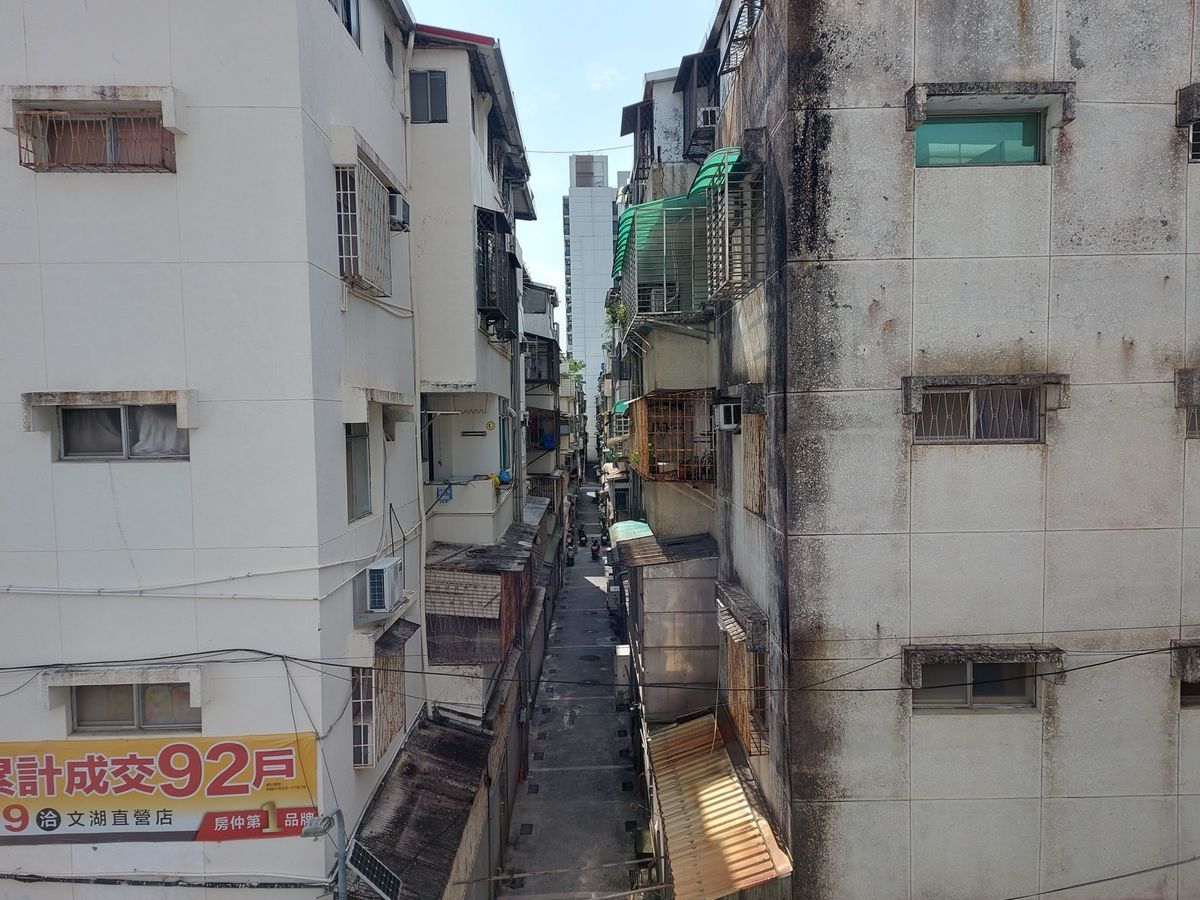
Photo: Johan Jönsson (Julle) via Wikimedia Commons, CC BY-SA 4.0
壁癌: what "wall cancer" looks like at a viewing
The word you will hear is 壁癌 (bì ái, literally "wall cancer"). It is not mold. It is water moving through concrete and leaving salts behind, and it is the single most useful thing to recognize at a viewing.
Signs of 壁癌:
- White, powdery or crystal-like deposits on the wall surface.
- Bubbling, flaking or peeling paint, often low on walls, around window frames or on walls that face outside.
- Crumbling plaster that comes off when you touch it.
- A patch of fresh paint on one wall only. Fresh paint is not proof of a problem, but run your hand over it and look at the edges and the corners nearby.
Why it matters: 壁癌 means water is getting into the structure, from a leaking roof, a cracked exterior wall, a neighbor's plumbing or rising damp. Cleaning and repainting hide it for a season; fixing it means finding the water source, which is a building repair. One small patch under a window in an older walk-up is common and often livable. Several walls, or a patch that is still damp to the touch, means the leak is active.
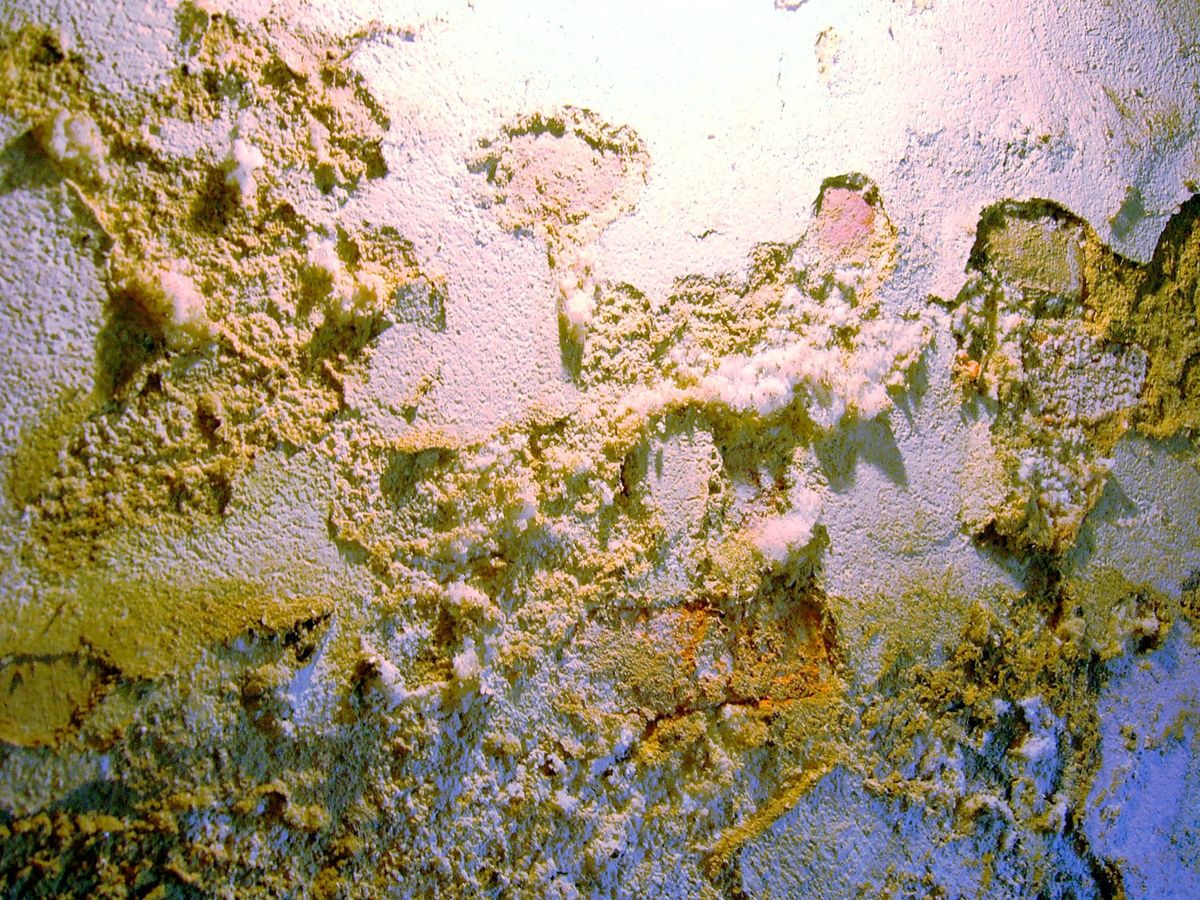
Photo: Mattes via Wikimedia Commons, public domain
The viewing checklist, room by room
Ceilings. Look up in every room. Yellow or brown rings, peeling paint and dark lines along the edges are water stains. Under a bathroom on the floor above, a stain often means a leaking pipe or failed waterproofing upstairs. On the top floor, a stained ceiling usually means the roof. Ask when the roof was last waterproofed (防水). If the unit is an illegal rooftop addition, read our guide to rooftop additions and subdivided units before you go further.
Exterior walls and windows. Check the wall under and beside each window, the corners where two outside walls meet, and behind any wardrobe you can move. Open and close every window. Newer airtight windows (氣密窗) seal much better than old single-pane sliders, which rattle and let rain in sideways during typhoons.
Bathroom. A bathroom with no window needs a working exhaust fan. Switch it on and hold a tissue to it. Look at the grout and silicone around the shower: black spots there are normal surface mold if light, but black mold climbing the ceiling means the room never dries.
Closets and cabinets. Open them and smell. A musty closet in an empty apartment will be worse once your clothes are inside. Check the back panel for dark spots and warped wood.
Balcony and drains. The balcony floor should slope toward a drain, and the drain should be clear. Blocked balcony drains are a common reason water ends up inside during heavy rain. If the balcony has been enclosed into the living space (陽台外推), check the floor where the old wall was and read our note on gas water heaters in enclosed balconies, because that is a safety issue too.
Air conditioners. Turn each unit on for a minute. A musty smell or black specks on the louvers mean mold inside. It is cleanable, but ask who pays for the cleaning before you sign.
Floors and skirting. Swollen wooden floorboards or skirting, especially near exterior walls and bathroom doors, mean water has been there.
Typhoon flooding: check the building, not just the unit
Most Taipei apartments come through typhoons fine. The risk is concentrated in a few places:
- Ground floor and basement units in low-lying areas, which can flood in extreme rain. Ask whether the building or the street has ever flooded, and look up the address on the National Science and Technology Center for Disaster Reduction's 3D disaster potential map, which shows official flood potential by area. If the map shades your street, choose a higher floor.
- Top floors, where roof leaks show up first in heavy rain.
- Units with old windows facing the wind, which can leak through the frames.
A unit on the third floor or above in a building with a maintained roof sidesteps the first two risks, which is why it's our default suggestion. Our guide to walk-up versus elevator buildings explains the trade-offs between floors and building types.

Photo: ynes95 via Wikimedia Commons, CC BY-SA 2.0
What to ask the landlord (in Chinese)
Landlords don't always volunteer leak history, so ask directly. These are the questions worth asking at every viewing:
- 颱風或下大雨的時候有沒有漏水過?(Táifēng huò xià dàyǔ de shíhou yǒu méiyǒu lòushuǐ guò?) Has it ever leaked during a typhoon or heavy rain?
- 這面牆的壁癌有處理過嗎?(Zhè miàn qiáng de bì'ái yǒu chǔlǐ guò ma?) Has the 壁癌 on this wall been repaired?
- 頂樓防水是什麼時候做的?(Dǐnglóu fángshuǐ shì shénme shíhou zuò de?) When was the roof last waterproofed?
- 浴室抽風機正常嗎?(Yùshì chōufēngjī zhèngcháng ma?) Does the bathroom fan work?
- 冷氣多久清洗一次?誰付?(Lěngqì duōjiǔ qīngxǐ yí cì? Shéi fù?) How often is the AC cleaned, and who pays?
- 這附近淹過水嗎?(Zhè fùjìn yān guò shuǐ ma?) Has this area ever flooded?
If you can, view on a rainy day, or ask the landlord for photos taken after heavy rain. For the rest of the questions worth asking, see 5 questions to ask a Taiwanese landlord before you sign, and for what to carry to the viewing itself, our apartment viewing checklist.
Dealbreaker or fixable?
- What you see: Light black spots on bathroom grout | Usually means: Normal surface mold | Our call: Fixable: clean before move-in
- What you see: Musty closet, dry walls | Usually means: Poor ventilation | Our call: Fixable with a dehumidifier
- What you see: One old, dry 壁癌 patch under a window | Usually means: Past leak, maybe repaired | Our call: Ask about repair; negotiate a fix
- What you see: 壁癌 on several walls, or damp to the touch | Usually means: Active water in the structure | Our call: Walk away
- What you see: Fresh water stain on a top-floor ceiling | Usually means: Roof leak | Our call: Walk away unless the roof was just fixed
- What you see: Windowless bathroom with a dead fan | Usually means: Room never dries | Our call: Walk away unless fixed before signing
- What you see: Ground or basement unit in a mapped flood area | Usually means: Typhoon flood risk | Our call: Choose a higher floor
Who pays for repairs: what the law says
Taiwan's Rental Housing Market Development and Management Act puts the duty on the landlord. Under Article 8, the landlord must hand over a home fit for living and keep it that way during the lease, must explain before signing which repairs they are responsible for, and if they do not repair within a reasonable deadline you set, you may do the repair yourself and claim the cost back or deduct it from rent.
In practice, leaks from the roof, walls and plumbing, and 壁癌 caused by them, are the landlord's job. Ordinary surface mold from drying laundry indoors with the windows shut is yours.
Two steps protect you:
1. Get the fix in writing before you sign. If the landlord agrees to repair a wall or the bathroom fan, write it into the contract with a date.
2. Record what is already there. Photograph every wall, ceiling, closet and AC vent at move-in and attach the photos to the property condition record (租賃標的現況確認書). That is what protects your deposit, which by law cannot exceed two months' rent (Article 7). Our guide to a normal Taipei rental contract shows where these clauses sit, and what happens when your lease ends covers getting the deposit back.
Let TRA do the moisture check with you
Spotting 壁癌, reading a ceiling stain and asking a landlord about typhoon leaks in Chinese is hard to do on your first week in Taipei. That is where having us at the viewing helps.
- We start with a consultation on your budget, area and needs, and flag the floors and building types that tend to have damp problems in the areas you are considering.
- We view apartments with you, go through the walls, ceilings, bathrooms, windows and closets on this list together, ask the landlord about leaks and repairs in Chinese, and tell you honestly when a unit looks like trouble.
- We go through the contract clause by clause, making sure agreed repairs and the condition record are in writing, then help finalize the deposit and signing.
Once the in-person search starts, finding the right place typically takes anywhere from 3 to 5 days up to about 1 to 2 weeks. You pay a deposit when we start and the balance once you've found your home; we quote individually. See how our service works or contact us.
Once you have the keys, a deep clean of the bathroom, window tracks and closets gives you a clean baseline; TRA Live's cleaning service does move-in deep cleans, and we quote individually.
Our pick
For your first Taipei apartment, choose a unit on the third floor or above, in a building whose roof and exterior walls are maintained, with a bathroom window or a working fan. Accept a little surface mold, which you can clean, but walk away from active 壁癌 on more than one wall or a fresh stain on a top-floor ceiling. And always ask about typhoon leaks before you sign, not after the first storm.
FAQ
What is 壁癌 and is it dangerous?
壁癌 is water moving through concrete and leaving white salt deposits, bubbling paint and crumbling plaster. It is not mold itself, but it means the wall is wet, which makes mold more likely nearby. It is a building problem that the landlord, not the tenant, needs to fix.
Should I avoid top-floor apartments in Taipei?
Not automatically, but check the ceiling carefully and ask when the roof was last waterproofed. A stained top-floor ceiling usually means a roof leak. Rooftop additions (頂加) carry their own legal and heat issues.
How can I check if an apartment floods during typhoons?
Ask the landlord and neighbors directly, check the ground floor and lobby for water lines, and look up the address on the official disaster potential map. If the area is shaded for flood potential, choose the third floor or higher.
Is a little mold in the bathroom a dealbreaker?
No. Light black spots on grout and silicone are normal in Taipei and clean off. Mold spreading across the ceiling, a dead exhaust fan or no window at all are the warning signs.
Who pays to fix leaks in a Taiwan rental?
The landlord, under Article 8 of the Rental Housing Market Development and Management Act, unless the damage is the tenant's fault. If they do not repair within a reasonable deadline, you may repair it and deduct the cost from rent.