
What to Bring to Your First Apartment Viewing in Taipei
By Raytio RayUpdated
Our apartment viewing checklist for Taipei: the documents to bring, the questions to ask, and 20 things to physically check in a flat before you agree to rent.
For your first apartment viewing in Taipei, bring your passport (or ARC), proof of why you're in Taiwan (resident visa, work permit, Gold Card or school admission letter), a phone with mobile data and a translation app, and a written list of questions. Leave the deposit money at home. Then treat the viewing as an inspection, not a tour: run the water, turn on the air conditioner, find the water heater, check the walls for mold and look for the smoke alarm. That's the core of our apartment viewing checklist for Taipei.
Our recommendation: view your top two flats twice, once in daylight and once after 7pm, and never pay a deposit at a first viewing unless you've seen the landlord's ID and proof they own or may rent the unit. The apartment viewing checklist for Taipei below is the one we'd follow.
What to bring to an apartment viewing in Taipei
- Bring: Passport, or ARC if you have one | Why: Landlords check ID early; the model contract asks both sides to show it
- Bring: Resident visa, work permit, Gold Card or admission letter | Why: Answers "how long are you staying?" before it's asked
- Bring: Employment letter or contract (if you have one) | Why: Reassures landlords worried about payment; only show if asked
- Bring: Phone with data, translation app and full battery | Why: You'll photograph everything and test mobile signal
- Bring: Your question list, written down | Why: So you don't remember the third question on the way out
- Bring: A small flashlight (or your phone light) | Why: For the backs of cupboards, under sinks and inside the water heater cabinet
- Bring: A Chinese-speaking friend, or a service like ours | Why: Many Taipei landlords don't speak English
What not to bring: cash for a deposit. A legitimate landlord will let you think it over for a day. If someone insists you pay on the spot, read our guide to rental scams targeting foreigners in Taipei first.
Before the viewing: three things to confirm by message
1. The exact unit. Ask for the address and floor. Listings sometimes show a nicer unit in the same building.
2. Who will show it. Owner, sub-landlord or agent. Each comes with different questions; our guide on whether you need a Taipei rental agent explains the differences.
3. The total monthly cost. Rent, management fee, how electricity is charged, internet. Our hidden costs guide shows what to ask about.
By law, what a landlord advertises has to match reality, including floor area, age, floor number and legal use (Article 13 of the Rental Housing Market Act). Screenshot the listing before you go, so you can compare.
Apartment viewing checklist for Taipei: 20 things to check
Work through the flat room by room. It takes about 20 minutes and it's the most useful 20 minutes of your search.
Water and bathroom
1. Run the shower on hot. How long until it's hot, and does the pressure hold?
2. Flush the toilet and watch it refill.
3. Look at the ceiling above the shower and around the window frame for black mold or peeling paint.
4. Smell the floor drain. A sewer smell usually means a missing trap or cover, and it also lets in cockroaches.
Gas and the water heater
5. Find the water heater. If it burns gas and sits indoors or on an enclosed balcony, that's a carbon monoxide risk. Our gas water heater guide shows what a safe setup looks like.
6. Ask whether gas is piped (天然氣) or bottled (桶裝瓦斯), and how you order refills.
Electricity and air conditioning
7. Turn on every air conditioner for a few minutes. Cold air within a minute is good; a musty smell means it needs cleaning.
8. Ask which electricity meter is yours and how it's billed. Since July 2024, a per-kWh charge can't exceed the average rate on the Taipower bill.
9. Count the outlets near the desk and kitchen, and check there's a 220V outlet if the AC needs one.
Walls, windows and damp
10. Press lightly on any bubbling paint near the floor or windows. White, powdery wall rot (壁癌) is a sign of long-term damp. See what to check for humidity and mold.
11. Open and close every window. Check they lock and seal.
12. Look for a dehumidifier, or ask whether you can run one.
Safety
13. Find the smoke alarm. Homes are required to have one under Article 6 of the Fire Services Act.
14. In a subdivided building or a rooftop addition, check there's a second way out. Our rooftop additions guide explains the risks.
15. Check the front door lock and whether the building has a locked main entrance.
Noise, signal and daily life
16. Close the windows and listen for a minute. Then open them. Main-road noise, a temple, a night market or a school can all matter.
17. Test mobile signal in each room.
18. Ask how trash works: a building collection point, or meeting the garbage truck at a set time.
19. Ask where to do laundry: in the unit, on the balcony, or a shared machine.
20. If the flat is listed as furnished, check every item against what you were told, and open the fridge and wardrobe.
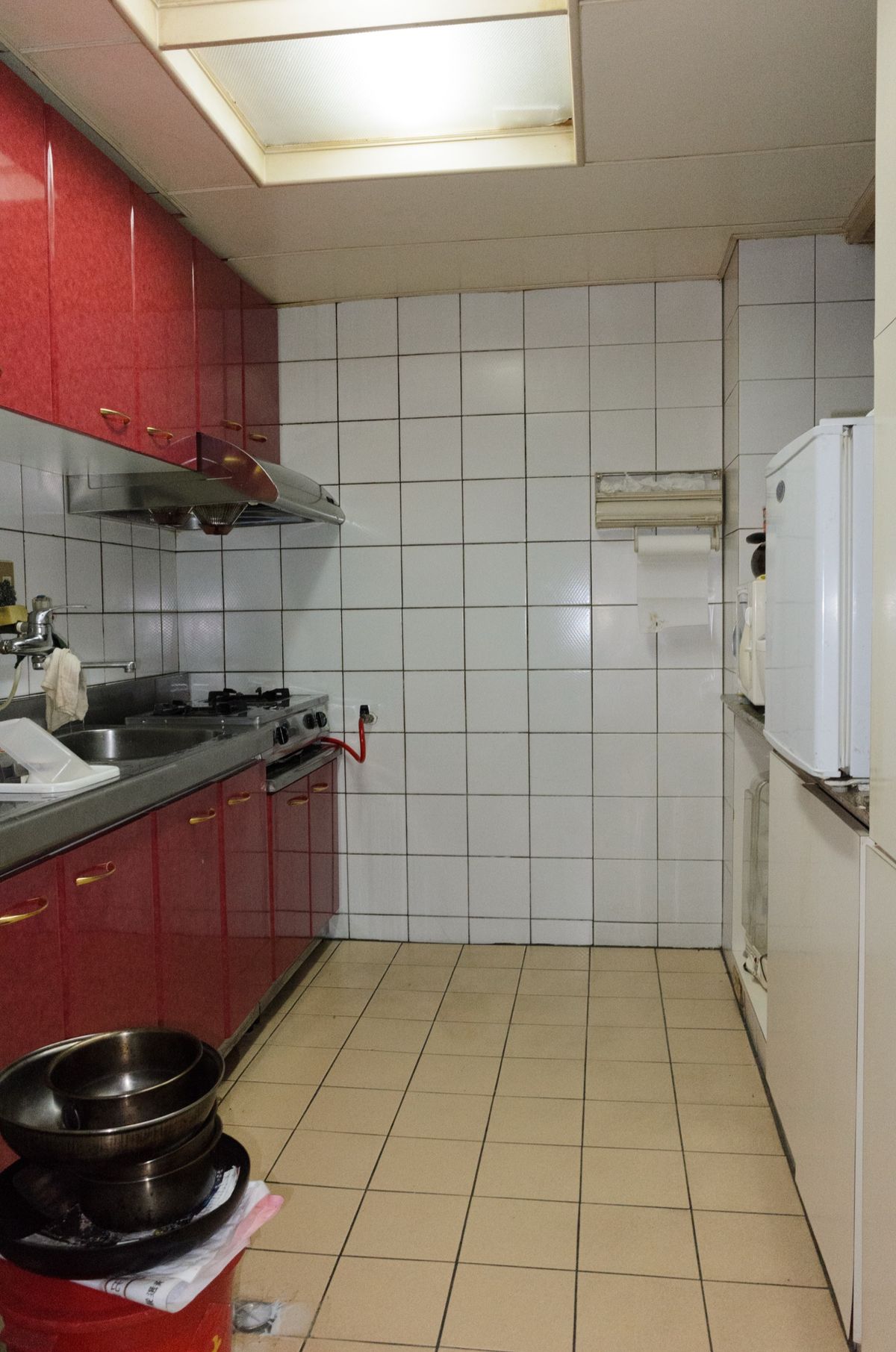
Photo: 玄史生 via Wikimedia Commons, CC0
Questions to ask at the viewing
Keep these to the ones that change your decision. Our questions to ask a landlord in Taiwan explains each in detail and gives the Chinese wording.
- Can I register this address for my ARC?
- How is electricity charged, and what's included in the rent?
- Can I end the lease early with one month's notice?
- Which repairs are yours, and how do I reach you when something breaks?
- How and when is the deposit returned?
- Are you the owner? If not, do you have the owner's written consent to sublet?
Ask for the condition report
The Ministry of the Interior's model lease includes a property condition statement (租賃標的現況確認書). It asks the landlord to state any illegal additions, water leaks, whether a smoke alarm is installed, whether an unnatural death happened in the unit, the management fee, and a list of included equipment. Ask at the viewing whether they'll fill it in. A landlord who hesitates over the leak or equipment sections is telling you something.
Photograph everything
Take photos and a short video of every room, the meters and any damage, with the date visible. Two reasons. First, after five viewings in a day, flats blur together. Second, if you take the flat, these become your evidence at move-out, when the deposit is on the line. Our guide to what happens when your lease ends explains why move-in photos matter so much.
View it twice
A quiet lane at 2pm can be a scooter shortcut at 6pm, and a calm block can sit next to a bar that opens at 10pm. If a flat makes your shortlist, go back once after dark, ideally on a weekday. Walk to the nearest MRT station at the time you'd actually commute. If noise is a concern, read dealing with noise in a Taipei apartment on our sister site.
After the viewing: compare flats on the same scale
By the end of a busy day you may have seen five flats, and the last one always feels best. Score each one the same evening, while the details are fresh, out of 5 on:
- Factor: Commute | What a 5 looks like: Under 30 minutes door to door at rush hour
- Factor: Total monthly cost | What a 5 looks like: Rent plus management fee plus a realistic electricity estimate, within budget
- Factor: Condition | What a 5 looks like: No damp, working appliances, safe water heater, smoke alarm
- Factor: Noise and light | What a 5 looks like: Quiet with windows closed, daylight in the main room
- Factor: Landlord | What a 5 looks like: Clear answers, ARC address agreed, ID and ownership shown
- Factor: Paperwork | What a 5 looks like: Willing to use the model lease and fill in the equipment list
A flat that scores well on landlord and paperwork but only average on looks is usually a better year than the reverse. Problems with the flat can be fixed; problems with the landlord tend to last the whole lease.
Viewing from abroad by video
If you're still overseas, a video call viewing can help you shortlist, but treat it as a filter, not a decision. Ask the person holding the phone to run the hot water on camera, open the wardrobe and fridge, show the water heater, point the camera at the ceiling corners and open the windows so you can hear the street. Then book the real viewing for your first days in Taipei. We explain why committing remotely rarely works in our guide to the ARC chicken-and-egg problem.
Where TRA comes in
A viewing goes very differently when someone in the room speaks Chinese and has seen hundreds of Taipei flats.
- We line up the viewings from your consultation on budget, area and needs.
- We view with you, run through the checks, and ask the landlord the awkward questions in Chinese on the spot: ARC registration, electricity rate, who owns the unit, what happened with that stain on the ceiling.
- We negotiate and review the contract clause by clause before you sign, then help finalize the deposit and signing.
Once the in-person search starts, finding the right place typically takes anywhere from 3 to 5 days up to about 1 to 2 weeks. You pay a deposit when we start and the balance once you've found your home; we quote individually. See how our service works.
Our pick
Bring ID and your visa documents, leave the deposit at home, run the 20-point checklist, and go back after dark before you commit. The three checks we would never skip: the water heater location, the ARC address question, and the landlord's proof they may rent the unit. If you want a second pair of eyes at your viewings, contact us here.
FAQ
What documents do I need to view an apartment in Taipei?
Your passport or ARC, plus whatever shows why you're in Taiwan, such as a resident visa, work permit, Gold Card or admission letter. An employment letter helps but only show it if asked.
Should I pay a deposit at the first viewing?
No. A legitimate landlord gives you time to decide. Only pay once you've seen the landlord's ID and proof they own the unit or may rent it, ideally when you sign the contract.
Can I view apartments in Taipei before I arrive?
You can see photos and video calls, but we don't recommend committing remotely. Photos hide damp, noise, water pressure and smells, and landlords prefer to meet tenants in person.
What's the most common problem foreigners miss at a viewing?
Damp and mold, especially behind furniture and around windows, and indoor gas water heaters. Both are easy to check in person and expensive to discover later.
Do I need to speak Chinese to view apartments in Taipei?
It helps a lot. Many landlords don't speak English. Bring a Chinese-speaking friend or a service that will ask your questions on the spot.