
Retiring Back to Taiwan: From Finding a Home to Settling In, With One Point of Contact
By Raytio Ray
Retiring back to Taiwan from the US? The full sequence: paperwork, choosing a home, your shipment, moving day, cleaning and daily life, all via one contact.
Retiring back to Taiwan is a different project from retiring here as a foreigner. As a Taiwanese citizen you already have the hard part: the right to live here, access to National Health Insurance once you re-register, and senior benefits from 65. What makes the move exhausting is everything around it: finding a home that suits the next twenty years, timing a container of furniture from the US, the moving day, cleaning, and then building a daily life in a city that has changed since you left.
Our recommendation: treat it as one project with one point of contact, in this order: paperwork, short-term stay, home search, shipment delivery, cleaning, then daily-life services. Below is each step, what tends to go wrong, and how TRA can carry the whole sequence so you can spend your first months on family, health and, for many returnees, a business you still want to run.
Why retiring back is different from retiring here as a foreigner
Foreign retirees have to find a residence route, because Taiwan has no retirement visa (our guide to retiring in Taiwan as a foreigner explains the options). You don't. Your checklist is shorter but has its own traps:
- Household registration first. NHI, your ID card and most senior benefits run through your 戶籍. Our companion guide to moving back to Taiwan from the US covers re-registration, passports, taxes and family members step by step.
- NHI timing. Under Article 8 of the National Health Insurance Act, you can join from the day you re-register if you were insured within the last two years; otherwise after six months of registration. Plan private cover for the gap; our health insurance before NHI guide compares options.
- Splitting time between the US and Taiwan. Since December 23, 2024, NHI no longer allows suspension while you are abroad (Ministry of Health and Welfare). If you keep registration, you keep paying premiums, even during long stays in the US.
- Senior benefits. Under Article 25 of the Senior Citizens Welfare Act, people 65 and over get half price on domestic public transport and at recreation and cultural venues.
A spouse without Taiwanese nationality needs their own residence route: see our Taiwan spouse visa guide.
Step 1: decide where you'll live, for the long term
Taipei is an old city, and it is getting older fast. At the end of 2025, people aged 65 and over made up 20.06% of Taiwan's population, and Taipei had the highest share of any city or county at 24.18% (World Journal, reporting Ministry of the Interior data). That shows in the details: plenty of clinics and parks, and a lot of buildings that were never designed for knees.
What we'd prioritize for a retirement home, in order:
1. An elevator. A fourth-floor walk-up feels fine at 60 and not at 75. Our walk-up vs elevator guide explains the trade-off; for retirees we'd only look at elevator buildings.
2. Ten minutes from family or a major hospital. Whichever matters more to you. Then a short walk to an MRT station.
3. A building with a management office. Someone to receive parcels, take in the garbage, and notice if something is wrong while you are in the US.
4. Quiet. Avoid units above a night market lane or a main road with scooter traffic; view at night before deciding.
If Taipei rents are more than you want to spend, our Taipei vs Taichung vs Kaohsiung comparison shows what you trade for a lower budget. And if you plan to buy eventually, renting first for a year is the cheapest way to learn which neighborhood you actually like.
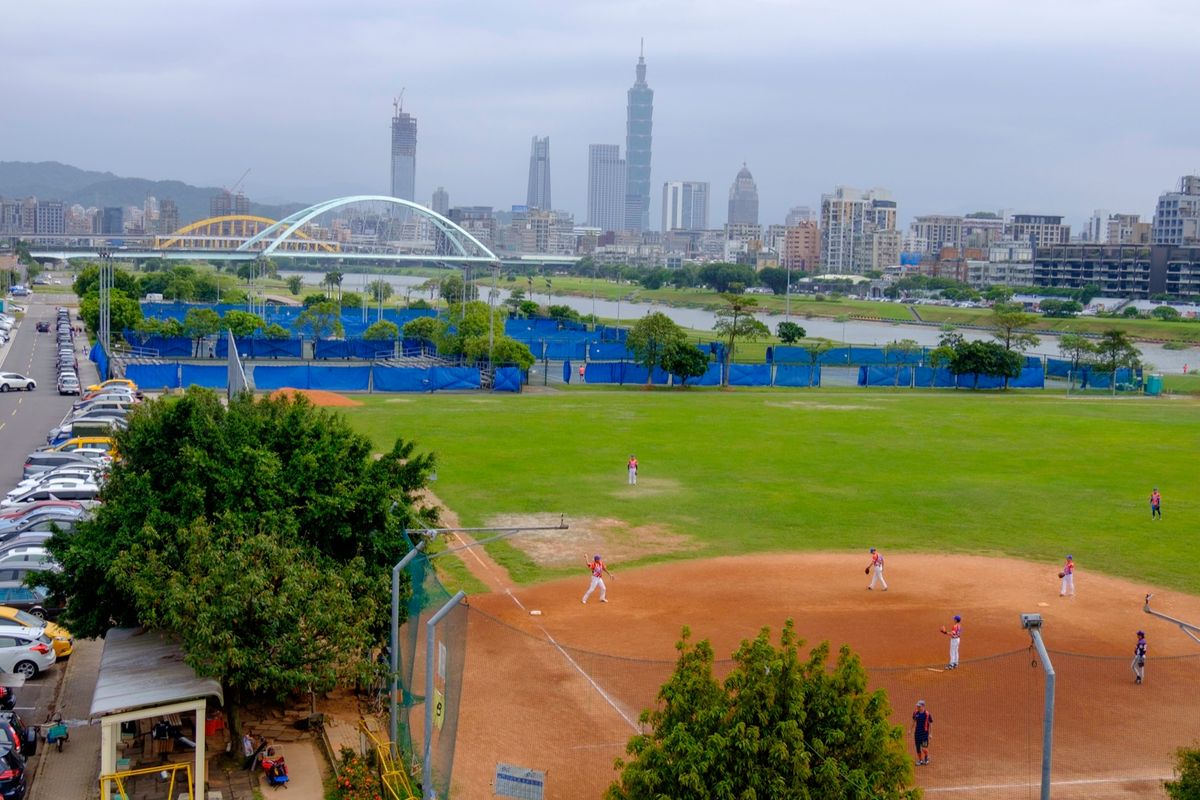
Photo: 玄史生 via Wikimedia Commons, CC0
Step 2: find the home
Don't sign from photos. Book one to two weeks of short-term accommodation, then view in person. A few things are specific to returning retirees:
- Bigger, quieter homes often come through agents. At higher rents, more listings come through real estate agencies, and the tenant's half-month agent fee becomes a real number. Our guide on whether you need an agent explains how commission works.
- Registration. Confirm before signing that you can register your household at the address.
- Unfurnished or furnished. If your furniture is coming from the US, you want an unfurnished unit, or a landlord willing to remove what's there. Our furnished vs unfurnished guide covers what "furnished" includes in Taipei.
- The contract. Read the repair clauses closely. Who fixes the water heater or the AC matters more when you'll be living in the home full time; our rental contract guide lists the clauses to check.
Step 3: time your shipment from the US
Most returning retirees ship at least some furniture, photos and keepsakes. Our guide to shipping belongings to Taiwan compares suitcases, postal boxes and sea freight. Three rules matter most:
- Declare it when you land. Taiwan treats anything shipped separately as unaccompanied baggage. Under the Ministry of Finance's rules on inbound passengers' baggage, you declare it at the red channel on arrival, and the shipment must arrive before you or within six months of your entry.
- Sea freight takes weeks. Door to door from the US it is commonly four to eight weeks, longer in peak season. Give the mover your Taiwan address only once you have signed a lease.
- Keep the paperwork together. Your mover will ask for your passport, proof of your arrival date, the stamped customs declaration and a packing list. Keep copies on your phone and in one folder, and give your Taiwan address and a local phone number to the mover as soon as you have them.
- Measure before you ship. American king beds, deep sofas and large fridges don't always fit Taipei elevators, stairwells or kitchens. Measure the elevator door and the bedroom before you pay to ship the bed.
Step 4: moving day and cleaning
The day the container arrives is where a returning family's week falls apart: the moving company needs the elevator booked with the building management, someone has to be at the door, and the apartment should be cleaned before the boxes go in, not after.
The order we recommend: deep clean the empty home first, then deliver and unpack, then a light clean once the boxes are gone. Our sister site explains what move-in cleaning really covers and how to move apartments in Taipei without losing your mind.
Step 5: life after you've settled
Once you live here, the needs change from logistics to life, and this is where a lot of returnees feel stuck. Your Chinese may be fine, but you don't know which providers are reliable anymore. Through our sister team, TRA Live, we can arrange:
- A car with a driver for trips. A day out to the coast or the mountains, or a family trip around the island, without renting a car or juggling trains with luggage.
- A private chef at home. Someone to come and cook for a family dinner or a celebration at your place.
- Airport pickups for you, or for children and grandchildren visiting from the US (airport transfer).
- Regular cleaning (cleaning service).
- Anything more specific. Tell us what you need and we'll see whether we can arrange it.
These are coordinated through our family concierge service and quoted individually, depending on what you need.
If you're not fully retired
Many people retiring back to Taiwan aren't really retiring. They want to open a small shop, run a studio, keep a US company going remotely, or finally start the business they put off for decades. That adds a second search and a second set of rules to the move.
- A space for the business. A storefront or office lease works differently from a home lease: the deposit isn't capped, you need the landlord's consent to register a company, and the zoning and occupancy permit decide what you can legally run there. Our guide to finding a storefront or office in Taipei walks through the checks.
- Running a US business from Taiwan. Once you're a Taiwan tax resident, how you're paid starts to matter on both sides. Our remote work and tax guide is a starting point; a cross-border accountant is worth paying for in year one.
- Timing. Find the home first, then the business space. Your household registration, bank account and phone number make every business step easier, and you'll know the city better by the time you sign a commercial lease.
If you want both searches done together, we can run them in parallel, so the home and the shop are found by the same team that knows your plans.
How TRA carries the whole move
The reason to use one contact is simple: you should spend your first months on family and health, not on phoning agents, movers and cleaners in turn.
- Home search. You tell us your budget, the family and hospitals you want nearby, and what you need from the building once. We contact landlords and agencies, schedule viewings together, and handle every conversation in Chinese.
- Agent fees. We work with several agencies. If you choose an agent listing, we negotiate the best agent fee we can for you, and on higher rents that saving often covers our own fee. We are never paid by the landlord or an agent.
- Contract and registration. We go through the lease clause by clause and confirm you can register your household there.
- Shipment, moving and cleaning. We can coordinate with your international mover or relocation company, the local moving day, building management and cleaning, so one person tracks the whole sequence.
- Business space. If you're opening a shop or office, we can search for that too, alongside the home.
- Daily life. Car with driver, private chef, airport pickups and other requests through TRA Live.
Apartment search pricing is a deposit when we start and the balance once you've found your home; we quote individually. Moving coordination, cleaning and daily-life services are also quoted individually. See how our apartment search works, or tell us your timeline and we'll suggest an order for your move.
Our pick
If you're retiring back to Taipei, rent for the first year in an elevator building with management, close to family or your hospital, and ship only the furniture you truly love. Re-register your household in week one so the NHI clock starts, and hand the logistics to one contact so you can enjoy coming home.
FAQ
Do I need a visa to retire back in Taiwan?
No, if you are a Taiwanese national. You re-register your household after you return. Family members who are not nationals need their own residence route, such as the joining-family visa for a spouse.
How long after returning can I use NHI?
From the day you re-register if you were insured within the past two years. Otherwise, after six months of continuous household registration.
Should I ship my furniture from the US?
Ship what you love or can't replace, and only after measuring your new home's elevator and rooms. Everyday furniture is usually easier to buy here. Declare the shipment when you land.
Can TRA arrange things after we've moved in?
Yes. Through TRA Live we can arrange a car with a driver, a private chef at home, airport pickups and cleaning, and we're open to more specific requests. Each is quoted individually.
Is Taipei a good place to retire?
For most returnees, yes, as long as you choose the building carefully: elevator, management office, and short distances to family, hospitals and the MRT.