
Taiwan Spouse Visa: How the Joining Family Route (JFRV) Actually Works
By Raytio Ray
Taiwan spouse visa guide for 2026: register the marriage first, get the JFRV, then your ARC. Documents, timeline, work rights, NHI and the road to an APRC.
The short version
The Taiwan spouse visa is officially a resident visa for joining family (依親居留), which everyone on the forums calls the JFRV. If you're married to a Taiwanese citizen, it's the best residence status most foreigners can get: you can work any job without a work permit, you don't need an employer, and after five years you can apply for permanent residency with no income test. The catch is the order of operations. The marriage has to be registered in Taiwan first, and the way you enter Taiwan decides whether you can apply locally or have to go through a Taiwan office abroad.
Facts below were checked on 2026-10-03 against the Bureau of Consular Affairs (BOCA), the National Immigration Agency (NIA) and Taiwan office (TECO) visa checklists. For the general visa-to-ARC mechanics, read From Visa to ARC. If you're comparing this with work-based options, see the Gold Card and other residency routes.
Two different Taiwan spouse visa routes
Married to a Taiwanese citizen with household registration. This is the classic JFRV. Your right to stay comes from your spouse's household registration (戶籍), and your ARC is tied to the marriage.
Married to a foreigner who lives in Taiwan (ARC, Gold Card or APRC holder). BOCA runs a separate checklist for this. You need your spouse's ARC or APRC with at least six months of validity left, and your marriage certificate authenticated by a Taiwan office. Spouses of migrant (blue-collar) workers can't use this route at all.
Step 1: register the marriage in Taiwan
Nothing moves until your spouse's household registration shows the marriage. Visa checklists ask for an original household registration transcript (戶籍謄本) issued within the last three months, showing the marriage, your name in your native language and your nationality.
If you married abroad: get your marriage certificate (and the official marriage registration record, if your country has one) authenticated by the Taiwan office covering where it was issued, with a Chinese or English translation also authenticated. Your spouse then takes it to their household registration office in Taiwan and registers the marriage.
If you marry in Taiwan: you both go to a household registration office with passports, a written marriage agreement signed by two adult witnesses, a declaration of your Chinese name, and your certificate of single status, authenticated abroad with a Chinese translation. Taiwanese offices treat that single-status document as valid for about six months, so don't get it too early.
Interviews for some nationalities. If you're from Vietnam, Indonesia, the Philippines, Thailand and a list of other mostly Southeast Asian countries, the Taiwan office in your country interviews the couple before it authenticates the marriage documents. Only after passing the interview can the marriage be registered in Taiwan and the visa applied for. Budget weeks, not days.
A forum pain point worth knowing: a Taiwanese spouse who has been living abroad may have had their household registration moved out. They have to enter on their Taiwanese passport, register an address and restore the registration before they can produce that three-month transcript.

Photo: Solomon203 via Wikimedia Commons, CC BY-SA 4.0
Step 2: get the resident visa (abroad or in Taiwan)
Option A, apply at a Taiwan office abroad. Our pick for most couples. You file the online form at visawebapp.boca.gov.tw and bring your passport (six months' validity), two photos, the household registration transcript, the authenticated marriage documents, a police record and a health certificate. You land with the resident visa already in your passport, and processing at many offices is about a week once documents are in order (longer if a marriage interview or ministry review is needed).
Option B, convert inside Taiwan. This only works if you entered on a visitor visa valid for 60 days or more that is not annotated "no extension" or "no change to residence". With that, the NIA lets you go straight to an ARC without a separate resident visa. You can file within 30 days before your permitted stay runs out.
What doesn't work: visa-exempt entry. BOCA states plainly that people who enter visa-free or on a landing visa cannot apply for a resident visa on the basis of a Taiwanese spouse. This is the single most common mistake we see: couples fly in visa-free, register the marriage, and discover the foreign spouse has to leave and reapply from abroad.
About the documents:
- Police record: from your home country's national authority (the NIA cites the FBI for Americans), issued within one year, covering at least the last five years, authenticated by a Taiwan office.
- Health certificate: issued within three months, using the Taiwan CDC's form. Doing it in Taiwan at a CDC-designated hospital after you arrive is easier if you're on Option B. A foreign one needs authentication.
- Translations: anything not in Chinese or English needs a translation, authenticated along with the original.
Step 3: the ARC
With a resident visa, you apply for the ARC and re-entry permit within 30 days of arrival (or of the visa being issued in Taiwan). Two rules specific to marriage cases, both from the NIA's instructions:
- You must apply at the NIA service center for the area where your Taiwanese spouse lives, and your spouse has to come with you.
- Your first ARC is only one year. Later renewals can be longer.
The fee is NT$1,000 per year of ARC validity, plus NT$2,200 if you converted from a visitor visa inside Taiwan. You'll also need proof of address. A lease works, and so does a homeowner's consent letter with their ID copy. If you're still flat hunting, get a lease that allows household or residence registration at the address, which some landlords quietly refuse. Our rental contract guide covers what to ask.
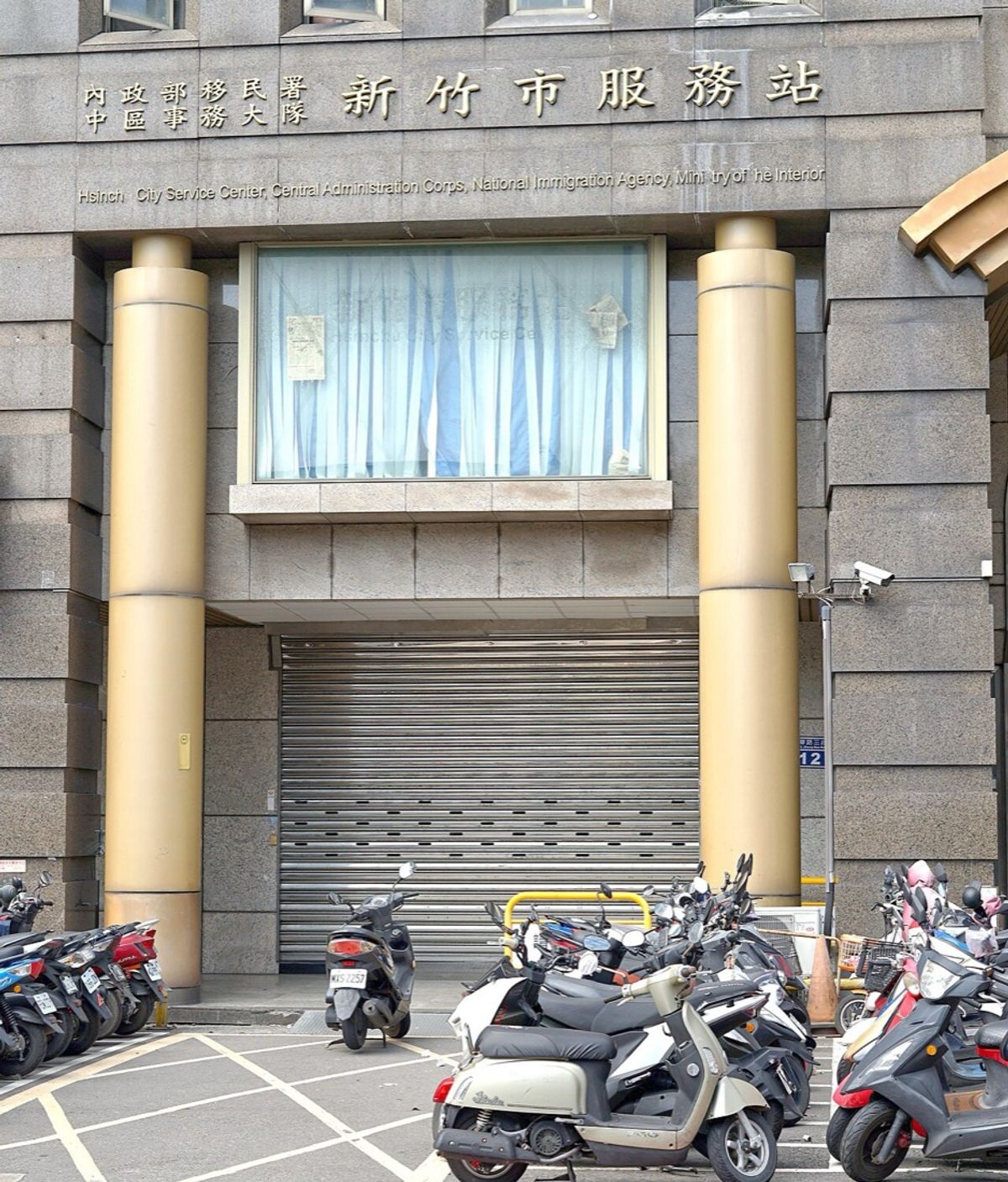
Photo: Solomon203 via Wikimedia Commons, CC BY-SA 4.0
Timeline at a glance
- Stage: Authenticate marriage or single-status papers | Where: Taiwan office abroad | Typical time: 1 to 3 weeks | Watch out for: Interview for some nationalities
- Stage: Register the marriage | Where: Household registration office, Taiwan | Typical time: Same day | Watch out for: Spouse's household registration must be active
- Stage: Get household transcript showing marriage | Where: Any household registration office | Typical time: Same day | Watch out for: Valid 3 months for visa use
- Stage: Resident visa | Where: Taiwan office abroad | Typical time: About 1 week | Watch out for: Health cert under 3 months, police record under 1 year
- Stage: ARC | Where: NIA service center where spouse lives | Typical time: Within 30 days of arrival | Watch out for: Spouse attends; first ARC is 1 year
- Stage: APRC eligible | Where: NIA | Typical time: After 5 years | Watch out for: 183+ days in Taiwan each year
Checklist
- Passport valid 6+ months
- Authenticated marriage certificate plus authenticated translation
- Household registration transcript showing the marriage, under 3 months old
- National police record, under 1 year, authenticated
- Health certificate on Taiwan CDC form, under 3 months
- Two 3.5 x 4.5 cm photos, white background
- Proof of Taiwan address (lease or owner's consent)
- Your spouse, in person, at the NIA
Work rights: the big advantage
Under Article 48 of the Employment Service Act, a foreigner married to a Taiwanese citizen with household registration who has been granted residence doesn't need a work permit. One longtime forum member summed it up for a newcomer: you have open work rights, so any employer can hire you, even a convenience store, with no paperwork on their side. That also makes freelancing and tutoring legal, which most work permits forbid.
Spouses of foreign residents are different. Since January 1, 2026, spouses of foreign professionals and specialist professionals (including Gold Card holders) can apply to the Ministry of Labor for their own work permit, with no employer sponsoring them.
Same-sex couples
Same-sex marriage has been legal in Taiwan since May 2019. Since January 2023, a Taiwanese citizen can register a marriage with a same-sex foreign partner even if the partner's home country doesn't recognize same-sex marriage. The exception at the time of our check: partners from mainland China, who are handled under cross-strait rules. Couples where both partners are foreigners from non-recognizing countries also can't marry in Taiwan. Once registered, the JFRV process is identical.
Health insurance: the 6-month gap
Marriage doesn't skip the National Health Insurance wait. ARC holders and their dependents generally join NHI after six months of residence (one trip abroad of up to 30 days is allowed). The shortcut: get a job. Employed people enroll from their first day of work, which is easy for you since you need no work permit. Until then, buy private cover. Our guides on insurance before NHI and how NHI works for foreigners cover the details.
The road to an APRC and citizenship
APRC: after five consecutive years of legal residence with at least 183 days in Taiwan each year, you can apply for permanent residency. Spouses of Taiwanese citizens are exempt from the income or asset requirement that applies to others, and you have two years after qualifying to apply. Our pick: do it. An APRC isn't tied to your marriage and doesn't need renewing every few years.
Naturalization: spouses can apply after three years of residence with 183+ days a year, a shorter period than other foreigners. You'll need to pass a basic language and civics test (or complete 72 hours of approved classes), and in most cases give up your original nationality, which is why many stop at the APRC.
The JFRV is tied to the marriage. If your spouse dies or you divorce, the NIA can let you keep residence in specific cases, such as having custody of Taiwanese minor children. Otherwise, you'll need another basis to stay.
Next step: a home for the family
If you're moving to join your spouse and need a new place together, the key detail for your ARC is a lease that allows household or residence registration at the address. TRA searches with you in person, asks landlords about registration in Chinese up front, and goes through the contract clause by clause before you sign, so the paperwork side of the move doesn't stall. Your Taiwanese spouse can join the viewings too; we handle the negotiating either way. See how the service works or contact us once you know your arrival date.