
Moving to Taiwan with China Tensions: A Calm, Practical Guide
By Raytio Ray
Moving to Taiwan with China tensions on your mind? Current travel advisories, what PLA drills mean for daily life in Taipei, and the simple prep residents do.
If you're thinking about moving to Taiwan with China tensions in the headlines, you're not being paranoid: almost every foreigner we help asks about it at some point, usually after a family member sends them a news clip. This guide won't tell you the risk is zero, and it won't tell you to panic. It covers what governments actually advise right now, what the big military drills looked like from a Taipei apartment, what serious analysts say, and the handful of practical things residents (local and foreign) actually do to be ready.
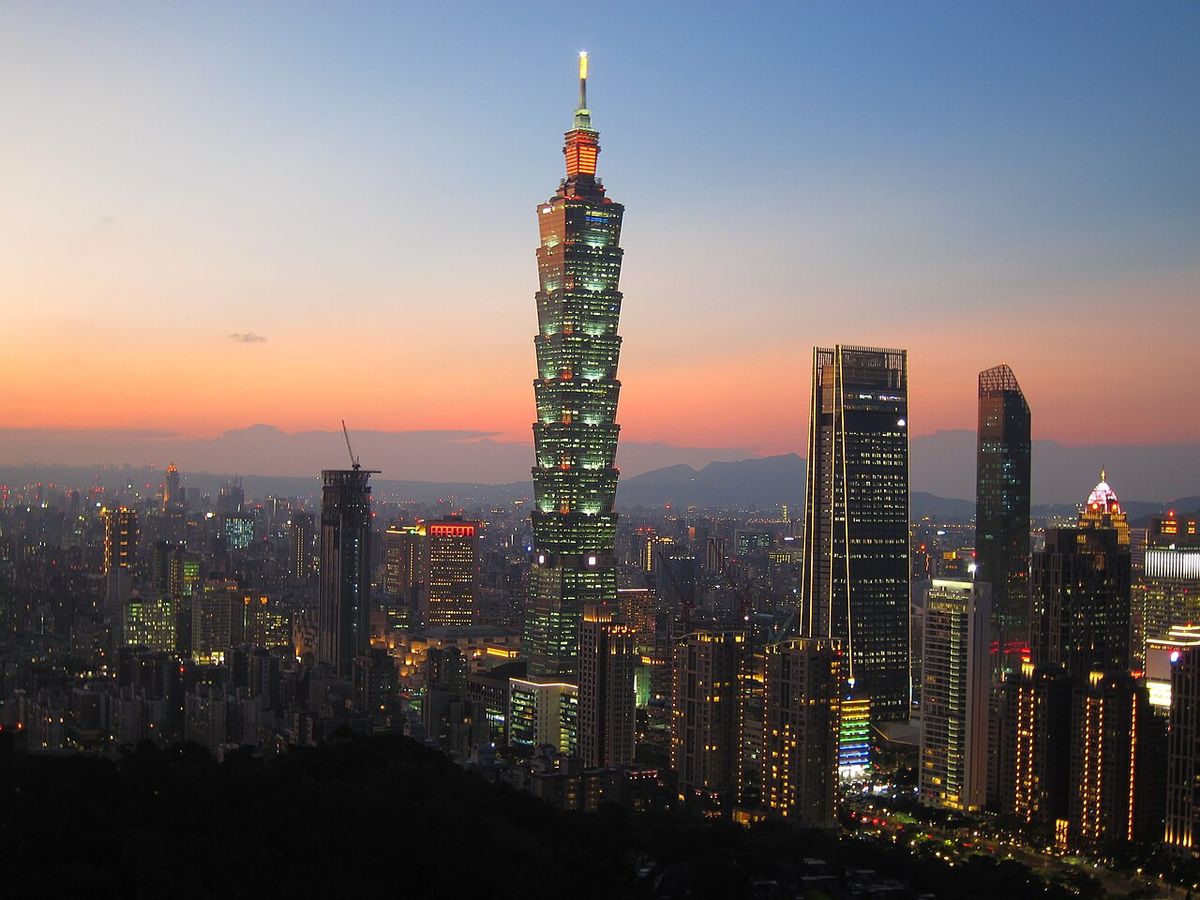
Photo: Ken Marshall via Wikimedia Commons, CC BY 4.0
What the travel advisories say in 2026
The four governments most of our readers check all put Taiwan at their lowest level:
- United States: Level 1, "Exercise normal precautions" (reissued November 2025). The risks it highlights are earthquakes, typhoons, flooding and heat, not China (U.S. State Department).
- Canada: "Take normal security precautions," the lowest level, last updated August 2026 (travel.gc.ca).
- Australia: "Exercise normal safety precautions," the lowest of its four levels (Smartraveller).
- United Kingdom: the FCDO does not advise against travel to any part of Taiwan (GOV.UK).
Advisories are written by people whose job is to be cautious, and they can change quickly. That's exactly why it's worth signing up for your government's alerts (more on that below). But today, no major government is telling its citizens to avoid Taiwan or leave.
What the big drills actually looked like from Taipei
China's military (the PLA) has held several large named exercises around Taiwan since August 2022. Two recent ones:
- Strait Thunder-2025A (April 2025): blockade and "precision strike" drills in the Taiwan Strait. Reporters on Taipei streets found most people barely paying attention; one resident said the drills happen so often they feel like routine.
- Justice Mission 2025 (December 29 to 30, 2025): the PLA said it was rehearsing a blockade of Keelung and Kaohsiung ports, and fired rockets into zones around the island. This one did touch daily life: Taiwan's transport ministry said over 100,000 international passengers and about 6,000 domestic passengers were affected by flight reroutings around a temporary danger zone (Al Jazeera).
What didn't happen in Taipei during either: MRT closures, empty supermarkets, school closures, or offices sending people home. Coffee shops were full. The honest summary is that the drills are serious signals aimed at governments, and for a resident their most likely real effect is a delayed or rerouted flight.
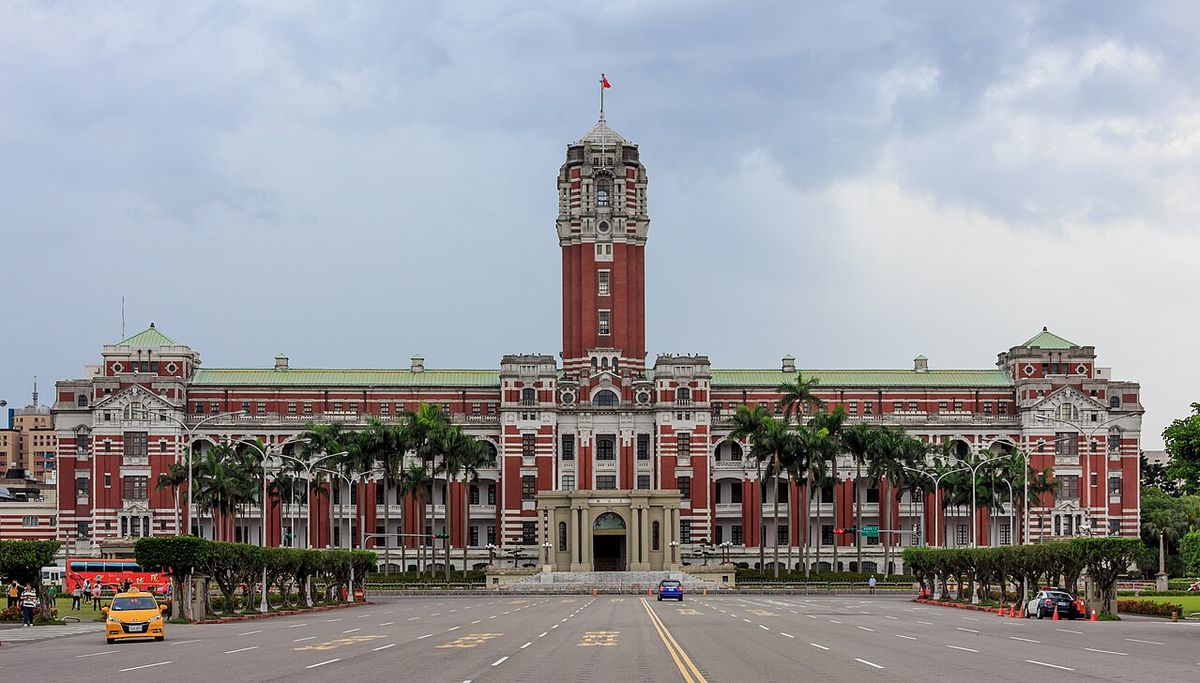
Photo: CEphoto, Uwe Aranas via Wikimedia Commons, CC BY-SA 3.0
What serious analysts say (briefly)
Nobody can tell you the probability of a war, and you should be skeptical of anyone online who claims they can. Two sources worth knowing:
- U.S. intelligence, March 2026: the Annual Threat Assessment said Beijing does not currently plan to invade in 2027 and has no fixed timeline, while the PLA keeps building the capability and China keeps the option of force (USNI News summary).
- CSIS expert survey: a survey of 52 U.S. and 35 Taiwanese experts found most doubt China can successfully carry out an amphibious invasion in the near term, but most think a blockade or "quarantine" is within its ability (CSIS China Power).
Our read: the scenario worth preparing for as a resident isn't a sudden invasion, it's disruption. Think flights, shipping, internet and possibly power for a while. That shapes the checklist below.
Is it safe to move to Taiwan? What foreigners actually say
On Forumosa, Taiwan's long-running expat forum, the threads on this topic are revealing. When Taiwan's new civil defense booklet came out in late 2025, one resident admitted they were "totally unprepared"; another, who has a family, said they had a tentative plan to leave in 2027 and hated not knowing whether that was too late or an overreaction. A 2025 thread about Japan telling its companies they'd largely be on their own in a crisis turned into a sober debate: some long-timers assumed there would be weeks of warning, others pointed out that a blockade could close the airports early, so "I'll just leave when it gets bad" isn't a plan.
That's the most useful takeaway from the forums. People who sleep well here aren't the ones who've decided war is impossible; they're the ones who did the boring prep once and then got on with their lives.
The prep that residents actually do
1. Download the government's English guide. In 2025 Taiwan's All-Out Defense Mobilization Agency published "In Case of Crisis: Taiwan's National Public Safety Guide" (當危機來臨時:臺灣全民安全指引) and mailed a printed copy to every household. It covers earthquakes and typhoons as well as military attack, plus first aid. The English PDF is about 30 pages and worth 20 minutes of your time. One line that sticks: if Taiwan is ever attacked, any claim that the government has surrendered is false. That's there because disinformation is expected to be part of any crisis.
2. Know where your nearest air raid shelter is. Taiwan has over 100,000 designated shelters, mostly ordinary building basements and underground parking garages, marked with a yellow and blue sign reading 防空避難 (Air Defense Shelter). Your apartment building may well be one. To find yours, use the National Police Agency's shelter map or the 警政服務 (Police Services) app, which has a 防空疏散避難專區 section that uses your location. Both are mostly in Chinese, so do it once with a Chinese-speaking friend or a translation app, then screenshot the result.
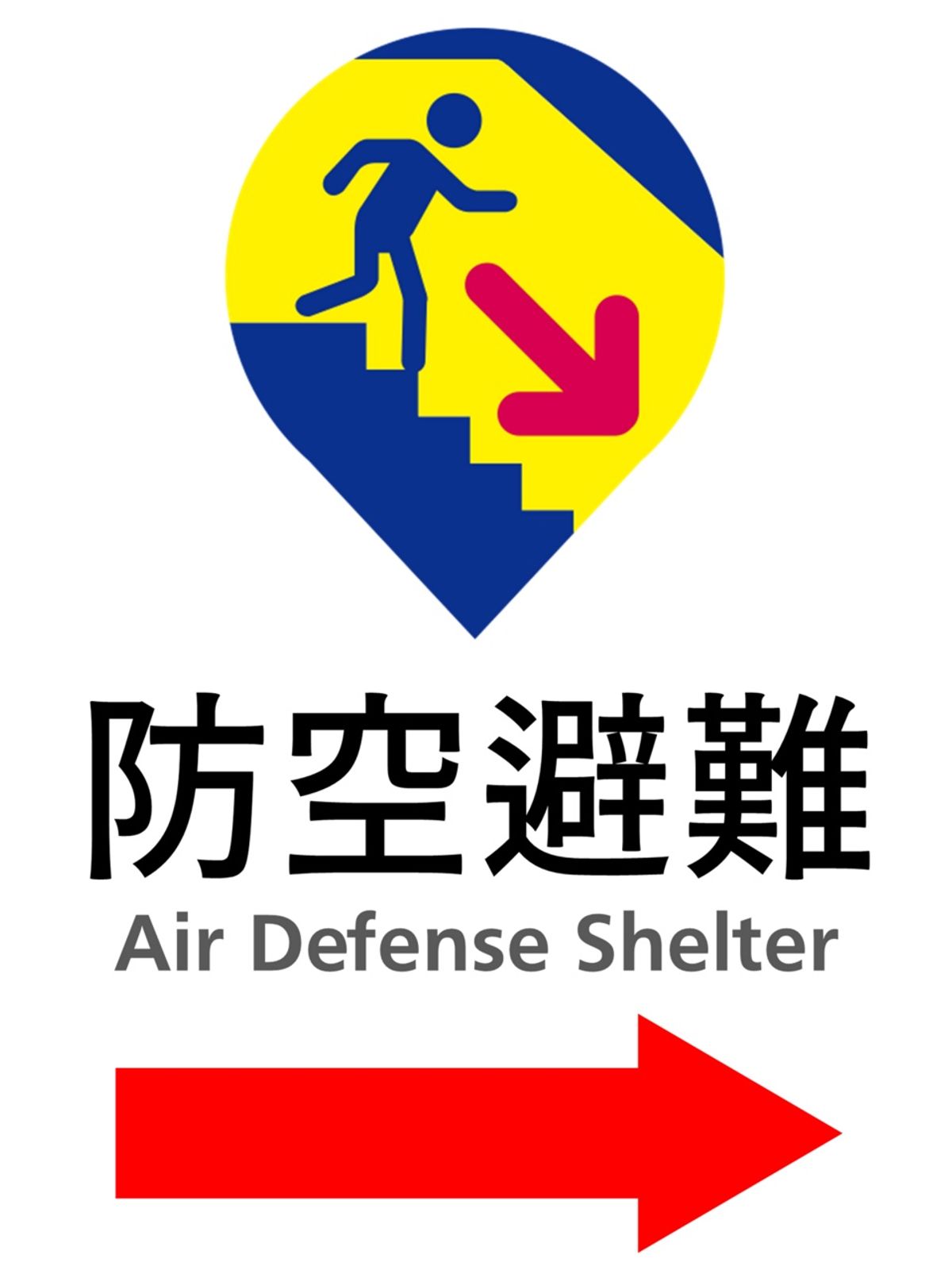
Photo: Wikimedia Commons, public domain
3. Expect the annual air defense drill. Each summer Taiwan runs the Urban Resilience exercise (城鎮韌性演習). In 2026, northern Taiwan's drill ran on August 13 from 2:30 to 3:00 p.m.: sirens and a phone alert, traffic stopped, people directed indoors or underground, MRT riders could enter stations but not leave, and mobile data was deliberately slowed. Ignoring evacuation orders can bring a fine of NT$30,000 to NT$150,000 (Focus Taiwan). It's 30 minutes and a good dry run.
4. Trust the phone alerts. Taiwan uses cell broadcast alerts (the loud 國家級警報, "national alert," and lower-level warnings) for earthquakes, typhoons and air raids. They work on foreign phones on a Taiwanese SIM. Keep them switched on.
5. Register with your country. Americans should enroll in STEP; Canadians in Registration of Canadians Abroad; Australians can subscribe to Smartraveller updates; Britons can sign up for FCDO email alerts on the Taiwan page. If evacuation flights were ever organized, this is how you'd hear.
6. Pack a go-bag once. The government's go-bag list is designed for 1 to 3 days. Our trimmed version for a foreigner in a Taipei apartment:
- 2 bottles of water, crackers, canned food, energy bars
- Flashlight or headlamp, power bank and cables, a small radio
- Prescription medicine, a basic first aid kit, masks
- Your passport, ARC, and copies of both in a ziplock bag
- Cash in NT dollars (ATMs and card terminals may not work)
- A paper list of contacts and your address written in Chinese
Most of this doubles as your typhoon and earthquake kit, which is the real reason to have it.
7. Keep your exit options open. Keep your passport valid with at least six months left, and if you have children, make sure their passports are current too. Keep some savings in an account at home or a multi-currency account, not only in a Taiwanese bank. Our guide to money before you arrive covers how to set that up.
8. Read your insurance's war clause. Most travel and international health policies exclude injury caused by war or invasion, and evacuation cover usually means medical evacuation, not leaving a conflict zone. If this matters to you, look for a policy with a security or political evacuation add-on. Once you're on Taiwan's NHI, routine care is covered regardless; see our guide to health insurance before NHI.
9. Be a little cynical online. Taiwan is one of the most targeted places in the world for disinformation. Fake "breaking news" about drills or shortages circulates on LINE groups. Check official sources such as the Ministry of National Defense or Focus Taiwan before forwarding anything.
Put the risk in perspective
The threats that actually hurt foreigners in Taiwan every year are much more ordinary:
- Traffic. Taiwan records close to 3,000 road deaths a year, and scooters are the main reason. This is statistically your biggest risk by far.
- Earthquakes. The April 2024 Hualien earthquake (magnitude 7.2) was the strongest in 25 years. Taipei swayed, but buildings held. Know how to drop, cover and hold on.
- Typhoons. Several a year, usually just a day or two indoors. See what typhoon days in Taiwan are actually like.
Save 110 (police) and 119 (fire and ambulance), and read our guide to emergency numbers and what to actually do. For everyday safety, see is Taipei safe for foreigners.
When you look at apartments, it's reasonable to ask whether the building has a basement shelter and to favor newer buildings with good earthquake standards. Both questions protect you against the risks that are actually likely, and they're the kind of thing we check for clients when we view places on their behalf.
Our honest take on moving to Taiwan with China tensions
Moving to Taiwan with China tensions in the background is a reasonable decision that hundreds of thousands of foreign residents have already made. The tension is real and long-running, but daily life in Taipei is calm, the advisories are at their lowest levels, and the prep takes one afternoon: download the guide, find your shelter, register with your embassy, pack a bag, keep your passport and some money ready. Then go enjoy the city. If you're still at the planning stage, our list of things to know before moving to Taiwan is the next stop.