
How to Bring Money to Taiwan in 2026: Cash, Cards and Your Rental Deposit
By Raytio Ray
How to bring money to Taiwan in 2026: where cards and Apple Pay now work, where cash still rules, which ATMs to use, and how to pay a NT$60,000 rental deposit.
If you're figuring out how to bring money to Taiwan, the short answer for 2026 is: bring two cards, very little cash, and a plan for your rental deposit. Taiwan changed a lot in the last year. Since July 1, 2026 you can tap a foreign Visa or Mastercard straight onto the Taipei MRT gates, and Apple Pay works at every convenience store. But your landlord, your breakfast shop and the night market still want New Taiwan dollars (TWD), and the deposit is the one payment that catches newcomers out.
Here is what we tell our own clients before they fly.
How to bring money to Taiwan: our short plan
1. Two cards on different networks (for example a Visa debit card and a Mastercard credit card), kept in different places.
2. A no-foreign-fee card or a Wise card for daily spending, so you are not paying 2 to 3% on every bubble tea.
3. A small amount of cash from home (around US$200 or equivalent) as a backup if a card gets blocked. You don't need more than that.
4. Raise your ATM and card limits with your home bank before you leave. This matters for the deposit, see below.
5. Withdraw about NT$10,000 at the airport and keep NT$3,000 to 5,000 in your wallet from then on.
Don't carry thousands of dollars in cash. It's unnecessary in 2026, and it's the riskiest way to move the deposit.
Taiwan cash vs card in 2026: what actually takes cards now
Taipei MRT. From July 1, 2026, every Taipei Metro station accepts contactless Visa, Mastercard, JCB, Discover and Diners Club cards, plus Apple Pay, Google Pay and Samsung Pay, directly at the gates (Focus Taiwan, Taipei Times). Tap in, tap out, the fare is charged to your card. On iPhone, turn on Express Mode in Wallet and you don't even need to unlock the phone. The catch: card taps don't count toward the MRT frequent rider rebate, and the MRT/bus transfer discounts are built around EasyCard.
Taoyuan Airport MRT. Contactless Visa, Mastercard, JCB and phone wallets have worked at the airport line gates for years, so you can ride into Taipei Main Station on day one without buying anything.
Airport pickup. If you book our airport transfer service, someone waits for you at arrivals at Taoyuan or Songshan and drives you to your first address. That means there's no rush to find an ATM or exchange counter for transport money the moment you land; you can withdraw at a 7-Eleven near where you're staying once you've settled in.
Buses, YouBike, small purchases. This is where EasyCard still wins. City buses take EasyCard (and, since January 2026, QR payments from local apps you won't have yet), and YouBike needs an EasyCard or registered card plus a free insurance enrollment that became mandatory in Taipei, New Taipei and Taoyuan on January 1, 2026 (CNA). Our pick: tap your bank card on the MRT for the first few days, then buy an EasyCard at any MRT station or convenience store once you start taking buses. Our guide to the MRT and EasyCard explains loading and refunds.
Trains. High Speed Rail tickets can be bought with a foreign credit card at ticket machines, counters and the T Express app. Taiwan Railway works fine with EasyCard for short trips.
Shops. 7-Eleven, FamilyMart, PX Mart, Carrefour, department stores, chain restaurants and cafes take foreign cards and Apple Pay or Google Pay. If you see a contactless symbol, tap.
Taxis. Many Taipei taxis take cards or app payment (especially if you book through an app like 55688 or Uber), but plenty of street-hailed cabs are still cash only. Ask before you get in.
Local wallets. LINE Pay, JKOPay and Taiwan Pay are everywhere, but they work best with a Taiwanese bank account and phone number. Don't count on them in your first weeks.
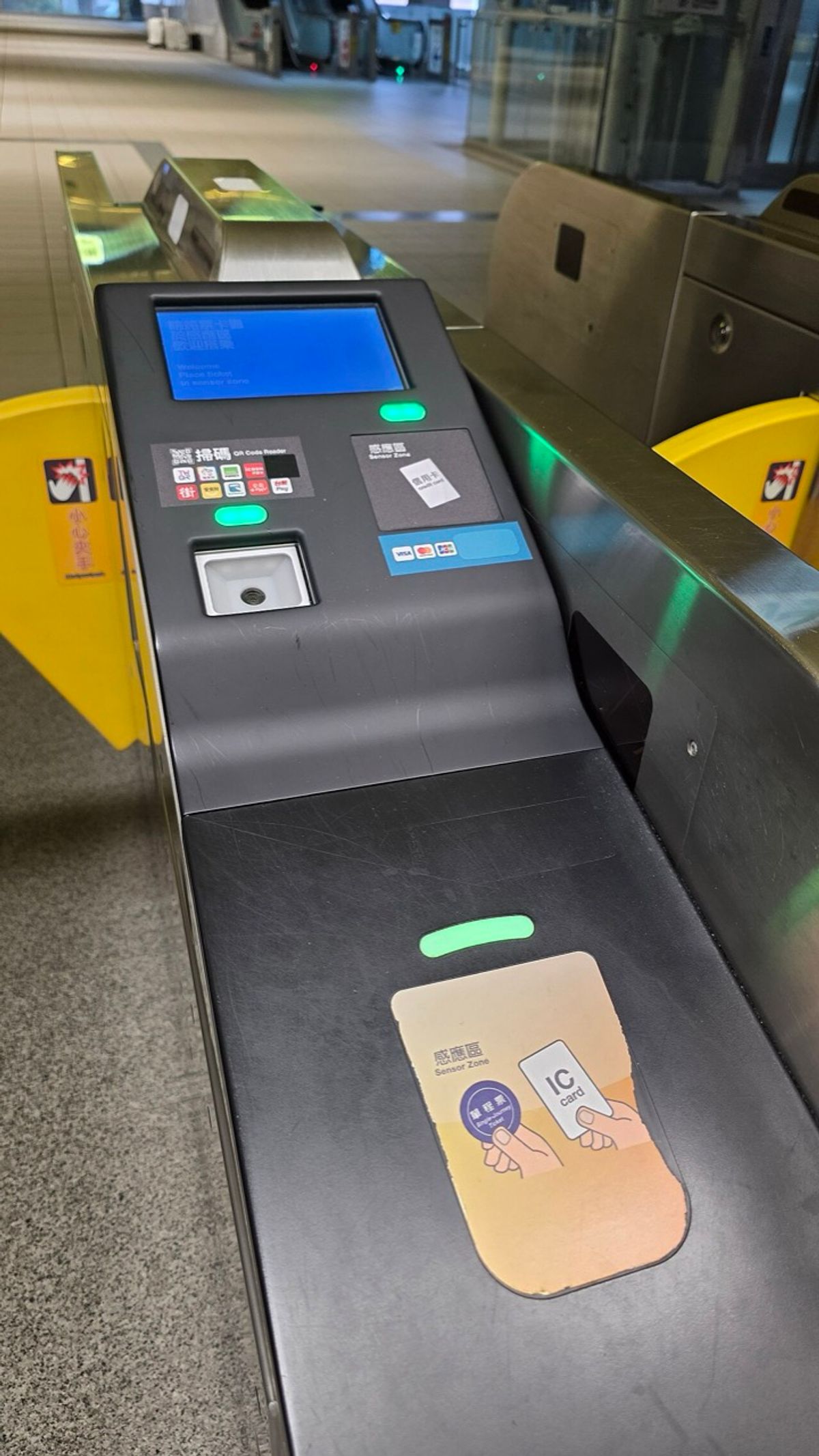
Photo: Sinsyuan via Wikimedia Commons, CC BY-SA 4.0
Where you will still need cash
Taiwan's cash habit is very real outside the chains. Expect to pay cash at:
- Night markets and traditional morning markets. Some stalls show a LINE Pay or Taiwan Pay QR code, but foreign cards almost never work.
- Breakfast shops (早餐店) and small noodle or dumpling places. A breakfast is NT$60 to 120; nobody runs a card for that.
- Neighborhood clinics, barbers, laundromats and small repair shops.
- Your landlord. Rent and deposit are usually paid in cash or by bank transfer. Card payment for rent is rare.
Our rule of thumb: keep NT$3,000 to 5,000 in your wallet. That covers a week of breakfasts and market dinners, a taxi home when the MRT has closed, and a clinic visit (a basic visit with National Health Insurance is a few hundred NT dollars, but without NHI in your first months it can be NT$1,000 or more). More than NT$5,000 is just risk; less than NT$3,000 and you'll be hunting for an ATM at 11 p.m.
ATMs and exchange: where to get TWD
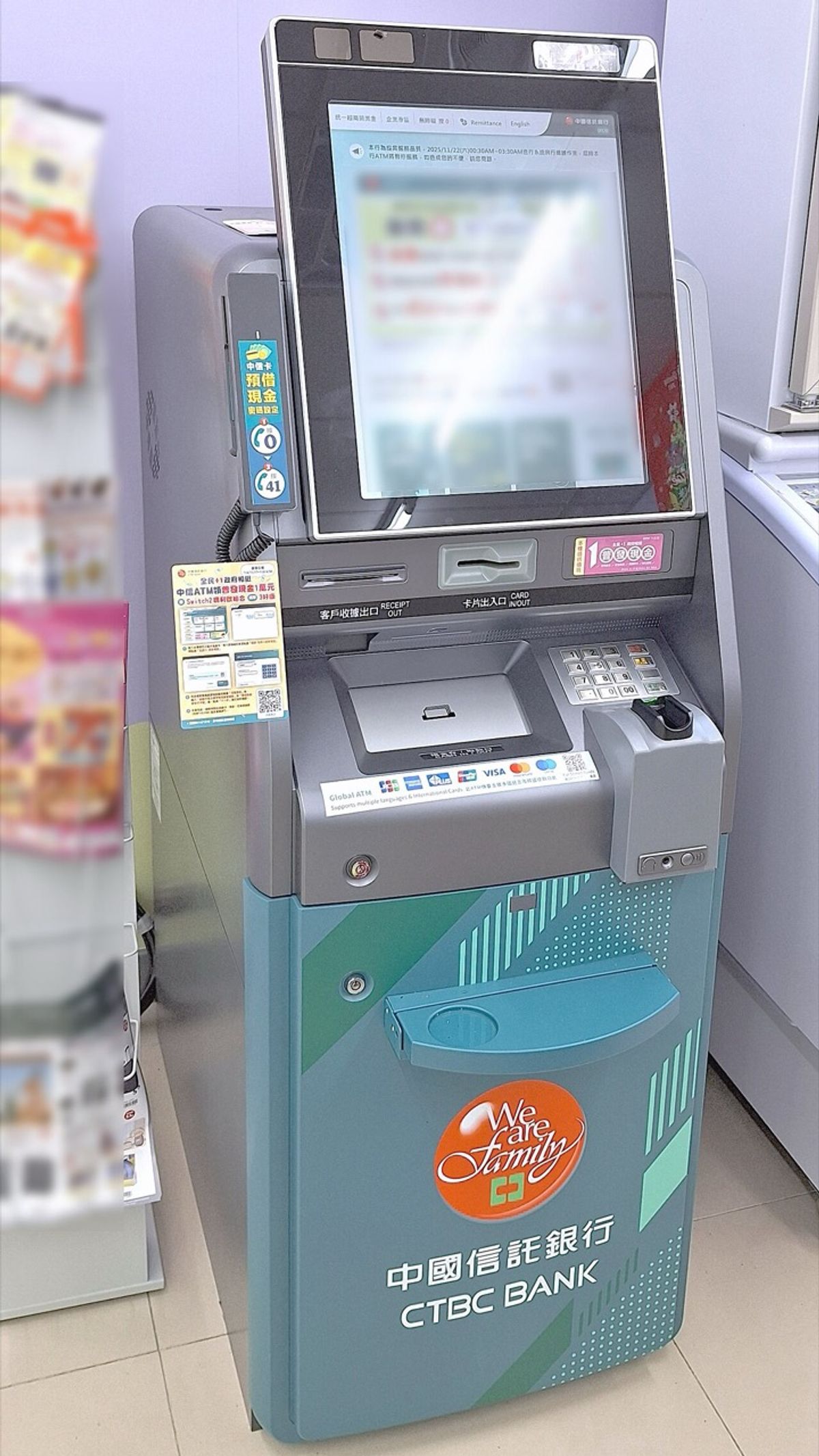
Photo: Solomon203 via Wikimedia Commons, CC BY-SA 4.0
Taiwan ATM foreign card basics. Most ATMs from major banks accept foreign Visa/Plus and Mastercard/Cirrus cards, and nearly every 7-Eleven has a CTBC ATM inside, which works with foreign cards around the clock. A single withdrawal is usually capped at NT$20,000, but you can make several in a row. Some banks add a fee of around NT$100 per withdrawal for foreign cards, on top of whatever your home bank charges. To minimize fees, take out NT$15,000 to 20,000 at a time instead of NT$2,000 five times. Our convenience store guide covers what else you can do at 7-Eleven and FamilyMart.
TWD exchange rate at the airport. The Bank of Taiwan and Mega Bank counters at Taoyuan Airport give rates close to their city branches (sometimes with a small handling fee per exchange), and they are open for arriving flights. It's fine to exchange your backup cash there. What you should avoid is exchanging money at your home airport before departure, where TWD rates are usually poor.
Always choose to be charged in TWD. If an ATM or card terminal offers to convert to your home currency, decline. That conversion rate is almost always worse than your own bank's.
Wise and Revolut. Both cards work at Taiwanese ATMs and shops (Wise card spending converts at the mid-market rate with a small fee). They are our pick for daily spending if your home bank charges foreign fees.
The rental deposit problem
This is where newcomers get stuck. Taiwan law caps a residential deposit at two months' rent, and most Taipei landlords ask for exactly that, plus the first month upfront. On a NT$20,000 apartment that's NT$60,000 due at signing, often within a day or two of choosing the place. Our guide to a normal Taipei rental contract explains the structure, and hidden costs beyond rent covers what gets added on.
Why it's hard:
- Your home bank's daily ATM limit may only be the equivalent of US$500 to 1,000.
- You can't open a Taiwanese bank account until you have your ARC, which takes a few weeks after arrival. See from visa to ARC.
- Most landlords won't take a foreign credit card.
Our recommended plan:
1. Before you fly, call your bank and raise your daily ATM limit for your travel dates. This one phone call solves the problem for most people.
2. Split withdrawals across two cards and two or three days if you can't raise the limit. Start withdrawing as soon as you're seriously viewing apartments.
3. If the landlord accepts a bank transfer, use Wise to send TWD directly to the landlord's Taiwanese account. You need the bank name, branch, account number and the account holder's name exactly as registered. Do a small test transfer first.
4. Avoid a traditional international wire unless you have no choice. Intermediary banks and the receiving bank each take a fee, and the money can take several working days.
5. Get a signed receipt for any cash you hand over, showing the amount and what it covers.
Once you have your ARC, open a local account. In June 2026 the National Development Council named six banks (CTBC, E.Sun, Taipei Fubon, Taishin, Mega and First Commercial) to run one-stop foreigner service at 17 designated branches, covering account opening, credit cards and international transfers in a single appointment (Taipei Times). Our comparison of Taiwanese banks helps you choose.
How to send money to Taiwan later
After you have a local account, the cheapest way to send money to Taiwan from home is usually Wise or a similar transfer service into your own TWD account. It's faster and cheaper than a bank wire, and it means you never need to carry large amounts of cash again. Keep the transfer records: they're useful if your bank asks where the money came from.
Carrying cash across the border
If you do bring cash, these are the declaration rules from Taiwan's Customs Administration (財政部關務署). They apply per person, and each currency is counted separately:
- Foreign currency: declare anything over US$10,000 in total value. Once declared, you can bring in any amount.
- New Taiwan dollars: declare anything over NT$100,000. This is also a hard cap: the excess is held by customs and returned when you leave.
- Chinese yuan (RMB): declare anything over RMB 20,000. The same cap rule applies.
Undeclared or misdeclared cash over the limits can be confiscated. Declaring is free at the red-line counter. But the bigger point stands: a deposit sent by transfer is safer, easier to document, and never needs a customs form.
Once your money is ready, the next step is finding the apartment that deposit goes toward. We search in person with you, handle the landlord conversation in Chinese, and go through the contract before you sign. See our services.