
Shipping Furniture to Taiwan? How to Find an Unfurnished Apartment That Fits It
By Raytio Ray
Shipping furniture to Taiwan? How to time a lease around a delayed ship, find an empty Taipei apartment, get the landlord to clear it, and measure first.
If you are shipping furniture to Taiwan, the hard part is not the ocean. It is making a Taipei apartment and a moving container meet on the same week. The good news: empty family apartments are easier to find than most people expect, about half of registered whole-apartment leases with three or more bedrooms in Taipei and New Taipei this year were signed without furniture, and a landlord who has furniture in the flat will often clear it if you ask before you sign.
Our recommendation: don't sign a lease until your shipment has a firm arrival date at a Taiwanese port, then sign for a start date one to two weeks after that. Live somewhere furnished and licensed until then. Get the landlord's furniture removal written into the contract with a date, and measure your biggest pieces against the elevator, the stairs and the bedroom before you agree to anything. Still deciding whether to ship at all? Our guide to shipping belongings to Taiwan covers freight and customs. This one starts when the boxes are on a ship and you need a home that can take them.
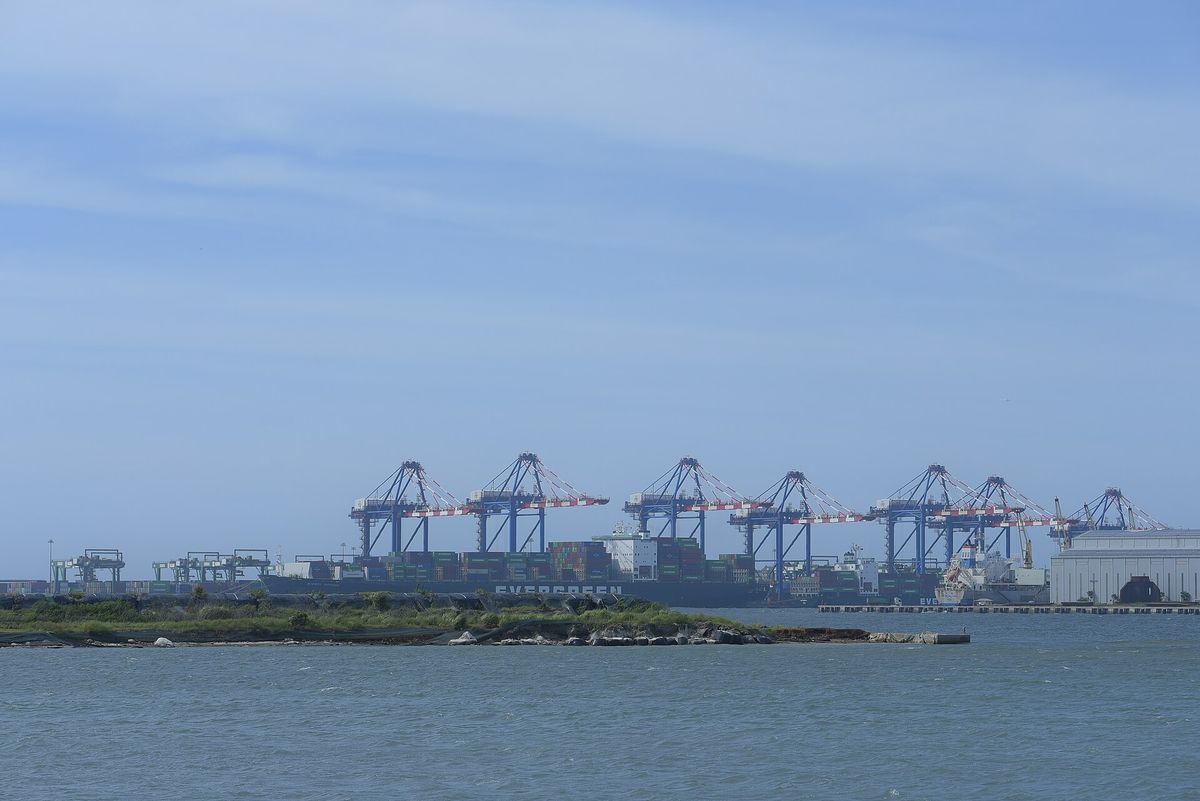
Photo: Taiwankengo via Wikimedia Commons, CC BY-SA 4.0
Shipping furniture to Taiwan: the timeline that actually works
Most sea shipments take weeks, and the date you are quoted on the day you pack is a hope, not a promise. Build your housing plan around the customs rules, which are fixed, rather than the ship, which isn't. Under the Ministry of Finance's rules for inward passengers' luggage, you declare the shipment at the red channel when you land, it has to arrive within six months of your entry, and customs clearance has to be done within 15 days of the vessel's arrival.
Here is the order we suggest:
- Stage: Before you fly | What you do: Get a written ETA range from your mover, not one date | Housing: Book a furnished stay for at least 4 weeks
- Stage: Landing day | What you do: Declare the shipment at the red channel, keep the stamped form | Housing: Furnished stay
- Stage: Weeks 1 to 3 | What you do: View empty apartments, shortlist two or three | Housing: Furnished stay
- Stage: Ship confirmed at port | What you do: Sign a lease starting 1 to 2 weeks later | Housing: Furnished stay
- Stage: Clearance (up to 15 days) | What you do: Mover clears customs and books delivery | Housing: Landlord clears the old furniture
- Stage: Delivery day | What you do: Building elevator booked, movers deliver and assemble | Housing: Move in
Why wait for the port? If you sign early and the ship slips three weeks, you pay two rents at once.
When the ship date keeps moving
A recent client family shipping a whole household from the US had their arrival estimate move from late November to early December while we were still searching, and nobody could promise it wouldn't move again. Their answer was practical. They told us the gap didn't matter much: they would rather sign the right empty apartment and live in it with a few basics for a while than lose a good flat waiting for the boxes. That is a fair choice for a family that is flexible and wants a specific area.
So there are really two strategies:
- Wait for the port, then sign. Lowest cost. Right for most people, especially if the rental market in your target area is not tight.
- Sign the right flat now and camp in it. Costs you some double rent or a few weeks on an air mattress, but you don't lose a rare unit. Right when the area you want has few family-size apartments, which in our experience is true of newer buildings in parts of New Taipei.
If your mover has a warehouse, ask what storage costs if the container arrives before your lease starts. It is usually cheaper to store for two weeks than to rush a lease.
Is it hard to find an empty apartment in Taipei?
For family-size flats, less hard than people fear. We pulled the government's actual price registration data for whole-apartment residential leases signed from April to September 2026, leaving out social housing. For units with three or more bedrooms, about half in Taipei (362 of 709) and in New Taipei (371 of 746) were registered without furniture. For one-bedroom units it was only about a quarter. In other words, the smaller the flat, the more likely it comes furnished, which matches what our furnished vs unfurnished guide says about studios.
Two words to know in Chinese listings: 空屋 (empty unit) and 家具可搬走 or 家具可清空 (furniture can be removed). Even a listing that shows a fully furnished living room may be negotiable, because many landlords are happy not to maintain a sofa and a bed frame. And "empty" in Taiwan often still means the air conditioners, water heater, range hood and built-in cabinets stay. That is what you want: those are fixed to the building and expensive to install yourself.
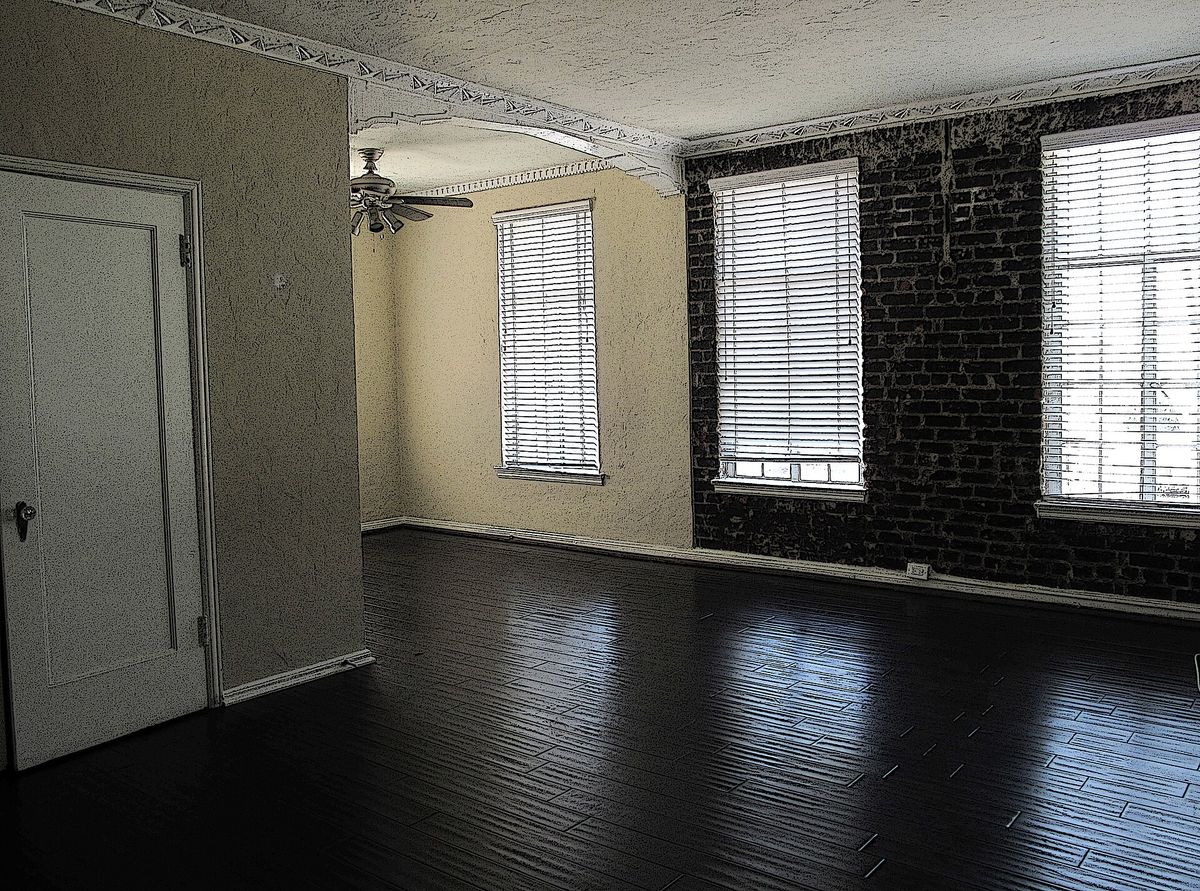
Photo: Downtowngal via Wikimedia Commons, CC BY-SA 3.0 (not a Taipei apartment, shown for illustration)
How to get a landlord to remove the furniture
Ask early, ask specifically, and give them an easy way to say yes.
1. Ask at the first contact, not after the viewing. "Can all the movable furniture be removed before move-in?" filters out the landlords who can't, and saves you a viewing.
2. Make a list, room by room. Bed frames, mattresses, sofa, dining set, desks, wardrobes that aren't built in. Mark what stays: air conditioners, water heater, range hood, built-in cabinets, and any appliance you'd like to keep, such as a fridge or washer if yours aren't coming.
3. Know what it costs them. Taipei's environmental department collects household bulky waste such as furniture free of charge, by appointment with the district cleaning squad, under its bulky waste rules; New Taipei runs a similar booking system through its district cleaning squads. A landlord who wants it gone faster can hire a moving company to haul it, and PRO360's moving price guide lists waste removal from about NT$1,500 to 1,700 for a small 1.75-ton truck. Mentioning that it is cheap and quick often settles it.
4. Offer flexibility on timing. If the landlord needs a week to clear the flat, that week can be the gap while your container clears customs.
Put the removal and the empty list into the contract
A verbal "sure, we'll clear it" is how families end up with someone else's mattress in the master bedroom on delivery day. Taiwan's model residential lease has a property condition statement (租賃標的現況確認書) with an equipment checklist, published by the Ministry of the Interior on its lease template page. Use it the other way around from a furnished rental: list what stays, and write that everything else will be removed.
Add one plain special term, in Chinese and English: the landlord removes the listed furniture by a specific date, before the lease start date, and if not, the start date and the first rent payment move back by the same number of days. Then photograph the empty flat on handover. Those photos protect your deposit later, because the landlord can't claim marks left by their own furniture. Under Article 8 of the Rental Housing Market Act, the landlord has to hand over a home that is fit to live in; your list makes clear what that home includes. Our guide to what a normal Taipei rental contract looks like shows where these pages sit.
Measure before you sign: American furniture in Taipei apartments
This is the step people skip, and it decides whether your furniture works at all.
Beds. A standard US king mattress is 76 by 80 inches, about 193 by 203 cm (GoodBed). Taiwan's common large size, sold as 6 by 6.2 尺 (雙人加大), is 182 by 188 cm; you can see it on mattresses sold at Costco Taiwan. So a US king frame is roughly 11 cm wider and 15 cm longer than what a Taiwanese master bedroom was planned around. Ask for the master bedroom's inside measurements, and allow space for the frame and for opening the wardrobe.
Room size. Listings give size in 坪 (ping, about 3.3 square meters), and the figure includes a share of the building's common areas, so the rooms are smaller than the number suggests. Our guide on how to read a Taiwanese rental listing explains the math.
Getting it in. Measure the elevator door width, the car's depth and its height, plus every door on the way in. A long sofa that fits through a door may not fit in the elevator car, and the diagonal of the car is what matters for tall wardrobes. In a walk-up, check the stair turns. If a piece won't go up the inside, movers can lift it through a window or balcony with a crane truck; PRO360 lists this at about NT$2,500 to 3,000 for the first hour. Our walk-up vs elevator building guide covers what to check in each type.
Big appliances. American refrigerators are often deeper and wider than a Taiwanese kitchen niche. A full-size US dryer needs a vent and a high-voltage outlet that most Taipei apartments don't have, so if you're shipping one, ask the landlord in writing whether you may install it and where.
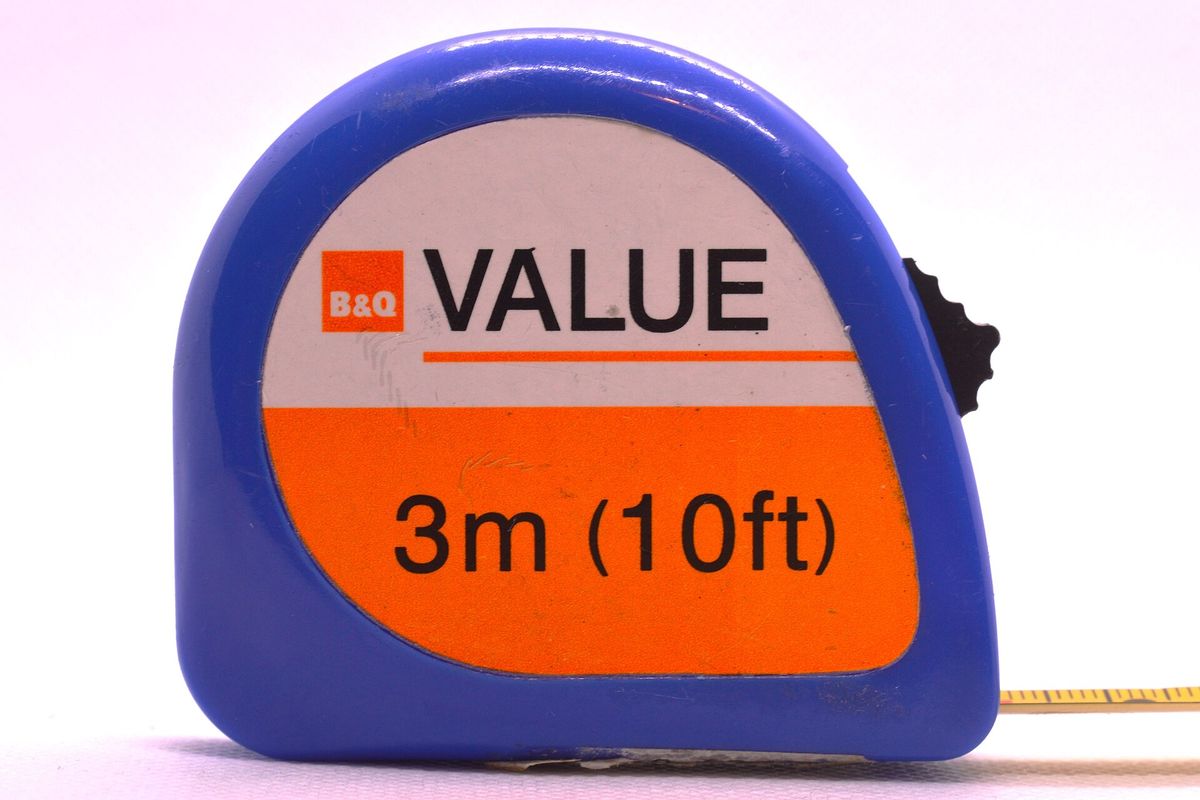
Photo: 多多123 via Wikimedia Commons, CC BY 4.0
Voltage and plugs: mostly good news from North America
Taiwan runs on 110 volts at 60 Hz with the same two-pin and three-pin plugs as the US and Canada (Type A and B), according to the Taoyuan City government's visitor page and the CIA World Factbook. Lamps, TVs, desktop computers and most small appliances from North America simply plug in. The same page notes that many buildings also have 220-volt outlets, mainly for air conditioners. Anything that ran on a 240-volt circuit at home, like an electric dryer or range, needs an electrician to look at it before you ship it, and often isn't worth shipping.
If you're coming from Europe, the UK or Australia, the logic flips: most appliances are 220 to 240 volts, so ship furniture, not appliances.
Where to live while the container is at sea
You need four weeks or more of somewhere furnished, close to the areas you are viewing. A serviced apartment on a monthly rate is the most comfortable option for a family; hotels work for shorter gaps. Our guide on where to stay your first weeks in Taipei compares the options.
One caution about short-term apartment rentals. The family we mentioned above started in a short-term rental and didn't enjoy it: long walks to put out the trash and strict noise rules, and once they learned that many short-term rentals in Taiwan don't hold a lodging licence, they didn't want to stay in one. You can check whether a hotel or B&B is licensed on Taiwan Stay, the Tourism Administration's accommodation site, before you book.
How TRA connects the apartment and the container
This is exactly the kind of move where one person coordinating everything saves you weeks. TRA can be your single point of contact from the first viewing to the day the boxes arrive:
- We search for empty or clearable family apartments in your areas, and ask every landlord or agent in Chinese, before you view, whether the furniture can go and by when.
- We view with you, measure with you, and check the elevator, stairs and bedroom sizes against your mover's inventory.
- We negotiate and write the removal date and the empty list into the contract, and go through every clause before you sign. Larger family flats are often listed through agents; if yours is, we work to get you the best agent fee we can, and on higher rents that saving often covers much of our own fee.
- We coordinate the move-in side: our sister service handles moving support and move-in cleaning, and we can liaise with your international mover on the delivery date and the building's elevator booking.
Each family's move is different, so we quote individually. See how our service works or tell us your shipping dates and what you need.
Our pick
Ship the furniture you love, not the furniture you own. Book a furnished place for at least four weeks, start viewing empty apartments as soon as you land, and sign once the ship is at port, unless the right flat in a scarce area shows up first. Whatever you sign, get the landlord's removal date in the contract and measure your bed and sofa against the elevator before you commit. If you want a second pair of hands on any of it, contact us here.
FAQ
Can I ask a Taiwanese landlord to remove the furniture?
Yes, and many will agree, especially for larger family apartments. Ask before the viewing, give a room-by-room list of what should go and what stays, and write the removal date into the lease.
Are unfurnished apartments common in Taipei?
For family-size units, fairly common. In government lease registration data for April to September 2026, about half of whole-apartment leases with three or more bedrooms were registered without furniture. Studios and one-bedrooms are much more often furnished.
When should I sign a lease if my shipment is still at sea?
Usually once the shipment has a confirmed arrival at a Taiwanese port, with a lease start one to two weeks later to allow for customs clearance. Sign earlier only if the right apartment is rare and you can live with some double rent.
Will a US king bed fit in a Taipei apartment?
Often, but measure. A US king is about 193 by 203 cm, wider and longer than Taiwan's common 182 by 188 cm size. Check the master bedroom, the elevator car and the stairs before you sign.
Do American appliances work in Taiwan?
Most small ones do: Taiwan uses 110 volts, 60 Hz and the same plugs as the US. Appliances that need a 240-volt circuit at home, such as electric dryers, need an electrician's check first.