
How to Negotiate Rent With a Taiwanese Landlord
By Raytio RayUpdated
Yes, you can negotiate rent in Taiwan. How to check fair rent, what to offer, which terms move more easily than price, and the Chinese phrases to use in Taipei.
Yes, you can negotiate rent in Taiwan, and most Taipei landlords expect at least a polite ask. But the room to move is usually modest, and it is rarely a market-stall haggle. What works is giving the landlord a reason: a longer lease, a reliable payment record, a flexible move-in date, or a unit that has been sitting empty. What doesn't work is a lowball number with no reason attached.
Our recommendation: check what similar flats actually rent for before the viewing, negotiate the terms first (repairs, appliances, electricity rate, the early-termination clause), and ask about price once, calmly, with a concrete offer. Over a year, a better term is often worth more than a small discount. Below is how to do each step, plus the Chinese phrases that make it easier.
Before you negotiate rent in Taiwan: know the real number
A landlord's asking price is an opinion. Three free sources tell you whether it's high:
- Actual rent registrations. Rentals handled by real estate agents and rental-management companies are reported to the Ministry of the Interior's actual price registration site (實價登錄). Search the building or the lane and you'll often see what nearby units really rented for, not just what they were listed at.
- Official medians. For the first half of 2026, Ministry data based on rent-subsidy contracts put Taipei's studio median at NT$15,000 and the shared-room median at NT$9,800, with Neihu (NT$19,500) and Songshan (NT$19,000) at the top for studios (UDN, August 2026). These come from subsidy applicants, so they can run below typical asking rents, but they are a useful floor.
- Our own ranges by area. Our Taipei rent prices guide gives our own rough ranges for studios and one-bedrooms in the main districts.
If the asking rent sits well above comparable units, you have a factual reason to ask. If it's already at or below them, spend your effort on terms instead.
What actually moves a Taiwanese landlord
Many Taipei landlords are individuals who own one or two flats. What they fear isn't a slightly lower rent. It's an empty month, a tenant who pays late, damage, and the hassle of finding someone new. Your leverage is anything that reduces those risks.
- Lease length. A one-year or two-year commitment is worth more to a landlord than six months. Under the Ministry's model terms, rent can't be raised during the lease, so a longer lease also locks in your price.
- Payment reliability. A stable job, a school admission letter or a Gold Card helps. So does offering automatic monthly transfers on a fixed date.
- Timing. A unit that has been listed for weeks, or a viewing outside the summer student rush, usually means a landlord who is more flexible.
- Move-in date. Taking the flat sooner, so the landlord doesn't lose a month, is a real concession you can trade.
- Low-maintenance tenant signals. No smoking, no pets, working professional, quiet hours. Landlords care about these more than you'd think.
Paying several months upfront is sometimes offered as leverage. We'd be careful: the legal deposit cap is two months (Article 7), and prepaid rent is money you'd have to chase if things go wrong. If you do prepay, put it in the contract.
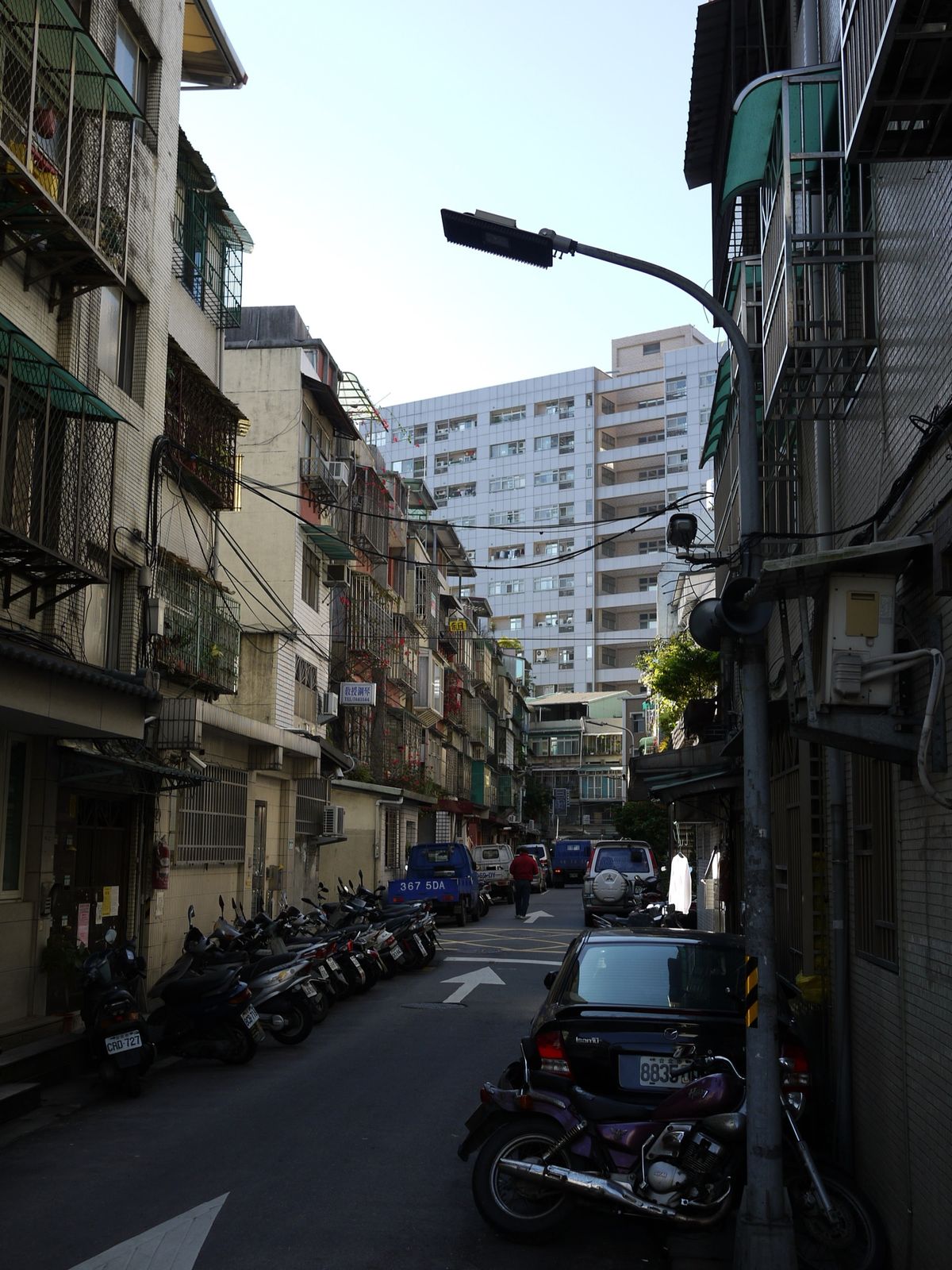
Photo: Bernard McManus via Wikimedia Commons, CC BY 2.0
Negotiate terms first, price second
Price is the one thing every landlord is braced for. Terms are where they say yes more easily, and many are worth real money:
- Term to ask for: Repairs done before move-in (leaks, mold, broken appliances) | Why it matters: Avoids a fight later; get it written into the condition report
- Term to ask for: A missing appliance added (washing machine, fridge, desk) | Why it matters: Saves you buying and later disposing of it
- Term to ask for: Electricity at the Taipower average rate | Why it matters: Since July 2024 the rules cap per-kWh charges at the bill's average rate
- Term to ask for: Early termination allowed with one month's notice | Why it matters: Caps your cost of leaving early at one month's rent
- Term to ask for: Management fee included in rent | Why it matters: Removes a monthly line item
- Term to ask for: Air conditioner cleaned before you move in | Why it matters: Cheap for the landlord, valuable in Taipei humidity
- Term to ask for: Written agreement that you can register the address | Why it matters: Essential for your ARC
- Term to ask for: Permission for a pet | Why it matters: Often negotiable for a small, quiet animal
The electricity and tax points are the most technical. Our guide to Taiwan rental fine print explains the electricity rule and why some landlords quote rent "excluding tax". If the landlord doesn't want you claiming the rent on a tax return, be aware that a clause banning it is void under the Ministry's lease rules. The deduction itself is worth up to NT$180,000 a year for eligible tax residents (Commercial Times), so decide before negotiating whether you care about it.
Taipei rent negotiation, step by step
1. Build rapport first. Ask about the building, the neighbors, how long they've owned it. Twenty minutes of friendly questions does more than any argument.
2. Raise terms during the walk-through. "The washing machine looks old, would you replace it?" is a natural question while you're standing next to it.
3. Ask about price once, with a reason. For example: "If I sign for two years, is there any flexibility on the rent?" Then stop talking and let them answer.
4. Offer something concrete in return. A longer lease, an earlier move-in, a fixed transfer date.
5. Accept a partial yes. A small reduction plus a new fridge is a good outcome. Pushing for more after a yes usually backfires.
6. Put every agreement in the contract. Verbal promises are easy to forget a year later. Rent, included items and repairs all belong on paper.
Chinese phrases that help
Even if you don't speak Mandarin, a sentence or two signals you're serious and local-minded:
- English: Is there any room on the rent? | Chinese: 租金還有空間嗎? | Pinyin: Zūjīn hái yǒu kōngjiān ma?
- English: If I sign for two years, could it be a bit lower? | Chinese: 如果簽兩年,可以算便宜一點嗎? | Pinyin: Rúguǒ qiān liǎng nián, kěyǐ suàn piányí yīdiǎn ma?
- English: Is the management fee included? | Chinese: 有含管理費嗎? | Pinyin: Yǒu hán guǎnlǐ fèi ma?
- English: How much is electricity per kWh? | Chinese: 電費一度怎麼算? | Pinyin: Diànfèi yī dù zěnme suàn?
- English: Can I register this address for my residence permit? | Chinese: 可以用這個地址辦居留證嗎? | Pinyin: Kěyǐ yòng zhège dìzhǐ bàn jūliú zhèng ma?
- English: Could you fix this before I move in? | Chinese: 入住前可以先修好嗎? | Pinyin: Rùzhù qián kěyǐ xiān xiū hǎo ma?
What tends to backfire
- Waving a cheaper listing at them. Unless it's a genuinely similar unit, it reads as haggling for sport and sours a relationship you'll depend on for a year.
- Negotiating hard in the first five minutes. The landlord hasn't decided whether they like you yet.
- Negotiating by text through a translation app. Tone gets lost, and it's easier for a landlord to send a flat "no" by message than to say it to your face.
- Asking for a discount on an already cheap unit. In popular areas during peak season, a good studio can get several inquiries a day. Asking for a lower price there can simply move you to the back of the line.
If the landlord won't consider foreign tenants at all, that's a different problem; see when a landlord won't rent to foreigners in Taiwan.
What the landlord may ask for in return
Negotiation runs both ways. A Taipei landlord who agrees to a lower rent or a new fridge often asks for something back, and it helps to know which requests are normal:
- A longer lease. The most common trade. Fine if your plans are stable; make sure the early-termination box still says you may leave with one month's notice.
- A fixed payment date. Reasonable. Set up a recurring transfer.
- No smoking, no pets, limited cooking. Some older buildings worry about smells and fire. Agree only to what you can live with for a year.
- You handle small repairs. Acceptable for light bulbs and consumables. Under the Ministry's lease rules, anything you're expected to repair must be listed and confirmed by you, so don't accept a vague "tenant fixes everything".
- A guarantor. Less common with foreigners, but some landlords ask. Our guide on landlords who hesitate over foreign tenants covers how to handle it.
What you shouldn't trade: your right to register the address for your ARC, or the deposit cap. A clause banning address registration is void under the same lease rules, and a deposit above two months breaks the law.
When not to negotiate at all
Sometimes the best move is to sign at the asking price. If the flat ticks every box, the rent is already at or below what similar units registered for, and you're viewing in late August when students are competing for every decent room, a request for a discount can cost you the flat. A good apartment at a fair price is worth more than a mediocre one at a bargain. Save your negotiating energy for the terms that protect you over the year.
Let TRA negotiate in Chinese for you
Negotiation is part of every search we do, and it's where speaking Chinese face to face makes the biggest difference.
- Before the viewing, we agree with you on your budget, your walk-away number and what you can offer: lease length, move-in date, payment schedule.
- At the viewing, we handle the conversation in Chinese on the spot, build rapport first, and raise price and terms at the right moment, the way a local tenant would. You're in the room and we translate as we go, so you decide every yes or no.
- Before signing, we make sure everything agreed (rent, repairs, appliances, electricity rate, early termination) is written into the contract.
We're never paid by the landlord or an agent, so our only incentive is a good deal for you. Once the in-person search starts, finding the right place typically takes anywhere from 3 to 5 days up to about 1 to 2 weeks. You pay a deposit when we start and the balance once you've found your home; we quote individually. See how our service works.
Our pick
Do your homework on the actual price registration site, then negotiate in this order: repairs and appliances, electricity rate, early-termination clause, and only then the rent itself, once, with a longer lease as your offer. If you'd like us at the table, tell us your budget and dates.
FAQ
Can you negotiate rent in Taiwan?
Yes. Polite negotiation is normal in Taipei, especially on units that have been listed for a while. Expect modest movement on price; terms such as repairs, appliances and the electricity rate are often easier to win.
How much discount can I ask for on a Taipei apartment?
There's no standard percentage. Check comparable rents on the actual price registration site first. If the asking price is clearly above similar units, you have a reason to ask; if not, focus on terms.
Is it better to negotiate in person or by message?
In person. Landlords respond to tone and rapport, and a written request through a translation app is easy to decline.
Should I offer to pay several months upfront?
Only with care. The deposit is capped at two months by law, and prepaid rent is harder to recover if something goes wrong. If you prepay, write it into the contract.
Can TRA negotiate with the landlord for me?
Yes. We negotiate in Chinese at the viewing with you present, and we're not paid by landlords or agents.