
Mail Forwarding When Moving to Taiwan: Your Home Address, Phone Number and Bank
By Raytio Ray
Mail forwarding when moving to Taiwan: the virtual mailbox to pick, keeping your home number for bank codes, and writing your Taipei address in English.
Mail forwarding when moving to Taiwan is the boring job almost everyone leaves to the last week, and it is the one that bites months later: a bank card that expires and gets mailed to your parents' house, a tax letter nobody opens, a verification code sent to a phone number you cancelled at the airport. Taiwan itself is easy. Your home country's paperwork is what follows you.
Here is the setup we recommend, country by country, plus how to receive mail in Taipei.
Our pick: the setup that works for most people
1. Keep one home address for banks, tax and government, and make it a virtual mailbox (or a very reliable family member, see below).
2. Keep your home phone number alive on the cheapest possible plan, or port it to Google Voice if you're American.
3. Move every login you can from SMS codes to an authenticator app or passkeys before you fly.
4. Open a Wise account at home while you still have a home address and phone, so you can move money both ways later.
5. Give everyone in Taiwan your Taipei address in Chinese, and use the English version only for mail coming from abroad.
Don't cancel your home bank accounts or credit cards. Taiwanese banks won't give you a credit card for months, and a long credit history at home is hard to rebuild.
Mail forwarding when moving to Taiwan: why the post office can't do it
On Forumosa, the oldest version of this question is simply "can the US post office send my mail to my new address in Taiwan?" In practice, no. The standard USPS change of address is built for US addresses, and most banks and government agencies won't post anything abroad anyway. The UK, Canada and Australia do offer international redirection, but it's expensive and temporary: Royal Mail charges around £150 to redirect post overseas for three months, and you'd be paying that to receive bank flyers in Daan.
The real fix is an address at home that someone (or some company) opens, scans and acts on for you.
Virtual mailbox options for Taiwan expats
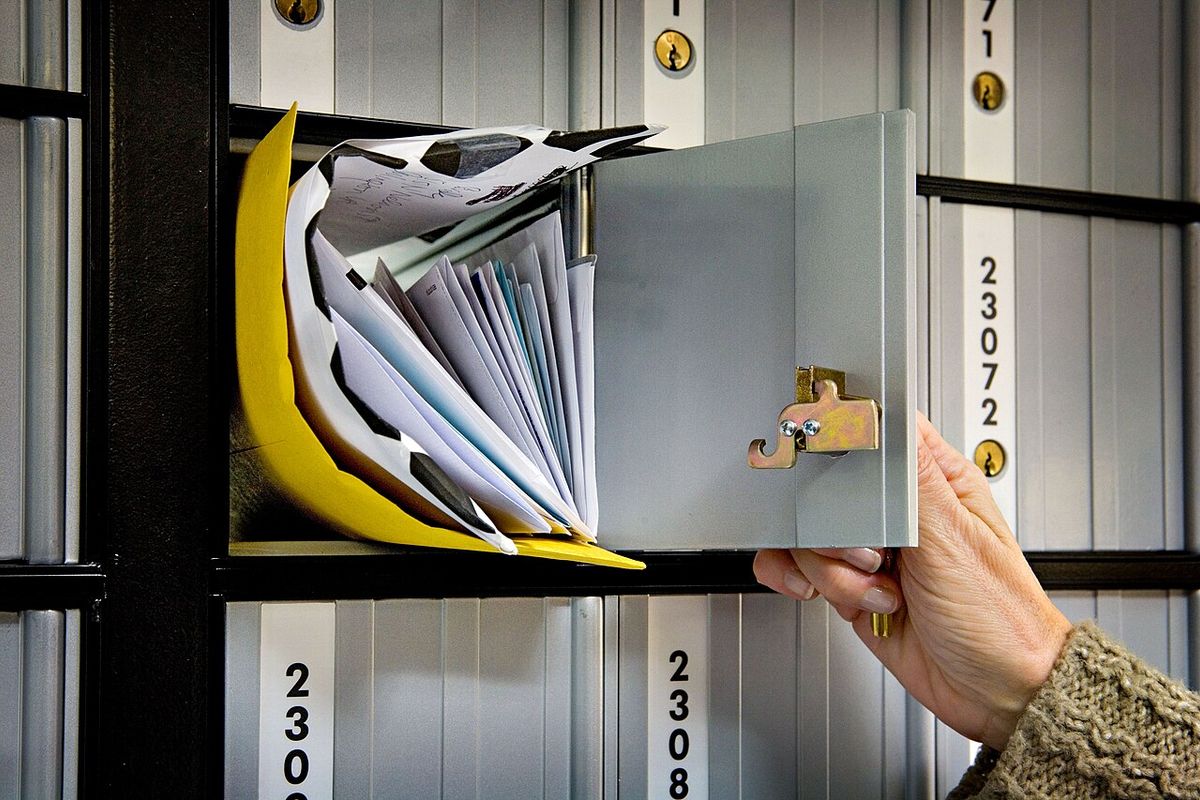
Photo: United States Postal Service via Wikimedia Commons, CC BY-SA 3.0
A virtual mailbox gives you a real street address. The company receives your letters, emails you a photo of each envelope, and you choose: scan it, shred it, or forward it to Taipei. Rough 2026 starting prices (they vary by address location, so check before you sign up):
- Traveling Mailbox (US): from about US$15 a month for the Basic plan, which includes 40 envelopes and 35 scanned pages. Our pick for Americans, because scanning is bundled and predictable.
- Anytime Mailbox (US): from around US$6 to 10 a month depending on the address you choose, with extra fees per scan. Cheapest if you get very little mail.
- iPostal1 (US): from about US$10 a month, also location dependent. Good if you want a real street address in a specific state.
- UK Postbox (UK): a London PO Box address from £6 a month, a street address from about £12 a month (Poole) to £24 in London, with forwarding charged per item (from about £0.90 plus postage).
Canadians and Australians have fewer big-name options. Many end up using a family member's address (next section) and a scanning arrangement with them.
The US catch: USPS Form 1583. Every US virtual mailbox makes you sign Form 1583, which authorizes the company to receive your mail, and it has to be notarized with two IDs. Do this before you leave. One forum member who left it too late found online notary platforms wouldn't accept his translated Taiwanese ID, and ended up booking an appointment at the American Institute in Taiwan (AIT) to get it notarized. Most providers now offer online notarization, which is easy with a US passport and driver's license while you still have both.
One more catch: some banks and brokerages flag known virtual mailbox addresses as "not a residential address". Expect one or two to push back.
Using a family member's address: fine, with three warnings
Using your parents' or a sibling's address is free, and it's what most people do. Three warnings:
- Your mail is their chore. Agree on how often they'll photograph letters for you. Forumosa has several threads from people who lost their US address overnight when a parent passed away or moved into care.
- US state taxes. If you're American, using an address in a state like California or Virginia can make that state argue you're still a resident and owe state income tax. A virtual address in a state with no income tax (Texas, Florida, Nevada, South Dakota) avoids that argument.
- Honesty with your bank. If you tell a bank you've moved abroad, some will restrict or close accounts. In the UK you can keep an existing ISA but can't add new money once you're non-resident, and Canadian TFSA contributions made while non-resident are penalized at 1% a month. Australians should tell their bank they're non-resident so the correct non-resident withholding tax is applied to interest.
Keeping your home phone number for 2FA
This is the step people regret most. Your home bank, tax portal and even your email will keep texting codes to your old number.
Americans: port your mobile number to Google Voice before you leave. Porting costs US$20, and it must be done from the US while the number is still active on a US mobile plan. After that, Google Voice works on Wi-Fi from Taiwan for receiving most texts. The weak spot: some banks refuse to send codes to VoIP numbers, so check your main bank first.
UK, Canada, Australia: keep the cheapest prepaid plan that doesn't expire quickly (in the UK, many people use giffgaff, which keeps a number active as long as you use it occasionally). Put the SIM in an old phone or use an eSIM alongside your Taiwanese SIM. Receiving SMS while roaming is usually free; check yours.
Everyone: switch every account that allows it to an authenticator app (Google Authenticator, Authy, 1Password) or passkeys. That way you aren't dependent on a number at all. For your Taiwanese number, see our guide to opening a bank account and getting a phone plan.
Money, tax and voting from abroad
Wise. Open it at home, verify it with your home address, and get local account details in USD, GBP, CAD, AUD or EUR. It's the easiest way to pay a home card bill from Taiwan. More in our guide to money before you arrive.
US taxes living in Taiwan. US citizens file a US return every year no matter where they live. Living abroad gets you an automatic extension to June 15 to file (interest on any tax owed still runs from April 15). If your foreign accounts, including your Taiwanese bank account, total more than US$10,000 at any point in the year, you also file an FBAR with FinCEN. Most people earning a normal Taiwan salary owe no US tax thanks to the foreign earned income exclusion or foreign tax credit, but you still have to file to claim them. If you work remotely for a foreign company, read our remote work and tax guide.
Voting. Americans request ballots through FVAP.gov each year. UK citizens can register as overseas voters (the old 15-year limit was removed in 2024). Canadians join the International Register of Electors. Australians should fill out an overseas notification with the AEC.
Receiving mail and packages in Taiwan
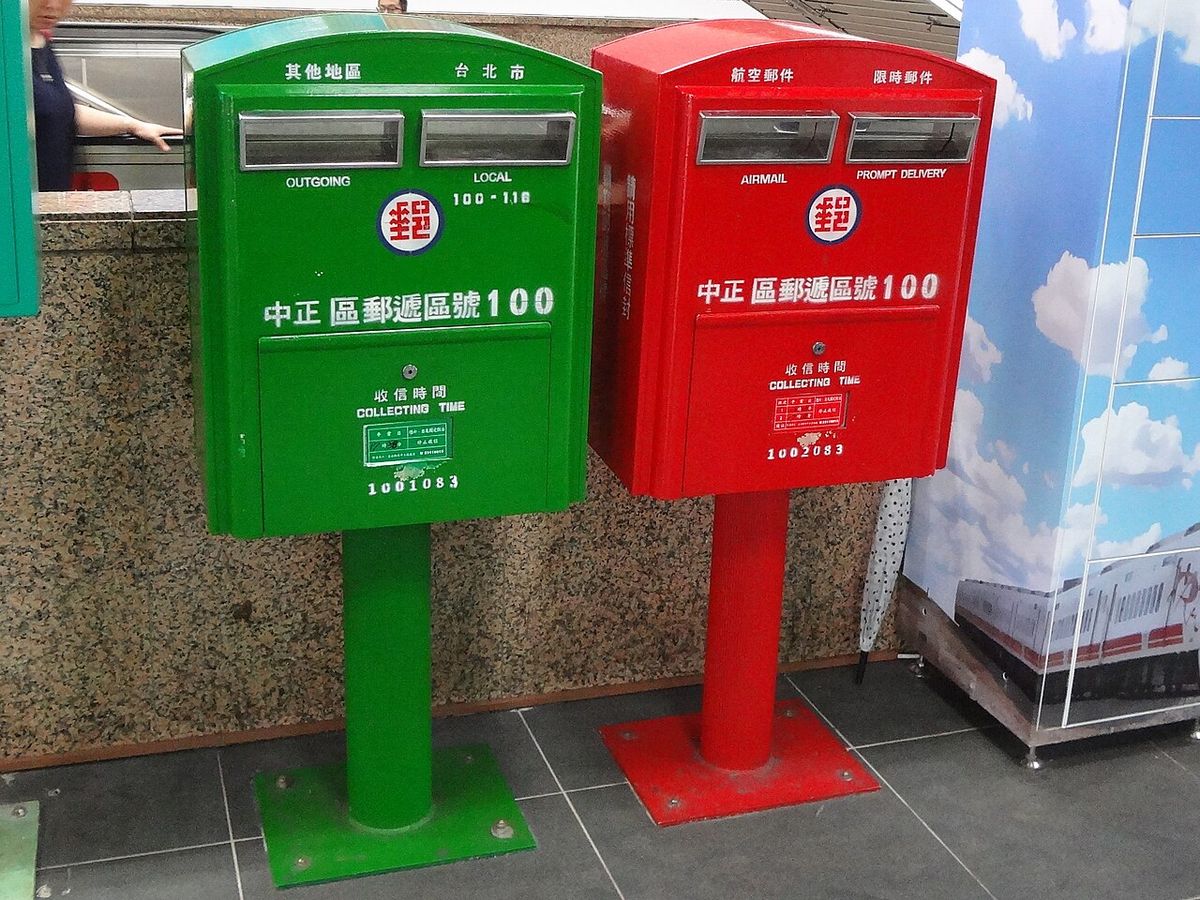
Photo: Solomon203 via Wikimedia Commons, CC BY-SA 4.0
Write your Taipei address in Chinese for anything sent inside Taiwan. Order goes from big to small: postcode, city, district, road, section, lane, alley, number, floor.
Taiwan address in English for mail from abroad. Use Chunghwa Post's official Chinese to English address translation tool: pick the city, district and road, type the numbers, and it gives you the correct romanized address. English goes from small to big, the opposite order. A typical result looks like:
3F., No. 55-2, Yining St., Datong Dist., Taipei City 103, Taiwan (R.O.C.)
Postcodes are 3+3 digits. The first three digits are the district (103 is Datong, 106 is Daan). The full six-digit code pins down your street segment, and the post office's postcode lookup gives it to you. Three digits will still arrive; six is faster.
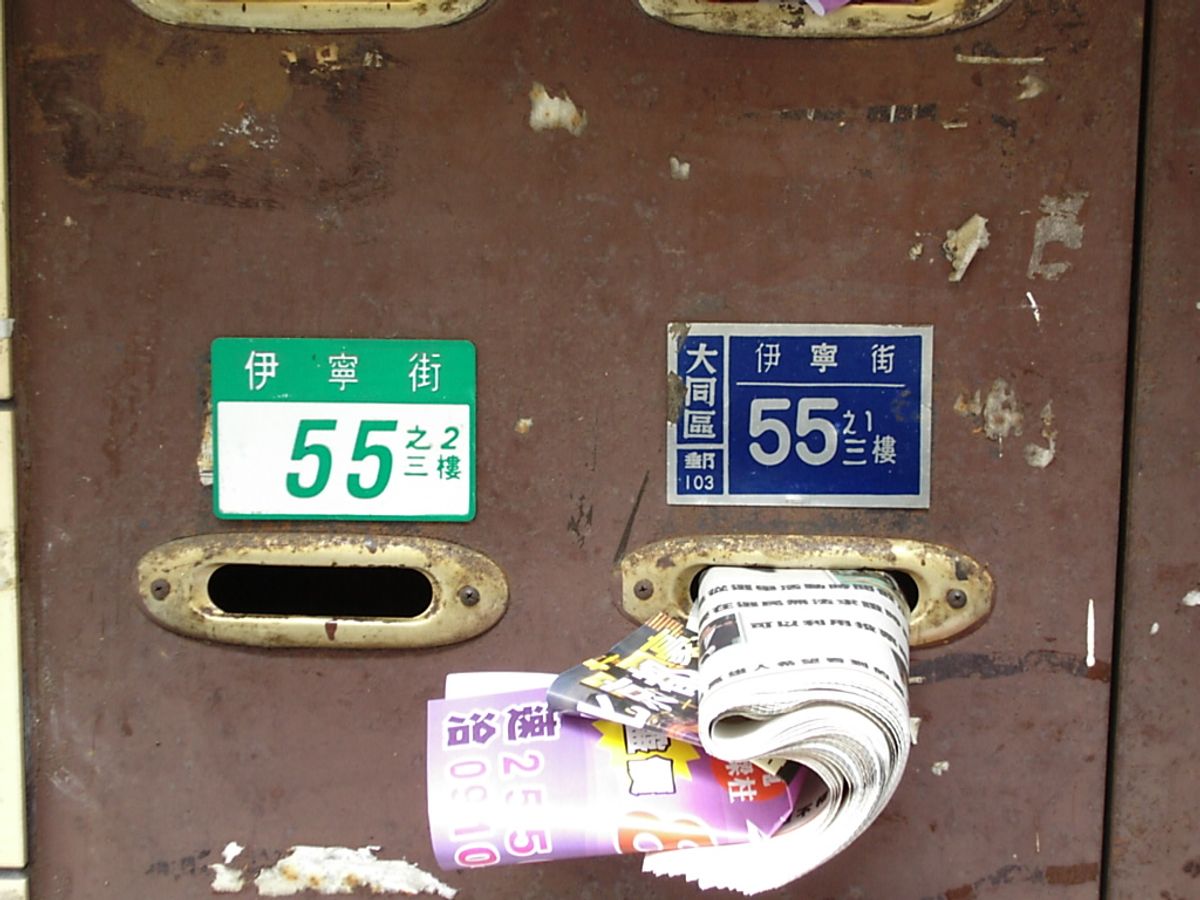
Photo: Aco at Chinese Wikipedia via Wikimedia Commons, CC BY-SA 3.0
That plate reads "55之2, 三樓": the 之 is the dash in "No. 55-2", and 三樓 is the 3rd floor. Put your name on your mailbox in English and Chinese so carriers can match it.
Overseas packages. Imports valued at NT$2,000 or less per shipment are generally duty and tax free. For courier and e-commerce shipments, customs uses real-name authentication through the EZ WAY app, which you'll want to set up once you have your ARC. If a package is waiting for confirmation in EZ WAY, it simply sits at customs until you tap approve.
Convenience store pickup is our pick for local orders. Shopee, PChome and Momo let you ship to any 7-Eleven or FamilyMart, and you collect with your name and phone number. Much easier than waiting for a courier in a walk-up with no doorman. Our convenience store guide and post office guide cover pickup, i郵箱 lockers and registered mail.
One rental note: confirm your landlord is fine with you using the apartment for mail and ARC registration before you sign. Our rental fine print guide explains why some sublet setups can't give you a usable address. For everything else to sort out before your flight, see things to know before moving to Taiwan.