
How to Bring ADHD Medication to Taiwan (and Other Controlled Drugs)
By Raytio RayUpdated
Planning to bring ADHD medication to Taiwan? Which stimulants are legal, why Adderall and Vyvanse are not, the 6-month rule, and how to refill once you land.
If you want to bring ADHD medication to Taiwan, the answer depends almost entirely on one thing: which molecule you take. Methylphenidate (Ritalin, Concerta) and atomoxetine (Strattera) are legal medicines here. Amphetamine products (Adderall, Vyvanse, dexamphetamine) are treated as illegal drugs, prescription or not. Once you know which side of that line you're on, the rest is paperwork.
Rules change. We checked the sources below on 2026-10-03; look at the [TFDA English site](https://www.fda.gov.tw/eng/) again before you fly.
Why the forum answers contradict each other
Read the Forumosa thread "Traveling to Taiwan with ADHD medicines?" and you get every possible answer. One newcomer said he had emailed Taiwan customs and still got conflicting replies. Long-time residents said they had flown in for decades and never had a bag opened. Others said, relax, the worst case is they confiscate it. Then someone pasted the Narcotics Hazard Prevention Act and the thread ended on "life imprisonment".
They're all partly right, because they're talking about different drugs. Customs rarely opens luggage, and for a legal controlled medicine with a prescription, nothing bad happens even if they do. But "they rarely check" is not a plan when the pills in your bag are a Schedule 2 narcotic under Taiwan law. The thread's practical conclusion was the right one: the person with both Adderall and Ritalin brought the Ritalin.
Which ADHD medicines you can bring to Taiwan
- Medicine: Methylphenidate (Ritalin, Concerta, Medikinet) | Status in Taiwan: Legal, Schedule 3 controlled medicine | Our advice: Bring up to 6 months with a doctor's letter
- Medicine: Atomoxetine (Strattera) | Status in Taiwan: Prescription medicine, not a stimulant | Our advice: Bring with prescription, low risk
- Medicine: Guanfacine, bupropion (Wellbutrin) | Status in Taiwan: Prescription medicines | Our advice: Bring with prescription
- Medicine: Amphetamine salts (Adderall, Mydayis) | Status in Taiwan: Amphetamine is a Schedule 2 narcotic; Adderall is not approved in Taiwan | Our advice: Do not bring
- Medicine: Lisdexamfetamine (Vyvanse, Elvanse) | Status in Taiwan: Listed as Schedule 2 and classed as a banned drug since 2015 | Our advice: Do not bring
- Medicine: Dexamphetamine (Dexedrine) | Status in Taiwan: Amphetamine family, same problem | Our advice: Do not bring
The key facts: Taiwan's narcotics law names amphetamine (安非他命) in Schedule 2, alongside cannabis. The Ministry of Health and Welfare added lisdexamfetamine as a Schedule 2 controlled drug in October 2015 and stated it counts as a "banned drug" under Article 22 of the Pharmaceutical Affairs Act, because it turns into dexamphetamine in the body. TFDA has also said plainly that Adderall is not approved in Taiwan.
Why it matters: under the narcotics act, simple possession of a Schedule 2 drug carries up to 2 years in prison, and "transporting" one (which bringing it across a border can be argued to be) carries life or at least 10 years. Will a customs officer treat one labeled bottle that harshly? Probably not. But you would be betting your visa and your move on someone's discretion. Our pick: if you're on Adderall or Vyvanse, talk to your doctor at home two or three months before the move about switching to a methylphenidate product, so you arrive already stable on something you can legally refill here.
How to bring ADHD medication to Taiwan, step by step
This is the process for legal controlled medicines such as Ritalin or Concerta, based on TFDA's December 2025 notice for travelers.
1. Get a diagnosis letter and prescription from your doctor at home (checklist below). TFDA's rule is that you must be able to show a doctor's prescription or a medical certificate.
2. Pack no more than 6 months' supply, and never more than the prescription covers. The 6-month cap comes from customs' entry rules for passengers.
3. Keep it in your carry-on, in the original pharmacy packaging with your name on the label. TFDA says controlled drugs must be carried by you personally.
4. Don't plan to mail a top-up later. Controlled drugs "cannot be sent by mail or courier". A parcel of Concerta from home will be stopped.
5. Optional but smart for Schedule 1 to 3 drugs (methylphenidate is Schedule 3): under Article 18 of the Controlled Drugs Act enforcement rules, you can file a declaration plus your doctor's letter with TFDA for their records before you travel. It isn't required, but it gives you a Taiwanese paper trail if anyone questions the quantity.
6. At the airport, if you're carrying several months of a controlled drug, use the red "goods to declare" channel and show the letter. It takes five minutes and removes any argument about whether you hid something.
There is no separate import permit for carrying your own legal prescription medicine in these amounts. Permits come in when you want to import something not normally allowed, such as a prescribed CBD product (see below).
Doctor's letter checklist
- Your full name exactly as on your passport, plus date of birth and passport number
- Diagnosis (ADHD, with the ICD code)
- Generic name of each drug, brand name, strength and daily dose
- Total quantity you're carrying and how many days it covers
- How long you've been on the treatment and why it's medically necessary
- Doctor's name, license number, clinic address, phone, signature and date
- In English, on letterhead; a Chinese translation helps but isn't required
The same letter becomes your first document at a Taiwanese psychiatrist, so ask for a short treatment history while you're at it.
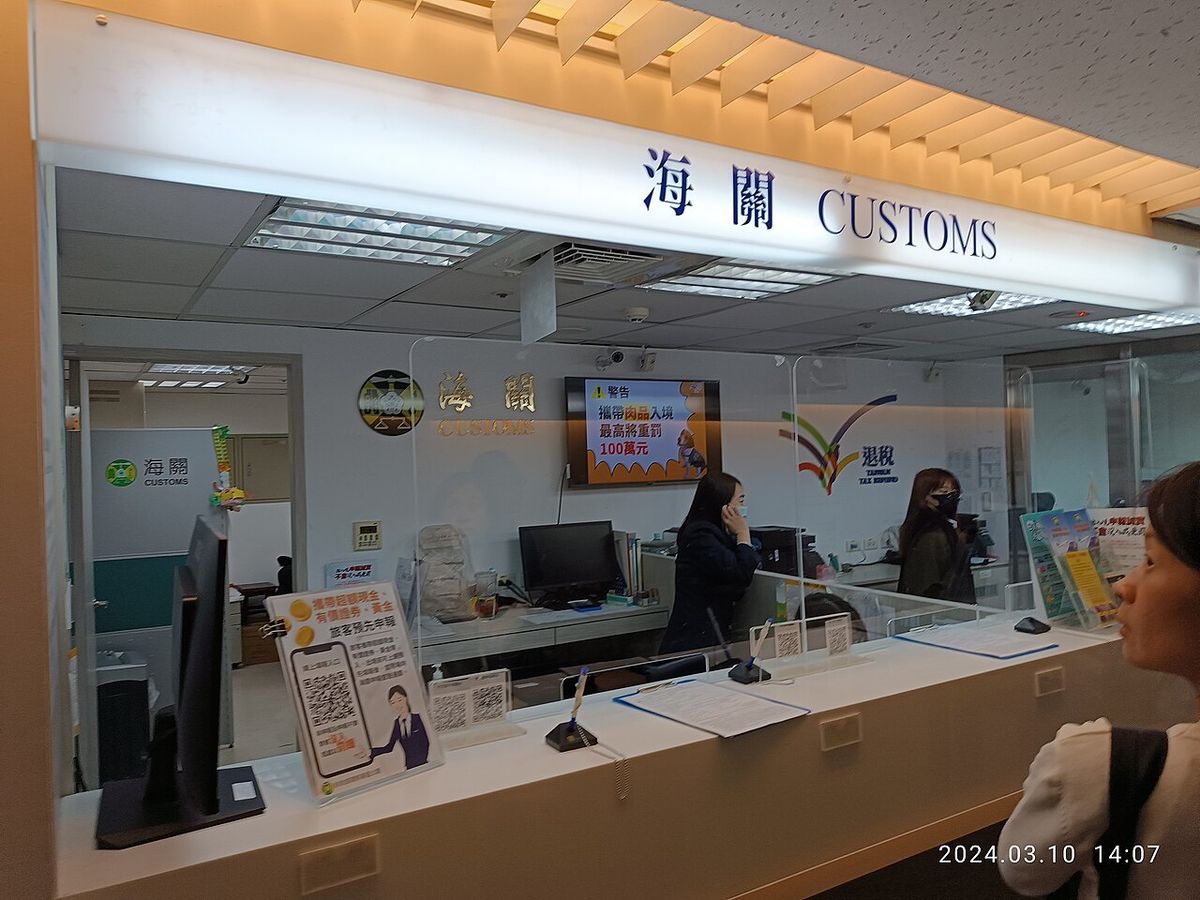
Photo: Meutnake Ah ManHO via Wikimedia Commons, CC0
Sleeping pills, benzodiazepines, painkillers and CBD
The same carry rules (prescription, 6 months, carry it yourself, no mail) apply to every legal controlled medicine. A few specifics:
- Sleeping pills and benzodiazepines. Zolpidem (Ambien, Stilnox), alprazolam (Xanax), lorazepam, diazepam and similar drugs are controlled medicines in Taiwan, mostly Schedule 4. Flunitrazepam is stricter, at Schedule 3. TFDA names zolpidem, triazolam and flunitrazepam as common examples. They're fine with a prescription; without one they count as illegal drugs.
- Opioid painkillers. Morphine, oxycodone and fentanyl are legal controlled medicines here, so a post-surgery prescription is fine with paperwork. Codeine and tramadol are controlled too. Bring the letter even for a small strip.
- Medical cannabis. Cannabis is Schedule 2, same as amphetamine, and Taiwan has no recreational or general medical cannabis system. A medical card from home means nothing at Taoyuan.
- CBD oil and gummies. This is the one that catches people. Taiwan only tolerates CBD products with THC under 10 ppm (0.001%), which is far stricter than the 0.3% "legal hemp" standard in the US. Above that, it's treated as a Schedule 2 drug, and bringing unapproved CBD can also count as importing a banned drug. "THC-free" on the label proves nothing. Our advice: leave all CBD at home.
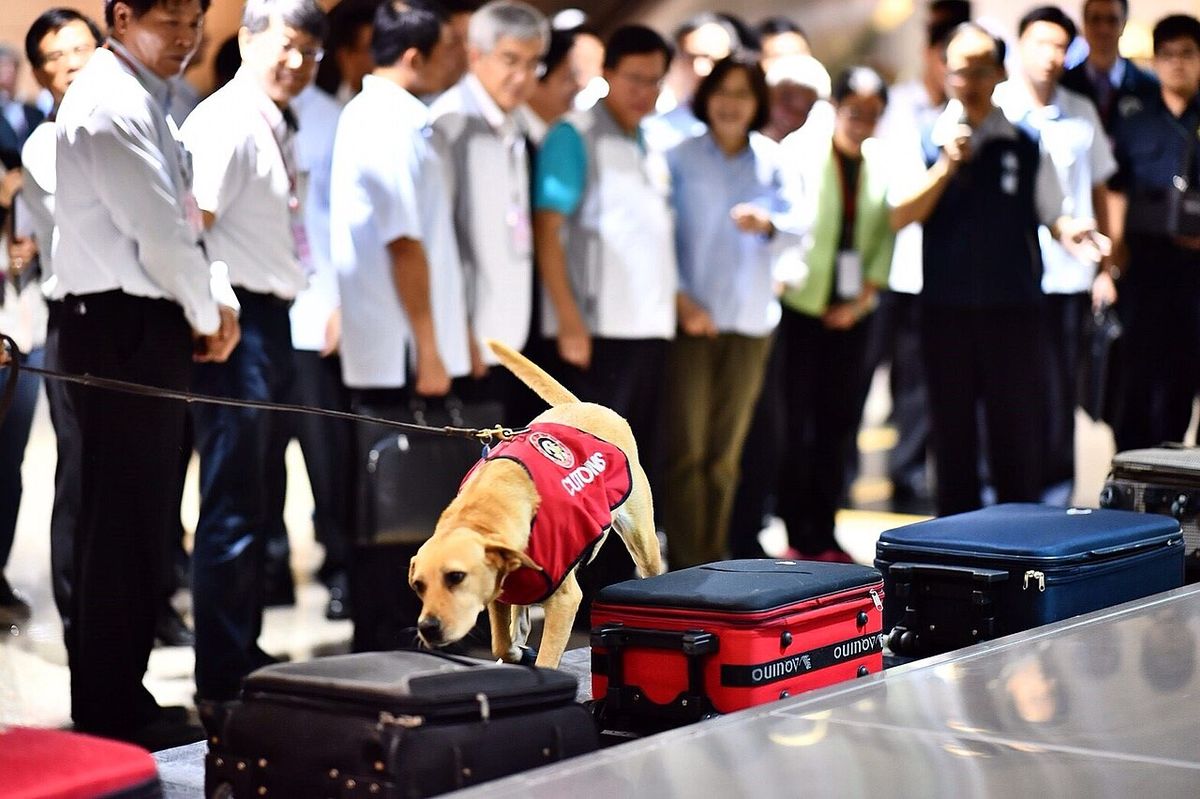
Photo: Office of the President, Republic of China (Taiwan) via Wikimedia Commons, CC BY 2.0
Getting ADHD medication once you're in Taiwan
Your foreign prescription can't be filled at a Taiwanese pharmacy. You need a Taiwanese doctor, and for ADHD stimulants that means a psychiatrist (精神科 or 身心科). Plan for this in your first month, not your last week of pills.
Where to go. A psychiatry clinic (身心科診所) is the cheapest and fastest; many in Da'an and Zhongshan have doctors who are comfortable in English. For a sure English consultation, big hospitals such as Taipei Veterans General and NTU Hospital have psychiatry departments and international service desks, at higher self-pay prices. Our guide to finding an English-speaking doctor in Taipei covers how to book.
What to expect. Several foreigners on Forumosa describe a cautious first visit: rating scales, an interview, sometimes a few weeks before a stimulant is prescribed. One got Ritalin for a month but was told adult ADHD "should subside". Bringing your diagnosis letter and old prescriptions shortens this a lot. Some doctors start with short-acting Ritalin and move you to Concerta later.
NHI coverage, the catch. Concerta (專思達) is available and licensed in Taiwan for patients aged 6 to 65. But National Health Insurance pays for long-acting methylphenidate mainly for patients diagnosed as children. If you were treated as a child, the doctor records that history and NHI continues paying. If you were first diagnosed as an adult between 19 and 40, NHI coverage needs prior approval. First diagnosed at 41 or older, expect to self-pay. Short-acting Ritalin and Strattera are easier routes for many adults.
Cost. With an NHI card, a clinic visit with medicine typically costs a few hundred NT dollars. Before your NHI starts (most new residents wait six months; see our guide to health insurance before NHI) you pay full price, roughly NT$1,000 or more for a first psychiatry visit plus the medicine. Self-paid Concerta adds up, which is another reason to arrive with a full six months.
Bridge plan. Bring six months, book a psychiatrist within your first four to six weeks, and get established while you still have a buffer. If your apartment search runs long, keep your medicine in your carry-on, not a hotel safe you'll forget at checkout.
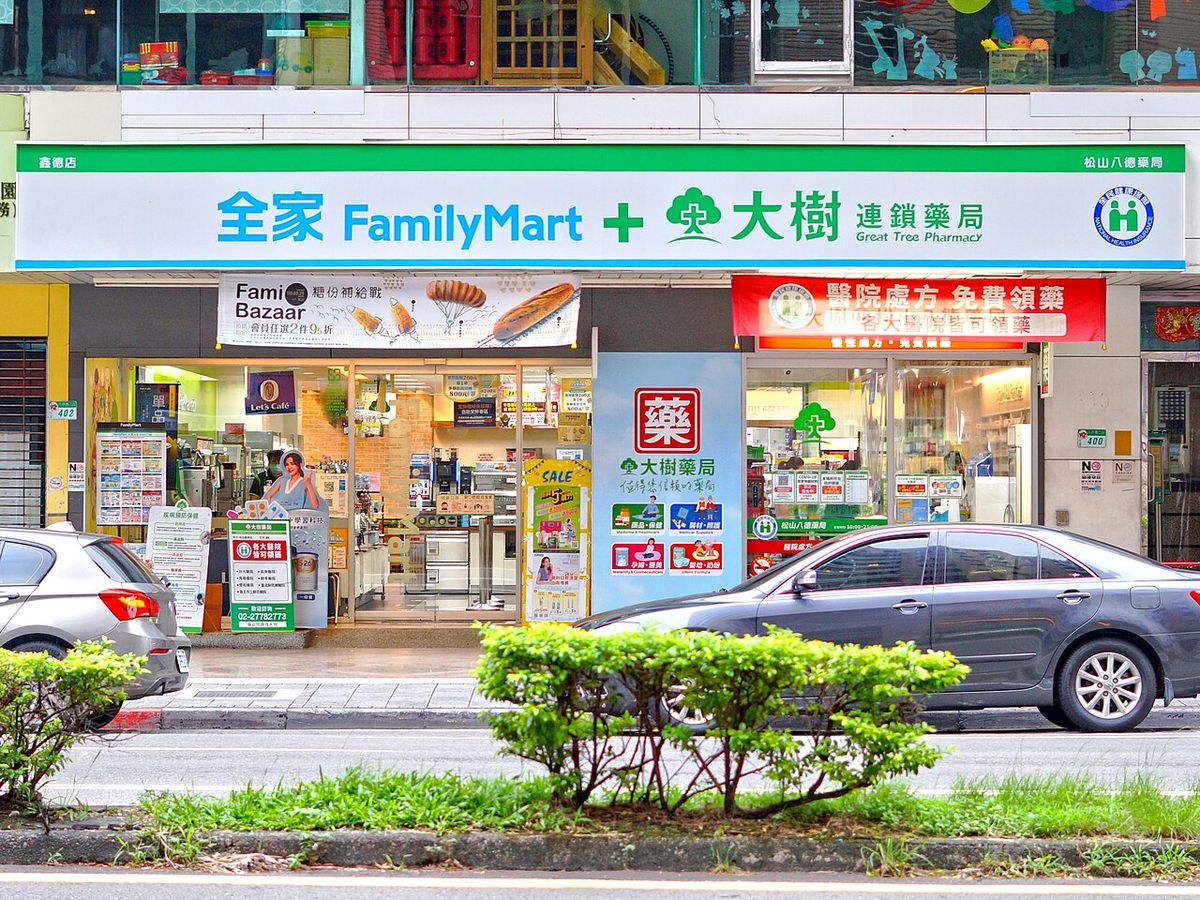
Photo: Solomon203 via Wikimedia Commons, CC BY-SA 4.0
Chain pharmacies like Great Tree (大樹) fill Taiwanese prescriptions, but they can't sell you methylphenidate without one.
Housing is the other first-month job. A psychiatrist near home is easier to keep seeing, and a hotel stay that drags on eats into your medicine buffer. If you're moving to Taipei, TRA can find you an apartment with an English-speaking search, in-person viewings and a lease check before you sign. Most searches take 3 to 5 days once viewings start. See how it works.
Quick checklist before you fly
- Check your drug's generic name: amphetamine or lisdexamfetamine means switch before you move
- Doctor's letter with every item from the checklist above
- Prescription copy, original labeled packaging
- Up to 6 months' supply, in your carry-on
- Optional: TFDA declaration for Schedule 1 to 3 drugs
- No CBD, no cannabis, nothing mailed later
- Red channel at Taoyuan if you're carrying a large controlled supply
- Psychiatrist appointment planned for your first six weeks
For the rest of the pre-move paperwork (degree authentication, arrival card, phones), see our list of things to know before moving to Taiwan.