
Living in Hsinchu as a Foreigner vs Commuting From Taipei: A Guide for Tech Workers
By Raytio Ray
Living in Hsinchu as a foreigner or commuting from Taipei by HSR? Real 2026 fares, commuter pass math, Zhubei and East District rents, and our pick for you.
You just signed an offer with TSMC, MediaTek or another company in the Hsinchu Science Park, and now you face the question every foreign engineer here faces: is living in Hsinchu as a foreigner the smart move, or should you live in Taipei and commute? The train makes the second option sound easy. The daily reality is more nuanced. This guide walks through the real 2026 commute numbers, what rent looks like in Hsinchu City and Zhubei, the lifestyle trade-offs nobody puts in the job offer, and our honest pick for singles, couples and families.
One disclosure up front: TRA's core area is Taipei. We know the Taipei side of this decision in depth. For Hsinchu, we've done the research below, but you should still visit before you sign anything.
The short answer
If you'll be on site at the park four or five days a week, live in the Hsinchu area. A daily Taipei commute costs you somewhere around 2.5 to 3.5 hours a day door to door and roughly NT$8,000 to NT$10,000 a month in train fares, before you've paid a single dollar more in Taipei rent.
If your team lets you work from home two or more days a week, or your partner's job and social life are firmly in Taipei, commuting becomes reasonable. Plenty of people do it. They just tend to be people who chose it with eyes open, not people who assumed "30 minutes by HSR" meant a 30-minute commute.
How the Taipei to Hsinchu HSR commute actually works
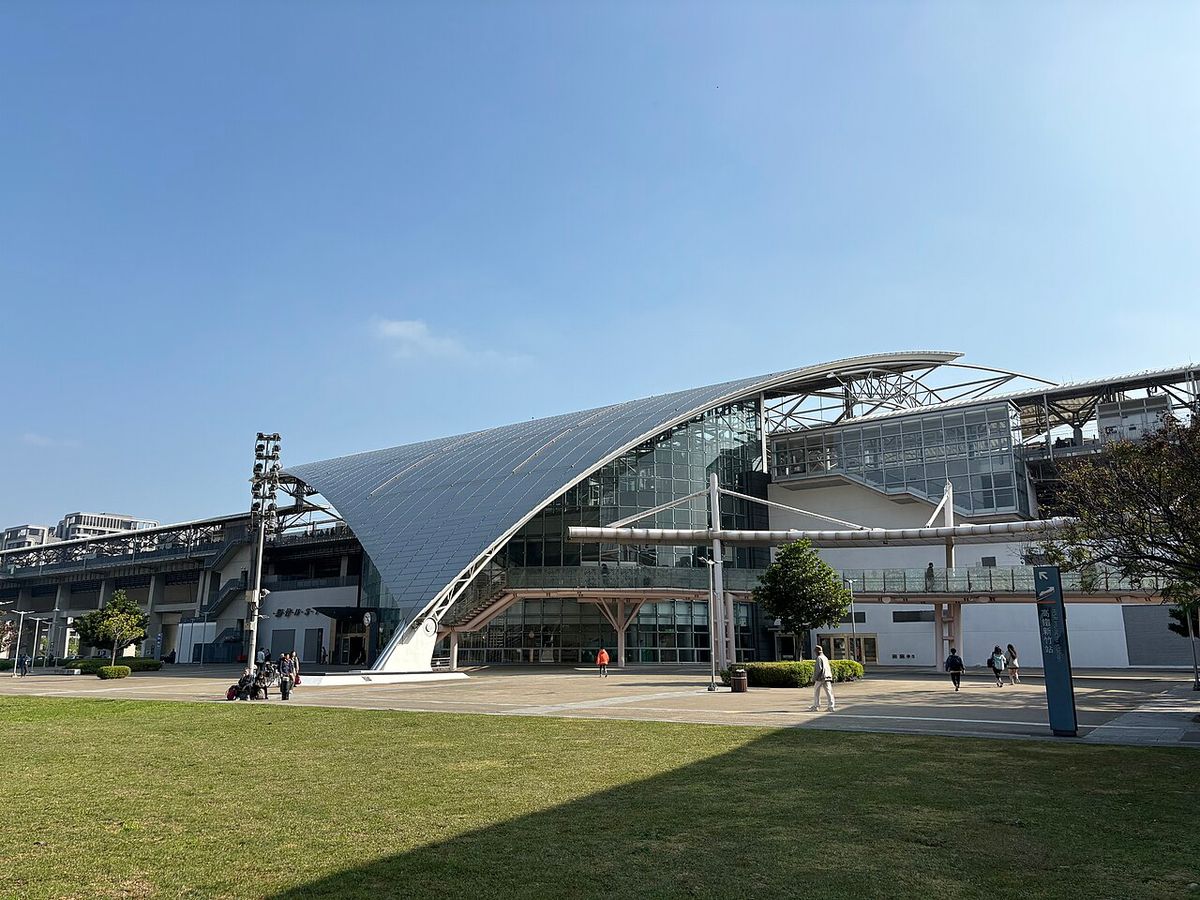
Photo: Meow via Wikimedia Commons, CC BY-SA 4.0
The high-speed rail is fast. On the official THSR timetable for a regular weekday in October 2026, trains from Taipei Station reach Hsinchu Station in 30 to 35 minutes, and in the morning peak there's a departure roughly every 10 to 25 minutes.
The catch is that the train ride is only the middle of the trip. THSR Hsinchu Station is not in Hsinchu City and not in the Science Park. It sits in Zhubei (Hsinchu County), and you still need to get from the station to your building. So a realistic door-to-door commute looks like this:
1. Home to Taipei Station or Nangang Station by MRT: 10 to 30 minutes
2. Waiting for your train plus the ride: 35 to 50 minutes
3. HSR Hsinchu Station to your office: 15 to 40 minutes, depending on which part of the park you're in and how you travel
That adds up to roughly 75 to 110 minutes each way. On a good day it's closer to the low end. On a rainy day with a missed connection, it's the high end.
Getting from the station to the park
You have a few options once you're off the train:
- Company shuttle buses. Many larger employers in the park run their own shuttles (交通車), including from the HSR station. Routes and timing differ by company and even by fab, so ask HR for the actual route list before you decide where to live. Don't assume.
- Public bus. Hsinchu City's electric "pilot bus" (先導公車) on route 182 links the HSR station, the Science Park, the universities and Hsinchu Train Station. The city cut its interval to about 20 minutes when it upgraded the line.
- Local train. The Liujia Line (六家線) runs from the HSR station (Liujia) toward Hsinchu Train Station, with stops near the eastern side of the city.
- Taxi or ride-hailing. Easy, but a daily taxi adds up fast.
What the HSR commute costs in 2026
Here are the fares we confirmed on thsrc.com.tw. THSR has said there's no fare change planned for now, though a future adjustment has been discussed for when new trains arrive.
- Ticket type: Standard car, reserved seat | Taipei to Hsinchu: NT$290
- Ticket type: Non-reserved car (自由座) | Taipei to Hsinchu: NT$280
- Ticket type: Business class | Taipei to Hsinchu: NT$640
- Ticket type: 10 rides within 30 days (82% of non-reserved fare) | Taipei to Hsinchu: NT$2,295
- Ticket type: 30-day commuter pass, unlimited rides (定期票) | Taipei to Hsinchu: NT$8,230
Both the multi-ride ticket and the commuter pass are named cards with your photo, they cost NT$100 to issue, and they only work in the non-reserved cars. In peak hours, that can mean standing.
Which one is cheaper for you
The 10-ride ticket works out to about NT$230 per ride. The commuter pass beats it once you ride roughly 36 times in 30 days, which is about 18 round trips.
- In the office 4 to 5 days a week: buy the 30-day pass. Twenty working days of single tickets would run you around NT$11,200.
- In the office 2 to 3 days a week: buy 10-ride tickets. Two or three packs cost NT$4,590 to NT$6,885 a month.
- In the office once a week or less: just buy single tickets.
Remember that this is on top of your MRT, the last-mile trip in Hsinchu, and Taipei rent. Some employers subsidize commuting, but that's a question for your offer letter, not something to assume.
Living in Hsinchu as a foreigner: the two main options
When foreign engineers say "living in Hsinchu," they usually mean one of two places: Hsinchu City's East District, which wraps around much of the Science Park, or Zhubei, the fast-growing city in Hsinchu County where the HSR station is.
Hsinchu City, East District (Guanxin, Guanpu and around the park)
This is the "live next to work" option. Guanxin (關新) and the newer Guanpu (關埔) redevelopment zone sit right beside the park, and many people here can scooter or bus to work in 10 to 15 minutes. It's popular with Science Park staff, and in 2026 Guanxin was again reported as Taiwan's highest-income neighborhood by average household income. That tells you who your neighbors are and why rent isn't cheap.
The upside is a short commute and access to the older city center, with more restaurants, markets and night life than Zhubei. The downside is traffic. Roads into the park are famously jammed at shift change, which is part of why companies like TSMC have trialed staggered start times.
Zhubei (Hsinchu County)
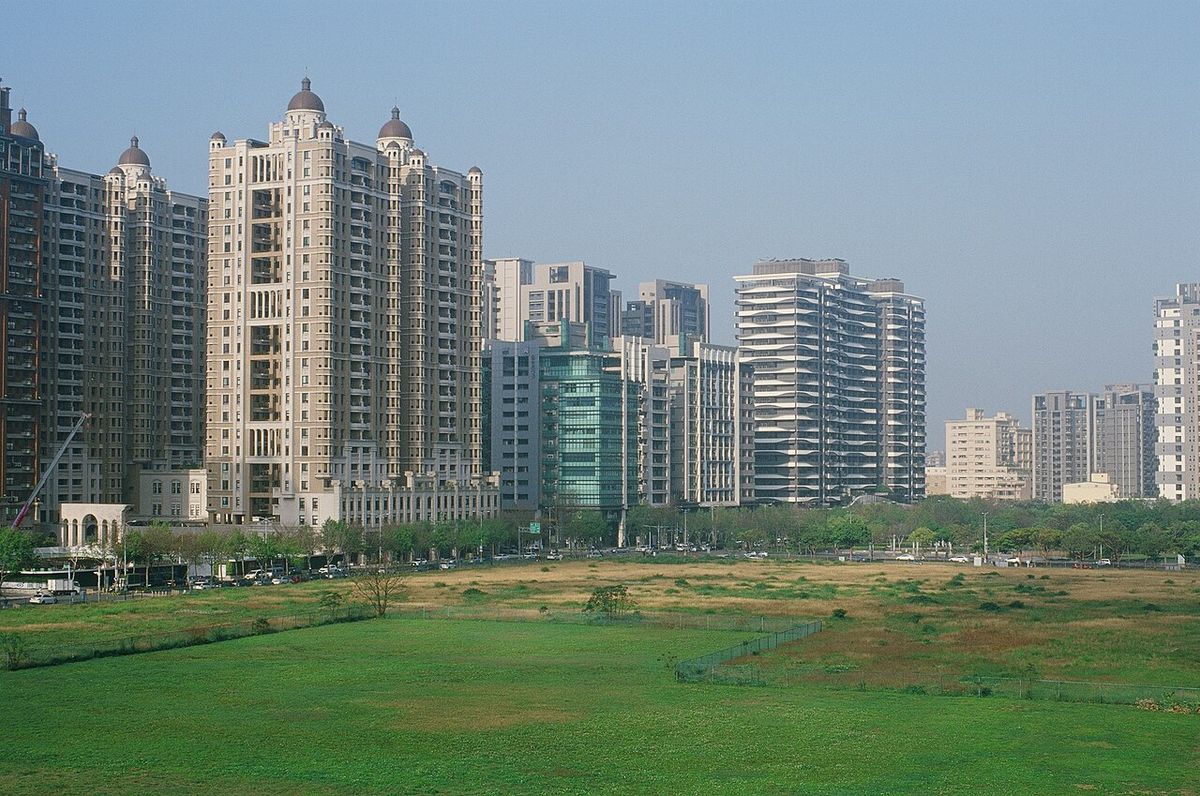
Photo: o331128 via Wikimedia Commons, CC BY-SA 2.0
Zhubei is newer, more planned and more family oriented. The area around the HSR station (高鐵特區) is full of modern high-rises with management offices, gyms and parking. If you or your partner will travel to Taipei often, living near the station is a real advantage: you're one train away from the city.
The trade-off is that Zhubei can feel like a suburb built around cars. Distances are wide, sidewalks are inconsistent, and the commute into the park is usually longer than from the East District.
Hsinchu Science Park housing: what rent looks like
Hsinchu rents are no longer "cheap compared to Taipei," and this surprises a lot of people. The park pushed demand up for years, and local news has covered landlords who prefer, or even require, tenants who work in the park.
Here are rough ranges based on 2025 and 2026 reporting and current listings. Treat them as a starting point, not a quote:
- Unit type: Small studio or suite (套房), older building | Hsinchu East District (Guanxin, Guanpu): NT$7,000 to NT$13,000 | Zhubei: NT$7,000 to NT$12,500
- Unit type: Newer studio or 1-bedroom in a managed building | Hsinchu East District (Guanxin, Guanpu): NT$14,000 to NT$26,000 | Zhubei: NT$14,000 to NT$26,000
- Unit type: 2-bedroom | Hsinchu East District (Guanxin, Guanpu): NT$20,000 to NT$30,000 | Zhubei: NT$20,000 to NT$25,000
- Unit type: 3-bedroom | Hsinchu East District (Guanxin, Guanpu): NT$30,000+ | Zhubei: NT$30,000+
For comparison, our Taipei rent guide by area puts a one-bedroom in Da'an at roughly NT$22,000 to NT$35,000 and in Xinyi at NT$25,000 to NT$40,000. So for Zhubei apartment rent, you're often paying something close to central Taipei prices for a newer building with more space, not a big discount.
Two things to know before you search:
- Management fees and parking. Newer Hsinchu buildings often charge a monthly management fee, and a parking space may be listed separately. Ask whether both are included.
- Lease length. Most listings expect a one-year lease. Short furnished stays exist but cost more.
Lifestyle trade-offs nobody puts in the job offer
The wind. Hsinchu's nickname is the "Windy City" (風城), and it earns it. From autumn through spring, the northeast monsoon wind can be strong and constant. It's mostly an annoyance, but it matters on a scooter.
You'll probably want a scooter or a car. Taipei's MRT spoils people. Hsinchu has buses and the local train, but most residents get around by scooter or car. If you plan to ride, you'll need a valid license first. Our sister site covers driving and scooters in Taiwan as a foreigner.
Fewer English services. Daily life in Taipei is fairly manageable without Mandarin. In Hsinchu, expect fewer English menus, fewer English-speaking clinics and landlords, and more reliance on colleagues to help with paperwork.
A smaller but real international community. The park, the universities and the international schools mean Hsinchu has more foreigners than most Taiwanese cities its size. It's just smaller and more tied to work. If your social life matters a lot, Taipei wins clearly.
Weekends. Many Hsinchu residents go to Taipei on weekends. It's easy by HSR. Some people treat that as the best of both worlds: quiet weekdays near work, city weekends.
International schools: why families usually choose Hsinchu
If you have school-age kids, the school often decides where you live. Hsinchu has several options:
- Hsinchu International School in Xiangshan District, Hsinchu City. Pre-K to grade 12, WASC accredited, for students holding foreign passports.
- Pacific American School on Xinglong Road in Zhubei, with elementary, middle and high school divisions.
- International Bilingual School at Hsinchu Science Park (IBSH), part of the public National Experimental High School. It only admits children of employees of park companies, government organizations, ITRI, NYCU and NTHU, so check your eligibility with HR.
Fees, waitlists and admission rules change, so contact each school directly before you choose an apartment. If you're comparing with Taipei schools, our guide to moving to Taipei with kids covers that side.
Our pick for single engineers, couples and families
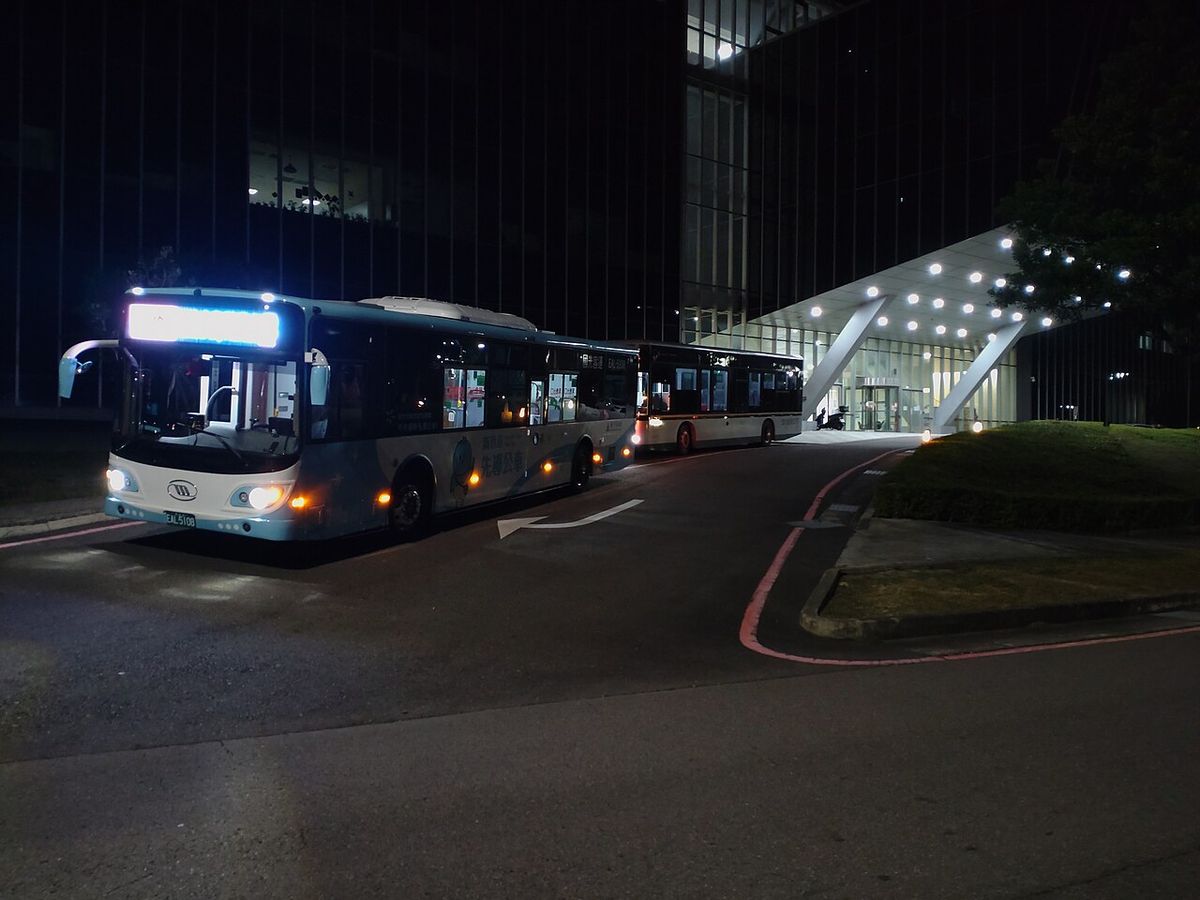
Photo: T Gordon Cheng via Wikimedia Commons, CC BY-SA 4.0
Single engineer, on site most days: Hsinchu East District, near Guanxin or Guanpu. You'll get the shortest commute, which matters most when fab or project schedules run long. A scooter makes it work. Go to Taipei on weekends for the social life. If you're a heavy Taipei weekender, consider Zhubei near the HSR station instead.
Single engineer, hybrid schedule: Taipei. If you're on site only two or three days a week, the 10-ride ticket keeps costs reasonable, and you get Taipei's lifestyle the rest of the week. Choose a place near Taipei or Nangang Station, not across the city. Our best area to live in Taipei comparison helps you narrow it down.
Couple, one partner works in the park and one in Taipei: Zhubei, near the HSR station. This is the fairest compromise. The Hsinchu partner has a short drive or shuttle, and the Taipei partner has a 30-minute train ride plus the MRT. Living in Taipei and making the park worker commute daily tends to wear on people within a year.
Family with school-age children: Zhubei or Hsinchu East District, chosen by school. Pick the school first, then look for housing within a short drive of it. Zhubei's newer buildings, parks and family-oriented neighborhoods suit most families. Commuting from Taipei with kids in a Hsinchu school rarely makes sense.
Before you sign anywhere
1. Ask HR for the shuttle bus routes and pickup points, and whether they subsidize commuting.
2. Confirm your real on-site schedule. It's the single biggest factor in this decision.
3. Do the commute once at real rush hour, both directions, before you sign a lease.
4. Price management fees, parking and utilities, not just the headline rent.
5. Confirm the landlord will let you register your ARC address there.
If you're leaning toward Taipei and working in Neihu instead of Hsinchu, our Neihu rental guide for tech workers covers that commute.
If you choose Taipei and commute, we can find the place
To be straight about it: TRA's home search covers Taipei, not Hsinchu, so if you decide to live in Hsinchu City or Zhubei, we're not the right people to find you that flat. But if you pick the Taipei-and-commute route, the location is what makes or breaks it, and that's our home turf. Our home search can focus on places within a short walk or MRT ride of Taipei Station or Nangang Station, so your HSR trip starts minutes from your door. We view places with you in person, handle the landlord in Chinese and go through the contract with you before signing. Contact us here with your on-site schedule and budget.