
Bringing a Pet to Taiwan: The 2026 Rules and the Timeline We'd Use
By Raytio Ray
Want to bring a dog to Taiwan? The 2026 rules for dogs and cats: microchip, rabies shot, blood test, import permit, 7-day quarantine and how to waive it.
Yes, you can bring a dog to Taiwan, and cats follow exactly the same rules. What you need is a microchip, a rabies vaccination, an import permit and, for most countries, a rabies antibody blood test, all done in the right order and within strict time windows. Pets from countries Taiwan doesn't list as rabies-free also face 7 days of quarantine on arrival, unless you plan early enough to qualify for the waiver.
If you start 7 to 9 months before your flight, most pets can skip quarantine entirely. If you start 3 months out, you can still bring your pet, but they will spend their first week in Taiwan in a quarantine kennel. Below is the official process as published by Taiwan's Animal and Plant Health Inspection Agency (動植物防疫檢疫署, APHIA), the timeline we'd use, and the part most people forget: finding a landlord in Taipei who will accept your animal.
Bring a dog to Taiwan: first, check which list your country is on
Everything depends on where your pet is coming from. APHIA's dogs and cats import page and its current procedure document (updated July 2026) recognize these places as rabies-free:
- Japan, Singapore, Australia, New Zealand
- The United Kingdom, Sweden, Iceland, Norway (excluding Svalbard), Estonia and the Czech Republic
- The US state of Hawaii and the territory of Guam
Everywhere else, including the mainland United States, Canada and most of Europe, counts as rabies-infected. That is the longer route, and it's the one many readers will face.
One rule applies regardless of origin: Taiwan bans the keeping and import of American Pit Bull Terriers, American Pit Bulls and American Staffordshire Terriers, under a Ministry of Agriculture announcement in force since March 2022.
The steps from a rabies-infected country
This is the sequence in APHIA's official procedure, in order:
1. Microchip. Implanted first, and it must scan and work. Every later document must carry the same chip number.
2. Rabies vaccination. Your pet must be at least 90 days old when vaccinated, and the shot must be given between 1 year and 30 days before arrival. A three-year vaccine doesn't change this: APHIA's FAQ says the most recent shot must fall inside that 1-year window regardless of how long the vaccine claims to last. The vaccine must be inactivated or approved for use in Taiwan.
3. Rabies antibody blood test (RNATT). The result must be at least 0.5 IU/ml, tested by a WOAH rabies reference laboratory or a laboratory designated by APHIA. A vet can draw the blood, but a general lab result won't be accepted. The sample must be taken between 1 year and 90 days before arrival.
4. Import quarantine permit. Apply on APHIA's online permit system at least 20 days before arrival. You upload your passport, the vaccination certificate and the lab report. The application itself is free.
5. Export veterinary certificate. Issued or endorsed by your own country's government veterinary authority (in the US, that is the USDA), stating the chip number, vaccination and blood test details, and that the animal shows no signs of rabies.
6. Arrival inspection. At the airport's animal and plant quarantine counter, show a copy of the permit, the original veterinary certificate and your customs declaration (or airway bill if your pet flies as cargo).
7. Post-entry quarantine. 7 days at a designated facility, unless you meet the waiver conditions below.
From a rabies-free country, the route is shorter: microchip, vaccination in the same 1-year to 30-day window, permit at least 20 days ahead, government veterinary certificate, and no blood test or quarantine. The catch is residency: your pet must have lived in that country for at least 180 days before travel, or since birth. If you transit through a rabies-infected country on the way, you also need a document showing your pet never left the airport, or a sealed travel crate, or quarantine applies.
Taiwan pet import quarantine: how to skip the 7 days
Since a February 2024 revision of the rules, pets from rabies-infected countries can skip quarantine if two conditions are met.
- Timing of the blood test. The blood sample must be taken between 180 days and 1 year before arrival. (There is also a route for pets with an earlier passing test: a new test within 180 days of arrival, taken 180 days to 1 year after the previous one.)
- Getting the result to APHIA early or directly. Either you apply for the import permit at least 120 days before arrival, or the laboratory (or your country's animal quarantine authority) sends the passing report directly to APHIA, in which case the normal 20-day deadline applies.
In plain terms: if your blood draw happens fewer than 180 days before your flight, your pet does 7 days in quarantine. There is no way around that part.
If quarantine does apply, the permit itself reserves your pet's space; you don't book separately. According to APHIA's list of quarantine premises, pets arriving at Taoyuan, Songshan, Taipei Port or Taichung go to the Guanyin Inspection Station run by APHIA's Taoyuan branch. The National Chung Hsing University veterinary hospital option is listed as temporarily unavailable, and Kaohsiung arrivals go to National Pingtung University of Science and Technology. Staff escort animals to the station only on working days, so APHIA asks owners not to land on weekends or public holidays.
What it costs
APHIA's FAQ lists the pieces:
- Import permit: free.
- At the airport: a NT$100 processing fee, plus inspection fees and, if quarantine applies, a transport fee to the quarantine station that depends on location and date (APHIA publishes a 2026 transport fee table). All of it is paid in cash, in New Taiwan dollars, so change money before you land.
- Quarantine stay: set by each facility, paid before your pet is released.
- At home: vet visits, the lab test, government certificate fees and the airline's pet charge. These vary so much by country and airline that any number we gave you would be a guess. Get quotes early.
One trap: pet food and treats containing meat from cows, pigs, sheep or poultry are subject to their own import rules, and undeclared items can be fined up to NT$1 million. If you bring any, keep it in its original unopened packaging and declare it, or simply buy food after you arrive. Taipei has plenty of pet shops.
The timeline we'd use
Our pick: if you're coming from a rabies-infected country and your pet is healthy, go for the quarantine waiver and start 7 to 9 months before your flight. A week in a kennel is stressful for most animals, and the extra planning costs you very little. Working backward from arrival:
1. 8 to 9 months out: confirm your country's status, book a vet appointment, check the microchip scans, and confirm your vet can send blood to an accepted lab.
2. 7 to 8 months out: rabies vaccination (if the last shot will be more than a year old by arrival), then the blood draw (ask your vet about the gap between the two), so the sample is safely more than 180 days old when you land.
3. About 5 months out: once the passing report is back, apply for the permit on the online system, at least 120 days before arrival.
4. 2 to 3 months out: book the flight and your pet's spot with the airline; check the vaccine will still be inside its 1-year window on arrival day.
5. Final 1 to 2 weeks: get the government export certificate and plan a weekday arrival.
If you're starting late, don't panic. Go for the standard route: blood draw at least 90 days before arrival, permit at least 20 days before, and accept the 7 days.
A small paperwork note: APHIA revised the import quarantine permit document on 5 January 2026. During 2026 both the old and new versions are accepted, but the old version stops being valid on 1 January 2027. If you're flying in early 2027, make sure the permit you hold is the new version.
Airlines set their own rules
Each airline decides whether your pet flies in the cabin, as checked baggage or as cargo, which crates it accepts, and whether it carries snub-nosed breeds like pugs and Persians, which many airlines restrict. Some routes also have summer heat embargoes. Call the airline before you book your own ticket.
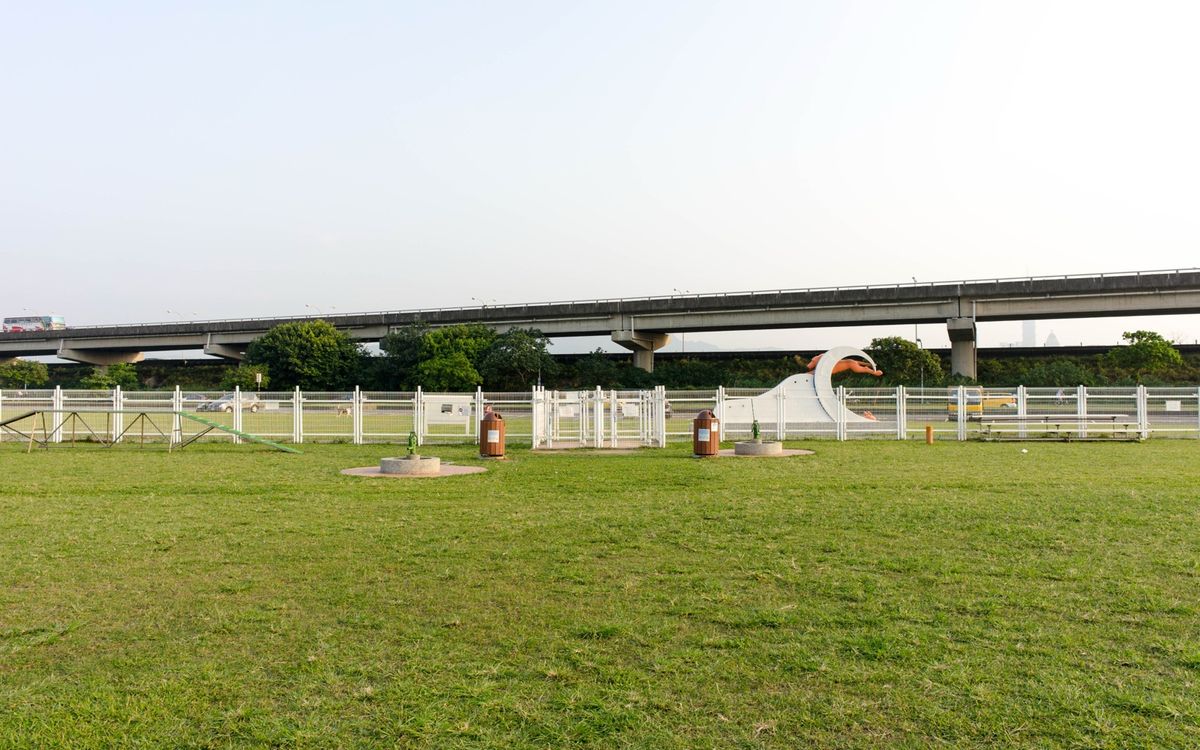
Photo: 玄史生 via Wikimedia Commons, CC0
Once you land: registration and daily life
Taiwan requires pet registration (寵物登記) for dogs, and since 1 January 2025 also for cats, according to the Ministry of Agriculture. Ask a local vet clinic how to register; many clinics handle it for you, and your pet's existing microchip number is what links everything together.
Taiwan also expects dogs and cats to be vaccinated against rabies every year, so put the next booster in your calendar. Find a vet near your new home, and an after-hours animal hospital, before you need one.
Taipei's riverside parks have fenced dog runs and long paths, which makes the city more dog-friendly than its density suggests. Heat is the bigger issue: summer pavement gets very hot, so walk early or late, and plan on air conditioning being on for your pet during the day.
Relocating a pet to Taipei: the landlord problem
Many people plan the flight perfectly and then discover that a large share of Taipei landlords say no to pets. There is no citywide rule; it is landlord by landlord, and sometimes building by building, as we explain in our guide to renting with a pet in Taipei. Expect a higher deposit if a landlord does agree, and get the permission written into the contract (here is what a normal Taipei rental contract looks like).
A few practical points:
- Book a pet-friendly first stay. Many short-term rentals and hotels don't accept animals. Check before booking, especially if your pet arrives with you. Our guide to where to stay your first two weeks covers the options.
- Think about the building. Lifts, a ground-floor unit or a short walk to a park matter more with a dog. See walk-up vs elevator buildings.
How TRA finds a pet-friendly landlord for you
This is where we genuinely help. Pet permission is a conversation that happens in Chinese, usually with an older owner, and a vague English message gets ignored. When you search with TRA:
- We raise your pet with the landlord early, in Chinese, so you don't fall for a flat that was always going to say no.
- We describe your animal the way landlords want to hear it: type, size, age, house-trained, how long it is alone, and any previous landlord reference.
- We negotiate on the spot, including the pet deposit and any conditions, and make sure permission for your pet is written into the contract before you sign.
Once the in-person search starts, finding the right place typically takes anywhere from 3 to 5 days up to about 1 to 2 weeks. You pay a deposit when we start and the balance once you've found your home; we quote individually. See how our service works or tell us about you and your pet.
If you'd also like someone to meet you at the airport, our airport transfer service can help. Whether we can take your pet in the same vehicle depends on its size and crate, so ask us before you book.

Photo: 玄史生 via Wikimedia Commons, CC0
Our pick
Start at least 6 months out, and ideally 7 to 9, aim for the quarantine waiver, and land on a weekday. Line up the housing side in parallel, because a pet-friendly apartment in Taipei takes more searching than the flight does. Rules change, so check APHIA's page again before every step. If you want a local team doing the landlord conversations in Chinese, get in touch.
FAQ
How long does it take to bring a dog to Taiwan?
Plan on 7 to 9 months if you want to avoid quarantine from a rabies-infected country, because the blood sample must be at least 180 days old on arrival. The fastest legal route with quarantine is roughly 3 to 4 months.
Does my pet have to go into quarantine in Taiwan?
Pets from rabies-free countries such as Japan, the UK or Australia generally don't. Pets from other countries do 7 days unless the blood test was taken 180 days to 1 year before arrival and the permit or lab report reaches APHIA in time.
Are the rules for moving a cat to Taiwan different from dogs?
No. Cats and dogs follow the same import requirements: microchip, rabies vaccine, blood test where required, permit and veterinary certificate. Cats must also be registered once you live here.
Which dog breeds can't be imported to Taiwan?
American Pit Bull Terriers, American Pit Bulls and American Staffordshire Terriers are banned from import and keeping. Check airline rules separately for snub-nosed breeds.
Is it hard to rent an apartment in Taipei with a pet?
It narrows your options, because many landlords say no, but pet-friendly places exist in every district. Ask about pets before viewing and get permission written into the contract.